
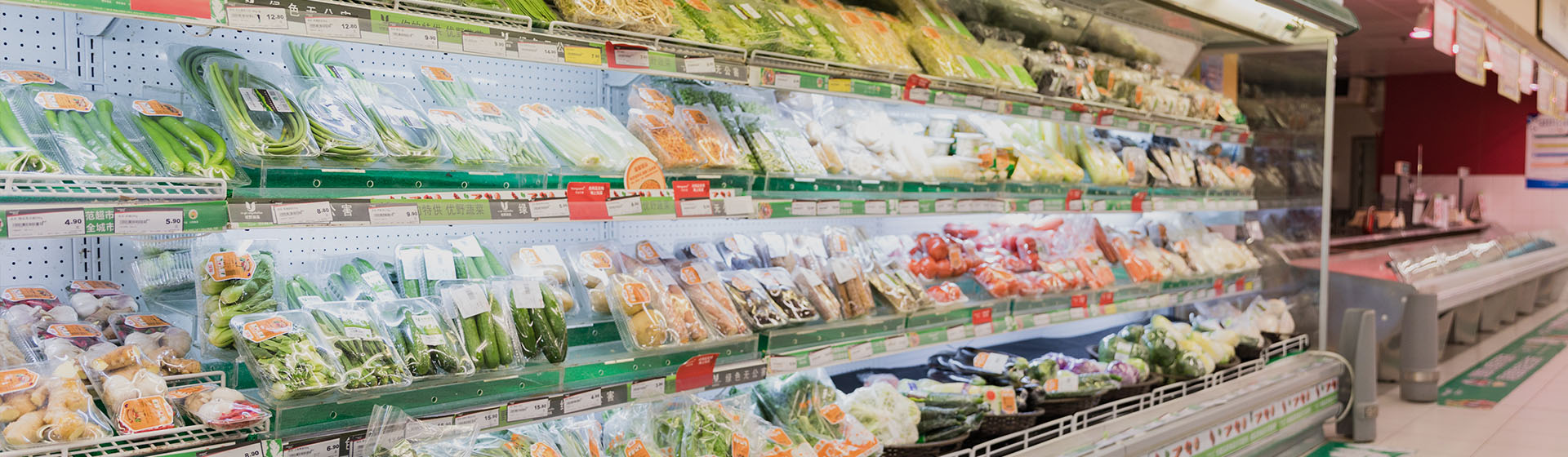
A Frozen Food Display Cabinet does more than keep products below freezing. In a commercial environment, it must make frozen goods easy to see, organize, and access while maintaining a stable internal temperature. This balance between display performance and refrigeration reliability makes the cabinet useful in frozen food stores, convenience stores, delicatessens, specialty food shops, and other commercial food spaces.
Frozen products are sensitive to temperature changes. Repeated exposure to warm air can lead to surface frost, damaged packaging, dehydration, and uneven product quality. Poor visibility can also make customers overlook products or spend too long searching. A well-designed display cabinet addresses both problems through controlled airflow, insulated glass, practical shelving, and a structure that supports stable operation.
The Display Cabinet Is Part of the Cold Chain
A frozen display cabinet is often the final refrigeration point before a product reaches the customer. Its performance therefore affects both product quality and the buying experience.
Unlike a basic storage freezer, a display cabinet must handle frequent interaction. Doors may be opened repeatedly, products may be moved during the day, and the surrounding room temperature may change. The cabinet needs to recover quickly after warm air enters and maintain consistent conditions across the storage area.
Its main functions include:
- Maintaining a stable frozen storage temperature
- Reducing warm-air infiltration during access
- Supporting clear product classification
- Improving visibility without unnecessary door opening
- Helping staff restock and inspect products efficiently
- Limiting frost buildup on packaging and interior surfaces
The cabinet should not be judged only by its lowest temperature setting. Long-term stability, sealing, airflow, and recovery speed are equally important.
Why Product Visibility Matters
Frozen food is usually sold in sealed packaging, so customers rely on labels, colors, and package shape. When items are hidden behind frost, stacked too deeply, or placed in a dark interior, comparison becomes difficult.
A Frozen Food Display Cabinet with a wide viewing area allows customers to identify products before opening the door. This reduces access time and helps limit cold air loss.
Several design details influence visibility:
Clear Glass and Condensation Control
Ordinary glass may fog when there is a large difference between internal and external temperature. Insulated or heated glass can reduce condensation and keep products visible in humid conditions.
Interior Lighting
Lighting should make labels readable without adding excessive heat. LED lighting is commonly used because it provides clear illumination with relatively low energy consumption.
Organized Product Zones
Shelves, dividers, or baskets keep categories separated. Frozen vegetables, seafood, meat, prepared meals, desserts, and ice cream can be arranged in defined sections, making stock control easier.
Temperature Stability Depends on the Whole Cabinet
Commercial buyers sometimes focus mainly on compressor power. However, stable performance depends on the complete cabinet structure.
Insulation
High-density insulation reduces heat transfer through the cabinet walls. Better insulation lowers the refrigeration load and helps the cabinet maintain a stable temperature.
Doors and Seals
For glass-door models, gaskets must remain flexible and fit closely around the frame. A damaged gasket allows warm, moist air to enter, increasing frost and energy consumption.
Air Circulation
Airflow should reach the full storage area. Poor circulation can create warmer zones near the top, corners, or door area. A balanced airflow path reduces these differences.
Defrost Control
Frost on the evaporator limits airflow and lowers refrigeration efficiency. A controlled defrost system removes frost without creating unnecessary temperature fluctuation inside the cabinet.
Matching the Layout to the Product
The internal arrangement should match the frozen food being displayed. There is no single layout suitable for every application.
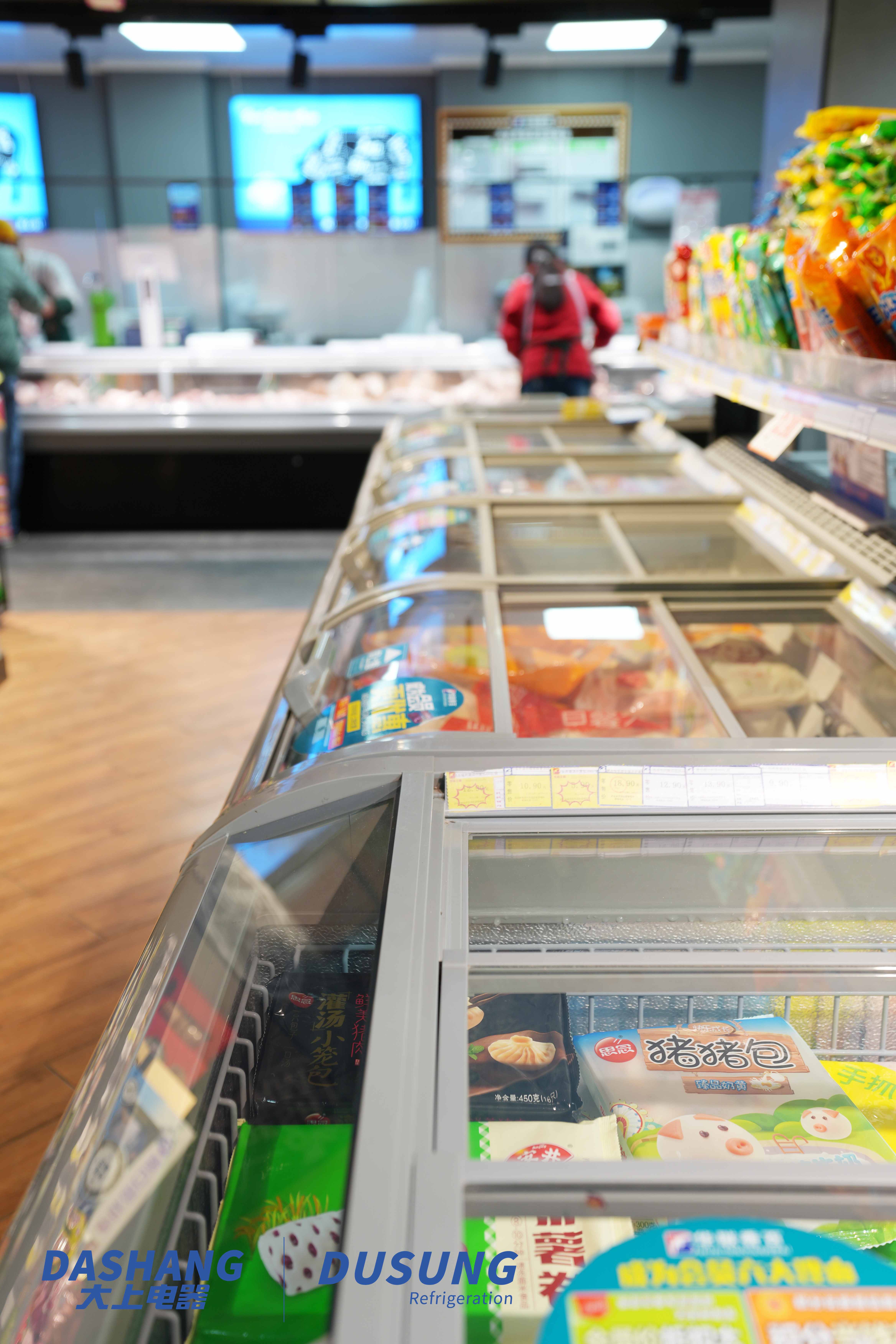
Vertical cabinets are useful when floor space is limited and customers need eye-level access. Horizontal cabinets can provide greater storage depth and may suit bulk packaging or high-volume products. Combination layouts are practical when different package sizes must be displayed together.
Before choosing a layout, consider:
- Package height and width
- Product turnover rate
- Customer or staff access
- Available aisle width
- Restocking frequency
- Number of product categories
- Need for seasonal display zones
A cabinet that fits the room but does not match the product format may create wasted space and poor organization.
Problems Caused by Incorrect Selection
Choosing a cabinet only by external size or purchase price can lead to operational problems.
Insufficient display depth may force products to be stacked too high, while excessive depth can hide products at the back and make stock rotation difficult. Door configuration also matters. One large door provides wide access, but several smaller doors can reduce cold air loss because only one section is opened at a time.
Other possible problems include:
- Glass fogging in humid environments
- Uneven temperature between shelves
- Frost around door edges
- Difficult cleaning near corners and drains
- Lighting glare on packaging
- Shelves that cannot support the required load
These issues are easier to prevent during selection than to correct after installation.
Evaluating Energy Efficiency
Commercial freezers operate for long hours, so energy performance affects total operating cost. Insulation, glass structure, fan control, lighting, compressor matching, and defrost settings all influence electricity use.
The cabinet should also be sized correctly. An oversized unit may waste energy, while an overloaded unit may struggle to maintain temperature. Placement matters as well. The cabinet should be kept away from direct sunlight, ovens, heating equipment, and poorly ventilated walls.
Choosing the Right Frozen Food Display Cabinet
A suitable cabinet should support the product, room layout, and daily operating pattern. Buyers should confirm:
- Required temperature range
- Product type and package size
- Installation dimensions
- Door style and opening direction
- Interior load capacity
- Local climate conditions
- Defrost method
- Lighting arrangement
- Cleaning access
- Refrigeration configuration
The best cabinet is not necessarily the largest or most powerful model. It is the one that keeps products stable, visible, and easy to manage under real working conditions.
FAQ
1. What temperature should a Frozen Food Display Cabinet maintain?
Many frozen foods require a stable temperature around -18°C or lower, but the exact setting should follow the product manufacturer’s recommendation and local storage rules.
2. Why does frost appear on frozen food packaging?
Frost forms when warm, humid air enters the cabinet and moisture freezes on cold surfaces. Frequent door opening, damaged gaskets, poor sealing, or unstable temperature can increase the problem.
3. Is a glass-door cabinet more efficient than an open cabinet?
A glass-door cabinet usually reduces cold air loss because the storage space stays enclosed. Actual energy use still depends on glass insulation, sealing, lighting, airflow, and refrigeration design.
4. How often should the cabinet be cleaned?
Interior surfaces should be checked regularly and cleaned whenever spills, ice, or packaging debris appear. A complete cleaning schedule may be weekly or monthly depending on traffic and product type.
Post time: Jul-28-2026


