
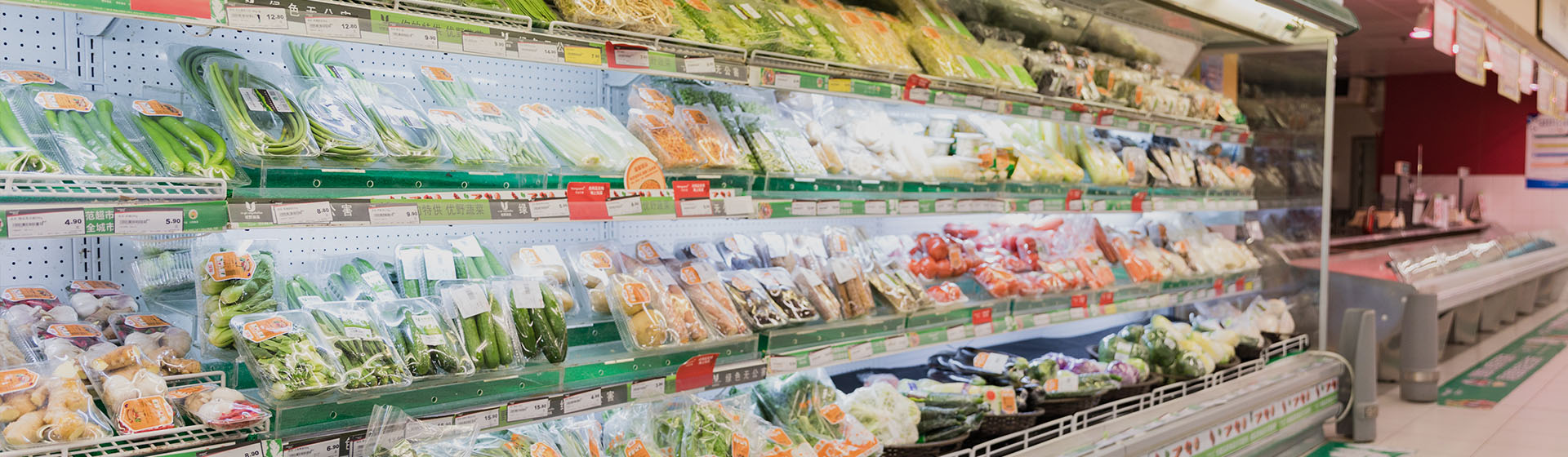
In modern commercial refrigeration, maintaining freshness is no longer limited to temperature control alone. Product visibility, airflow stability, humidity management, and cabinet structure all directly influence how fresh products are stored and displayed. A Fresh Food Cabinet is specifically engineered to create a controlled environment that supports product preservation while maintaining organized and visually clear presentation.
Compared with conventional refrigeration equipment, modern fresh food cabinets are designed with optimized cooling systems, improved airflow structures, and flexible internal configurations that support a wide variety of fresh products. From vegetables and fruits to dairy items and ready-to-eat foods, these cabinets are built to maintain stable storage conditions while improving internal organization and accessibility.
What Is a Fresh Food Cabinet?
A Fresh Food Cabinet is a refrigerated display and storage system developed for fresh and temperature-sensitive products. Unlike frozen storage equipment, fresh food cabinets operate within moderate cooling ranges designed to preserve texture, moisture balance, and product appearance rather than deep freezing.
These cabinets are commonly equipped with transparent glass structures, multi-layer shelving systems, and controlled airflow circulation to maintain consistent cooling performance throughout the storage area. Depending on the cabinet configuration, products can remain highly visible while still being protected from excessive temperature fluctuation and moisture loss.
Structural Design and Cabinet Configuration
The structural layout of a fresh food cabinet directly affects cooling stability and internal storage efficiency.
● Multi-layer cabinet structure
The internal design usually includes multiple display levels that maximize vertical storage space while maintaining organized product separation.
● Reinforced cabinet framework
Heavy-duty steel or aluminum structures improve durability and long-term operational stability.
● High-density insulation materials
Thick insulation layers reduce external heat transfer and maintain stable internal temperatures.
● Transparent front display design
Glass panels improve product visibility while maintaining thermal control inside the cabinet.
Cooling System and Temperature Control
The refrigeration system is one of the most important components of a Fresh Food Cabinet, as fresh products require stable but non-freezing temperatures.
● Precision cooling system
Advanced refrigeration systems maintain consistent cooling conditions without causing excessive drying or freezing.
● Multi-directional airflow circulation
Balanced airflow ensures even cooling across all shelves and prevents localized temperature differences.
● Intelligent temperature sensors
Real-time monitoring systems continuously adjust cooling output to maintain stable conditions.
● Moderate temperature operating range
Fresh food cabinets generally operate between 2°C and 8°C depending on product requirements.
Humidity Management and Freshness Preservation
Humidity control is essential for preserving the appearance and texture of fresh products.
● Moisture-balanced airflow design
The airflow system is engineered to reduce excessive moisture loss from stored products.
● Controlled humidity environment
Helps vegetables and fruits maintain freshness without rapid dehydration.
● Reduced surface condensation
Optimized cooling circulation minimizes water buildup on products and cabinet surfaces.
● Stable internal climate
Maintains consistent storage conditions even during frequent door opening or customer access.
Glass Structure and Visibility Performance
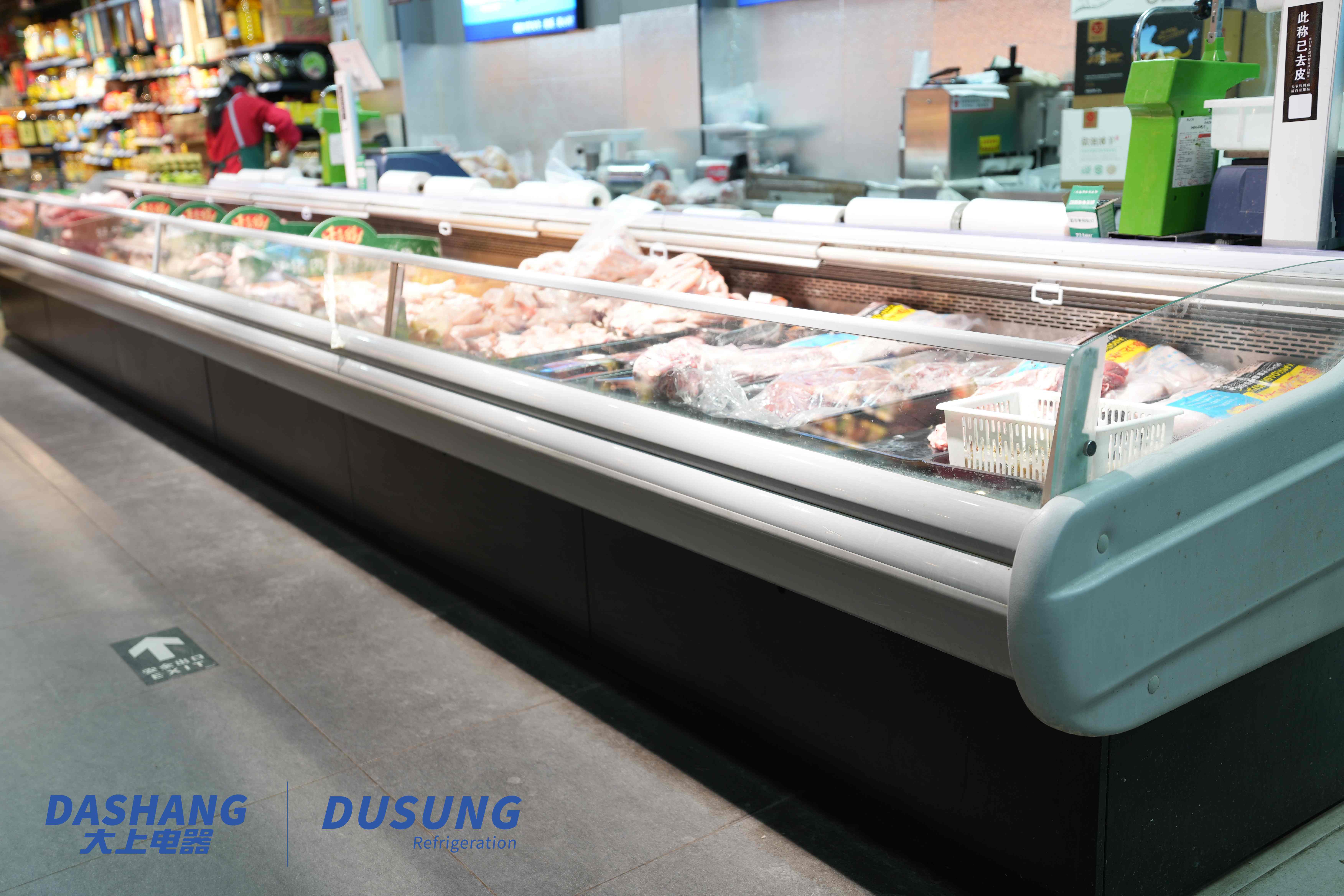
The visibility system of a Fresh Food Cabinet is designed to combine presentation clarity with thermal efficiency.
● Double-layer tempered glass
Improves insulation performance while maintaining product visibility.
● Anti-fog technology
Prevents condensation from obstructing product display.
● High-transparency display panels
Ensure products remain clearly visible under different lighting conditions.
● Energy-efficient LED lighting
Provides bright internal illumination without generating excessive heat.
Internal Shelf and Storage Design
The internal organization system improves storage flexibility while supporting efficient airflow circulation.
● Adjustable shelving configuration
Shelves can be repositioned based on product size and packaging requirements.
● High-load shelf construction
Supports heavy fresh food products without deformation.
● Open airflow channel design
Prevents airflow blockage and ensures uniform cooling.
● Product separation zones
Different areas can be organized for vegetables, dairy products, beverages, or prepared foods.
Thermal Efficiency and Energy Optimization
Modern fresh food cabinets are designed to improve thermal retention and reduce unnecessary energy consumption.
● High-efficiency insulation structure
Minimizes thermal leakage and improves temperature retention.
● Optimized refrigerant circulation
Improves cooling performance while reducing operational energy demand.
● Tight sealing system
Reduces external warm air infiltration and stabilizes cabinet temperatures.
● Balanced cooling distribution
Ensures consistent performance with reduced compressor workload.
Defrosting and Condensation Control
Fresh food cabinets must manage moisture carefully to prevent performance reduction and product quality issues.
● Automatic defrost system
Prevents excessive frost accumulation on evaporator surfaces.
● Condensate drainage structure
Allows moisture generated during operation to be removed effectively.
● Moisture-resistant interior materials
Reduce the risk of water damage and improve cabinet hygiene.
● Stable airflow management
Helps maintain low condensation levels throughout the cabinet interior.
Durability and Material Engineering
Long-term performance depends heavily on cabinet material quality and structural engineering.
● Corrosion-resistant external coating
Protects the cabinet surface from environmental wear and moisture exposure.
● Heavy-duty glass and frame system
Improves structural strength and operational durability.
● Reinforced base support
Maintains cabinet stability under high storage loads.
● Impact-resistant internal components
Designed for continuous commercial use and repeated product loading.
Noise Reduction and Operational Stability
The operating stability of a Fresh Food Cabinet reflects the quality of its refrigeration system and internal structural design.
● Low-noise compressor technology
Maintains quieter operation while providing reliable cooling performance.
● Anti-vibration structure
Reduces mechanical stress and extends equipment lifespan.
● Stable internal airflow system
Maintains smooth cooling circulation with minimal airflow turbulence.
Product Adaptability and Storage Flexibility
One important advantage of a fresh food cabinet is its ability to support multiple fresh product categories within the same refrigeration environment.
● Fresh vegetable storage
Maintains moisture balance and reduces dehydration.
● Fruit preservation
Supports stable cooling without damaging texture.
● Dairy product storage
Maintains safe and consistent refrigerated conditions.
● Ready-to-eat food organization
Provides structured storage for packaged fresh meals and prepared foods.
Conclusion
The Fresh Food Cabinet is a specialized refrigeration solution developed around temperature stability, humidity management, and organized fresh product storage. Through optimized airflow systems, durable cabinet construction, advanced cooling technology, and efficient thermal insulation, it provides reliable preservation conditions for a wide range of fresh products.
From multi-layer shelving systems and anti-fog glass panels to intelligent temperature control and balanced cooling circulation, every structural element contributes to long-term refrigeration stability and product preservation performance. For applications requiring reliable fresh product storage with stable environmental control, a fresh food cabinet offers a technically advanced and highly adaptable refrigeration solution.
FAQ
- What temperature range does a fresh food cabinet usually operate in?
Most fresh food cabinets operate between 2°C and 8°C depending on the products being stored. - Why is humidity control important in a fresh food cabinet?
Humidity management helps prevent dehydration and maintains product texture and freshness. - How does the cabinet maintain even cooling across all shelves?
Through multi-directional airflow circulation and balanced cooling system design. - What materials are commonly used in fresh food cabinet construction?
Most cabinets use coated steel, aluminum, tempered glass, and high-density polyurethane insulation materials.
Post time: May-06-2026


