
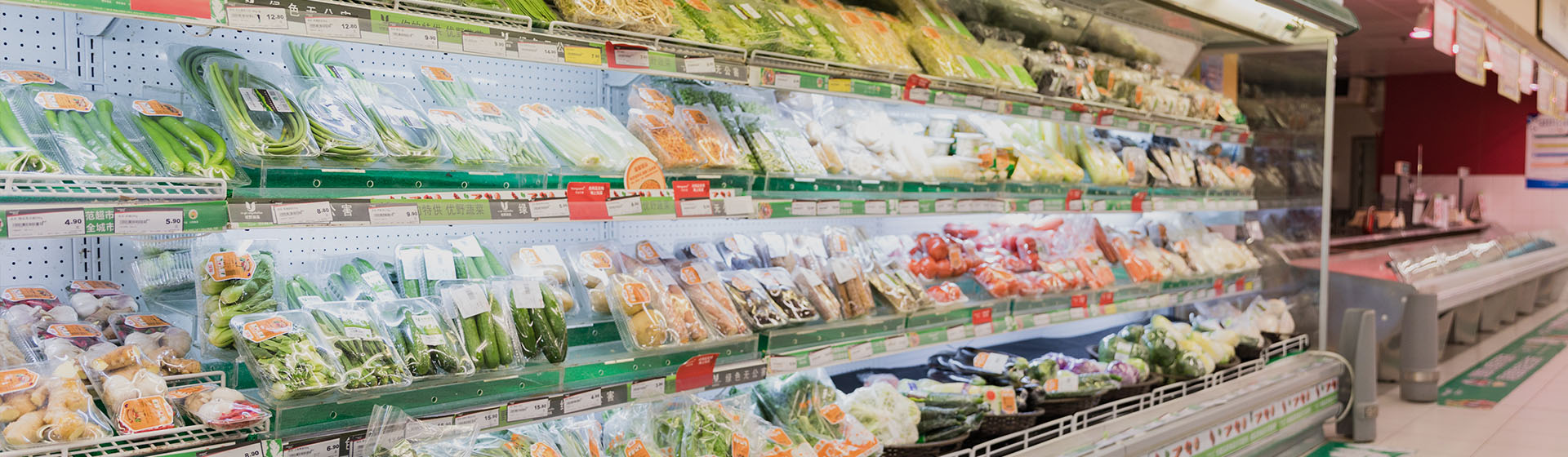
Modern retail and food service industries rely heavily on refrigeration systems that can balance energy efficiency, product visibility, and stable cooling performance. The integration of glass-door upright fridge design with air-curtain cooling technology represents an advanced direction in commercial refrigeration, combining two different cooling approaches into a more optimized solution for food storage and display.
As supermarkets, convenience stores, and food distribution centers face rising energy costs and stricter food safety standards, this hybrid refrigeration concept is becoming increasingly relevant for long-term operational efficiency and commercial competitiveness.
The Evolution of Commercial Upright Refrigeration Systems
Traditional upright refrigeration systems typically fall into two categories: sealed glass-door units and open-display air-curtain systems. Each has strengths but also clear limitations in real-world operation.
Glass-door upright refrigerators are widely used because they provide strong insulation performance and stable temperature control. However, frequent door opening can still cause temperature fluctuations and energy loss.
Air-curtain cooling systems replace physical doors with a controlled stream of cold air that forms an invisible thermal barrier. This improves accessibility and display visibility, but can be less stable in high-traffic or warm environments.
The hybrid concept combines these two approaches to improve both energy efficiency and operational flexibility.
How Air-Curtain Cooling Technology Enhances Glass-Door Fridges
In a hybrid design, air-curtain technology is integrated into a glass-door upright fridge to strengthen airflow control and reduce temperature instability during usage.
When the door is opened, the air-curtain system helps create a cold air barrier near the opening zone, reducing warm air infiltration. When the door is closed, it supports internal circulation and helps maintain uniform temperature across all shelves.
This active airflow management improves thermal consistency compared to traditional static cooling systems.
Key Advantages of Energy-Efficient Hybrid Upright Fridges
The integration of glass-door insulation with air-curtain cooling technology brings multiple performance benefits:
● Improved energy efficiency by reducing cold air loss during door operation
● More stable internal temperature distribution across different storage levels
● Better product visibility combined with controlled cooling performance
● Reduced compressor workload due to smoother temperature regulation
● Faster cooling recovery after frequent door opening in busy stores
● Lower risk of spoilage for temperature-sensitive food products
● Enhanced performance in high-traffic retail environments
These advantages make the system suitable for modern retail environments where efficiency and product quality must work together.
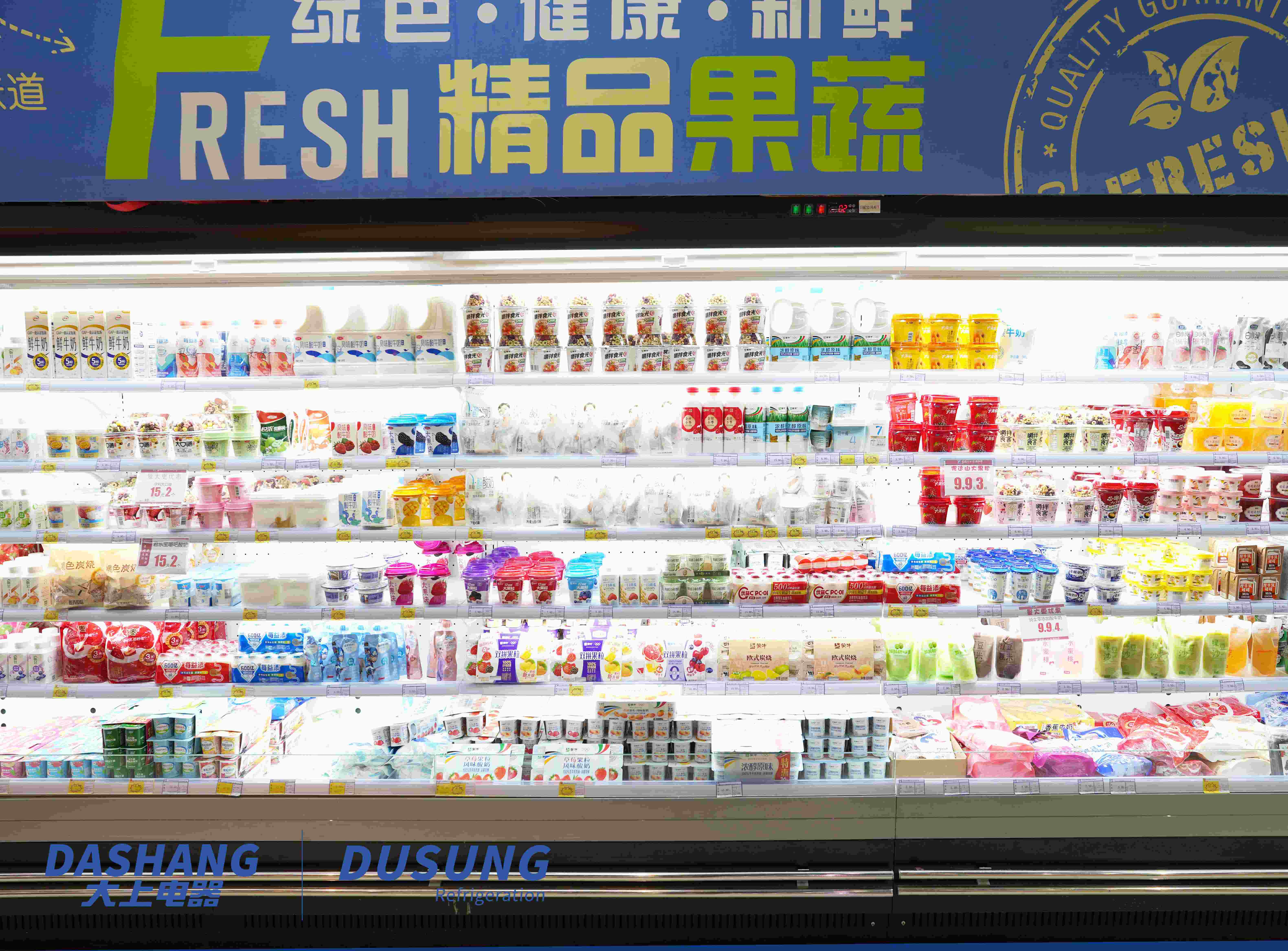
Application Scenarios in Commercial Food Storage
Energy-efficient glass-door upright fridges with air-curtain technology are widely used across multiple commercial sectors.
In supermarkets and convenience stores, they are commonly used for beverages, dairy products, packaged fresh foods, and frozen items. The transparent design supports product visibility, while internal airflow control ensures stable preservation even under frequent access conditions.
In restaurants, hotels, and catering operations, these systems support ingredient storage where consistent temperature control is essential for food safety and quality maintenance.
Cold chain logistics environments also benefit from these units, especially in staging or preparation zones where goods are frequently accessed but must remain within strict temperature ranges.
Energy Efficiency and Operational Cost Benefits
One of the main advantages of integrating air-curtain technology into glass-door refrigerators is improved energy performance.
Traditional systems often suffer from energy loss due to repeated door opening and uneven air distribution. The hybrid system reduces these issues through active airflow stabilization and improved internal circulation.
Key long-term benefits include:
● Lower electricity consumption during continuous operation
● Reduced wear on compressors and cooling components
● Longer equipment lifespan due to stable operating conditions
● Fewer maintenance interruptions and service costs
● More predictable energy expenditure for commercial operators
Over time, these improvements can significantly reduce total operating costs in large-scale commercial applications.
Design Considerations and System Structure
The design of an energy-efficient hybrid upright fridge requires careful integration of insulation technology, airflow control, and temperature management systems.
The glass door typically uses multi-layer insulated glass to minimize heat transfer, often combined with anti-fog and low-emissivity coatings to improve visibility and efficiency.
Inside the cabinet, air channels are designed to distribute cold air evenly across multiple shelves. The air-curtain system responds dynamically to door openings, helping maintain temperature stability even during frequent access.
Modern systems may also include digital controllers that monitor temperature in real time and adjust cooling output based on usage patterns and ambient conditions.
Impact on Retail Display and Customer Experience
Beyond technical performance, hybrid refrigeration systems also improve retail presentation and customer interaction.
The glass-door design provides clear visibility of products, while stable internal cooling ensures freshness and visual appeal. Customers can quickly locate items without prolonged door opening, improving shopping efficiency.
For retailers, this results in better product presentation, reduced waste from spoilage, and improved operational efficiency.
Maintenance and Long-Term Reliability
Maintenance requirements for hybrid upright refrigeration systems are manageable but important for long-term performance.
Routine maintenance typically includes cleaning airflow channels, checking fan operation, inspecting door seals, and verifying temperature sensor accuracy. Proper maintenance ensures both the glass insulation and air-curtain system operate efficiently.
When maintained correctly, these systems offer strong reliability and long service life, making them suitable for demanding commercial environments.
Conclusion
Energy-efficient glass-door upright fridges with air-curtain cooling technology represent an advanced evolution in commercial refrigeration. By combining passive insulation with active airflow control, they achieve a balance between energy efficiency, temperature stability, and product visibility.
These systems are especially well-suited for modern retail and food service environments where operational efficiency, food safety, and customer experience are equally important. As energy costs continue to rise, hybrid refrigeration technology is expected to become an increasingly important solution in commercial cold storage applications.
FAQ
1. What is the main advantage of combining glass-door and air-curtain technology?
The main advantage is improved energy efficiency and temperature stability, achieved by combining physical insulation with active airflow control.
2. Is this type of fridge more energy-efficient than traditional models?
Yes, in most cases it reduces energy loss during door opening and improves overall cooling efficiency, especially in high-traffic environments.
3. Where is this refrigeration system commonly used?
It is widely used in supermarkets, convenience stores, restaurants, hotels, and cold chain logistics operations.
4. Does the air-curtain system replace the need for a glass door?
No, it works together with the glass door to improve airflow control and reduce temperature fluctuations, rather than replacing the door.
Post time: May-21-2026


