
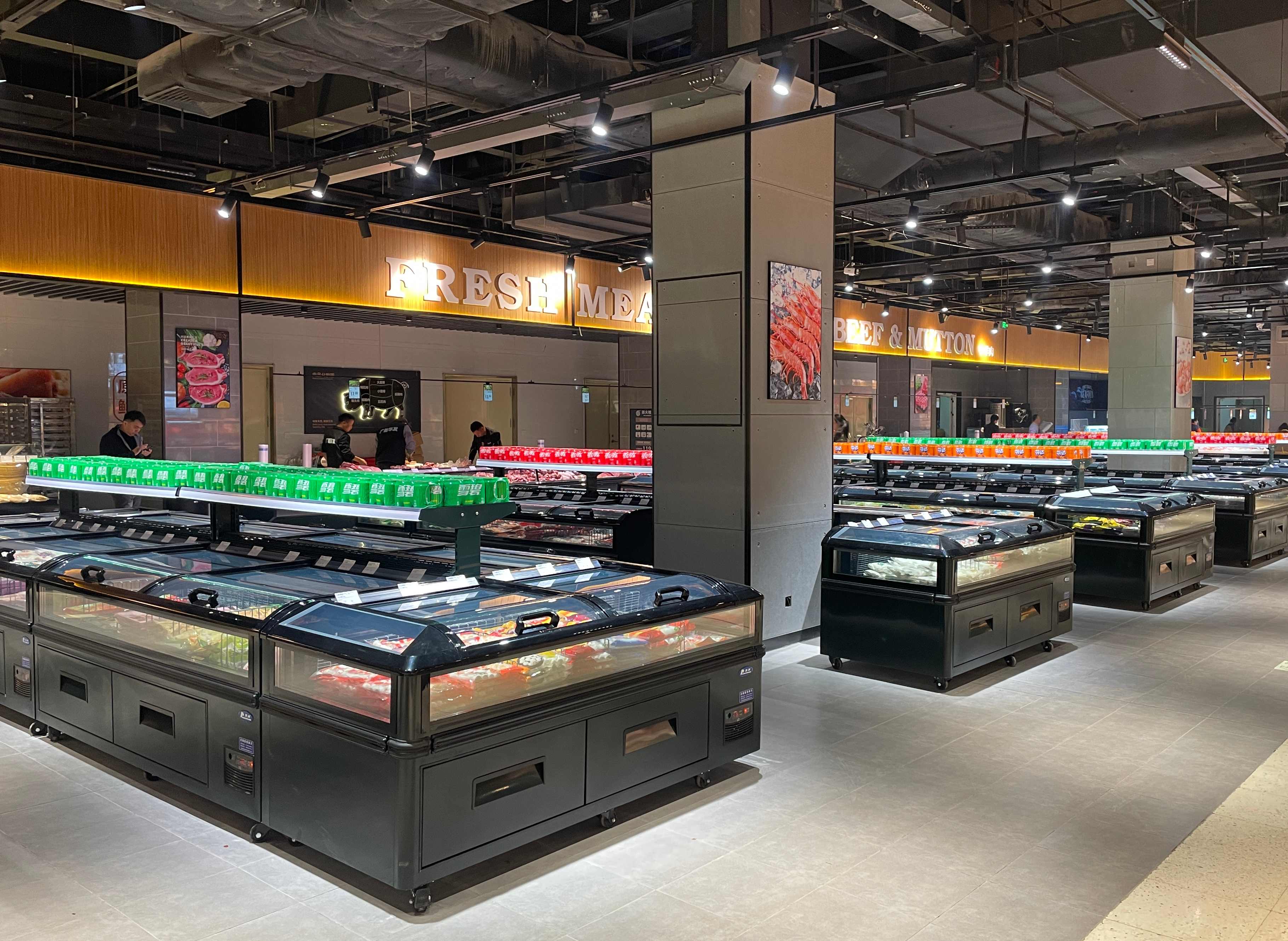
An End Cabinet Freezer is designed for the exposed end of a combined island freezer line. Instead of leaving the end as a blank panel or unused space, it adds a refrigerated display zone visible from the front, side, and aisle approach. This gives the end position practical value while making the complete island layout look coordinated.
The product suits supermarkets, food stores, frozen food sections, and commercial refrigeration projects that use several horizontal cabinets in a row. It can display ice cream, frozen meat, seafood, vegetables, prepared meals, desserts, and promotional groups. Its value comes from combining added capacity, wider visibility, and a cabinet shape that matches the main island line.
The End Position Has Different Display Requirements
The central section of an island freezer is normally viewed from the long aisle. The end section is different because people approach it from several directions.
A well-planned island freezer end cabinet uses this position as a visual transition between aisles. Transparent glass, a curved or angled display surface, and a low upper profile prevent the unit from looking like a solid obstacle. Products remain visible before anyone reaches the side of the main island.
This position can be used for:
- High-turnover frozen food
- Seasonal products
- New package formats
- Ice cream and desserts
- Mixed promotional categories
- Products needing stronger aisle visibility
The end cabinet should guide attention toward the full frozen display while preserving comfortable aisle movement.
Product Structure Must Match the Main Island Freezer
An end cabinet works best when its height, glass shape, base finish, bumper line, and top edge match the adjoining island freezers. Inconsistent proportions can make the installation look fragmented and may create gaps that collect dirt.
A typical End Cabinet Freezer includes an insulated body, transparent display glass, sliding or lifting access panels, internal baskets, refrigeration components, drainage, temperature control, and a base coordinated with the central cabinets. Depending on the project, the unit may use an independent plug-in system or connect to a remote refrigeration plan.
The connection between the end unit and straight cabinets needs attention. Surfaces should align, access panels must remain usable, and service points should not be trapped. Electrical supply, ventilation clearance, and drainage should be planned before positioning the full island.
Wider Viewing Angles Improve Product Recognition
The strongest feature of a frozen food end display is visibility. A person approaching from the cross aisle may see it before the long side of the island, so clear glass becomes part of the display strategy.
A large viewing area reveals package color, product type, and category separation without unnecessary opening. This is useful for ice cream packs, frozen snacks, boxed meals, seafood bags, and other visually identified products.
Glass must remain clear in real store conditions. Insulated glass, suitable frames, effective sealing, and anti-condensation solutions help when humidity changes. Glass selection should therefore be considered together with ambient conditions, cabinet temperature, and opening frequency.
Internal Baskets Define Usable Capacity
The external shape may be curved, rounded, or angled, so internal space is not identical to a straight island freezer. Usable capacity depends heavily on basket design.
Removable baskets and dividers create product zones without blocking cold-air circulation. Smaller packages can stay near the upper viewing area, while heavier cartons or reserve stock remain lower. The arrangement should keep labels visible and prevent products from falling into narrow corners.
A practical layout may include:
1. A front-facing zone for priority products
2. Side zones for complementary categories
3. Lower space for larger packages
4. Upper baskets for compact products
The loading line must remain clear. Filling above the recommended level can disturb the cold-air boundary, increase temperature variation, and reduce visibility.
Stable Freezing Depends on the Complete Design
The end unit needs the same stable frozen conditions as the central cabinets. Insulation, evaporator arrangement, compressor capacity, glass performance, sealing, and defrost control all affect temperature stability.
The end position may receive more cross-aisle air movement. Warm air from entrances, air-conditioning outlets, or busy intersections can disturb the cabinet environment. The refrigeration system should therefore match the actual installation conditions rather than only nominal volume.
A commercial end cabinet freezer should maintain product temperature across the front, sides, and lower zones. Commissioning checks should include several points because one sensor reading may not represent every basket.
Matching End Cabinets Complete the Island Layout
Two end cabinets can be installed at opposite ends of a straight freezer line, creating a continuous refrigerated island with a unified appearance.
This improves floor-space use because the ends become active display areas instead of decorative panels. It also supports category planning. The central section may hold core frozen food, while the ends present ice cream, new products, or seasonal items.
The full line should coordinate:
- Cabinet height and base depth
- Glass color and transparency
- Handle and lid style
- Exterior finish
- Bumper position
- Lighting appearance
- Temperature range
- Service access direction
Consistency makes the installation look like one refrigeration solution rather than several unrelated cabinets.
Cleaning and Service Access Must Remain Practical
Island ends receive frequent contact from carts, baskets, cleaning equipment, and passing traffic. Protective bumpers and durable exterior panels help reduce surface damage.
Rounded corners, removable baskets, accessible drains, and smooth glass tracks simplify cleaning. The connection beside the main island should not create unreachable gaps.
Technicians may need access to controls, condenser areas, fans, or drainage. A compact installation should still leave a workable maintenance route. Plug-in models require clear ventilation openings, while remote systems need accessible pipe routes and valves.
FAQ
What is an End Cabinet Freezer used for?
It is installed at the end of a combined island freezer line to add frozen storage, improve cross-aisle visibility, and complete the cabinet layout.
Can an end cabinet operate independently?
Yes. Some models use a self-contained plug-in system, while others are matched with remote refrigeration. The configuration depends on the project.
What products can be displayed?
It can display ice cream, frozen meat, seafood, vegetables, ready meals, desserts, snacks, and other packaged frozen products within the cabinet temperature range.
What should be confirmed before installation?
Confirm the main island dimensions, connection position, aisle clearance, product type, temperature requirement, glass and basket configuration, electrical supply, ventilation, drainage, and maintenance access.
Post time: Aug-06-2026


