
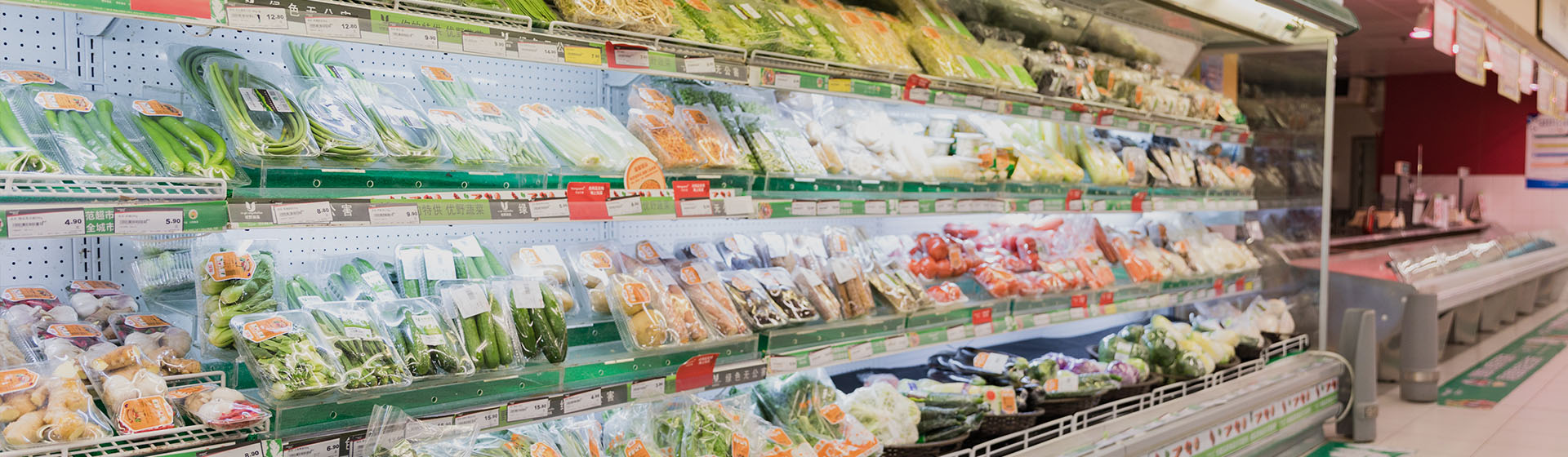
In modern supermarket design, refrigeration equipment is no longer only a storage tool but a key part of product marketing strategy and customer flow management. A double-tier fresh food display cabinet is specifically developed to improve how deli and dairy products are presented, accessed, and preserved in high-traffic retail environments.
By combining vertical space utilization with precise refrigeration control, this equipment helps retailers increase display density while maintaining product freshness and visual appeal throughout the entire sales cycle. It is widely used in supermarkets that aim to balance operational efficiency with strong merchandising performance.
Why Double-Tier Design Matters in Modern Food Retail
The structure of a refrigeration cabinet directly affects how customers interact with products, especially in categories such as dairy and deli items where freshness perception is highly visual.
A double-tier layout introduces a structured presentation system that separates products into two clearly defined display levels, allowing retailers to organize inventory more strategically while improving customer browsing efficiency.
This design is particularly valuable in retail environments where space is limited but product variety is high, as it transforms vertical height into usable commercial display capacity.
Key functional value includes
● Increasing product density without expanding store footprint
● Creating a clear visual hierarchy for different product categories
● Supporting faster product identification for customers
● Improving merchandising flexibility for seasonal or promotional layouts
● Enhancing overall refrigeration efficiency through structured airflow design
Engineering Logic Behind Double-Level Refrigeration Structure
Unlike standard single-layer cabinets, a double-tier fresh food display cabinet is built around a dual-zone refrigeration concept that ensures both levels receive consistent cooling performance.
The internal system is engineered to manage airflow distribution vertically, ensuring that temperature stability is maintained regardless of product load or customer access frequency.
This requires a more advanced structural and mechanical design compared to traditional display units.
Core engineering elements include
● Independent airflow channels supporting each display tier
● Reinforced structural framing to support dual shelving loads
● Transparent insulation glass for maximum product visibility
● High-efficiency compressor systems designed for continuous operation
● Precision-balanced air circulation to avoid temperature layering issues
This engineering approach ensures that both tiers function as a unified cooling system rather than two separate compartments, improving overall refrigeration stability.
Refrigeration Performance and Product Stability Control
In deli and dairy applications, maintaining consistent temperature and humidity levels is essential because even minor fluctuations can affect texture, taste, and shelf life.
Double-tier display cabinets are designed to minimize these risks through continuous environmental monitoring and adaptive cooling control systems.
The refrigeration system is not static but responsive, adjusting its performance based on internal load changes and external environmental conditions.
Key performance mechanisms include
● Real-time temperature adjustment based on internal sensor feedback
● Balanced humidity control to prevent drying or condensation effects
● Rapid cooling recovery after frequent door openings
● Stable airflow circulation to eliminate hot spots
● Automated defrost cycles that maintain uninterrupted operation
This ensures that dairy products such as cheese, yogurt, and milk-based desserts, as well as deli items like prepared meats, remain in optimal condition throughout the day.
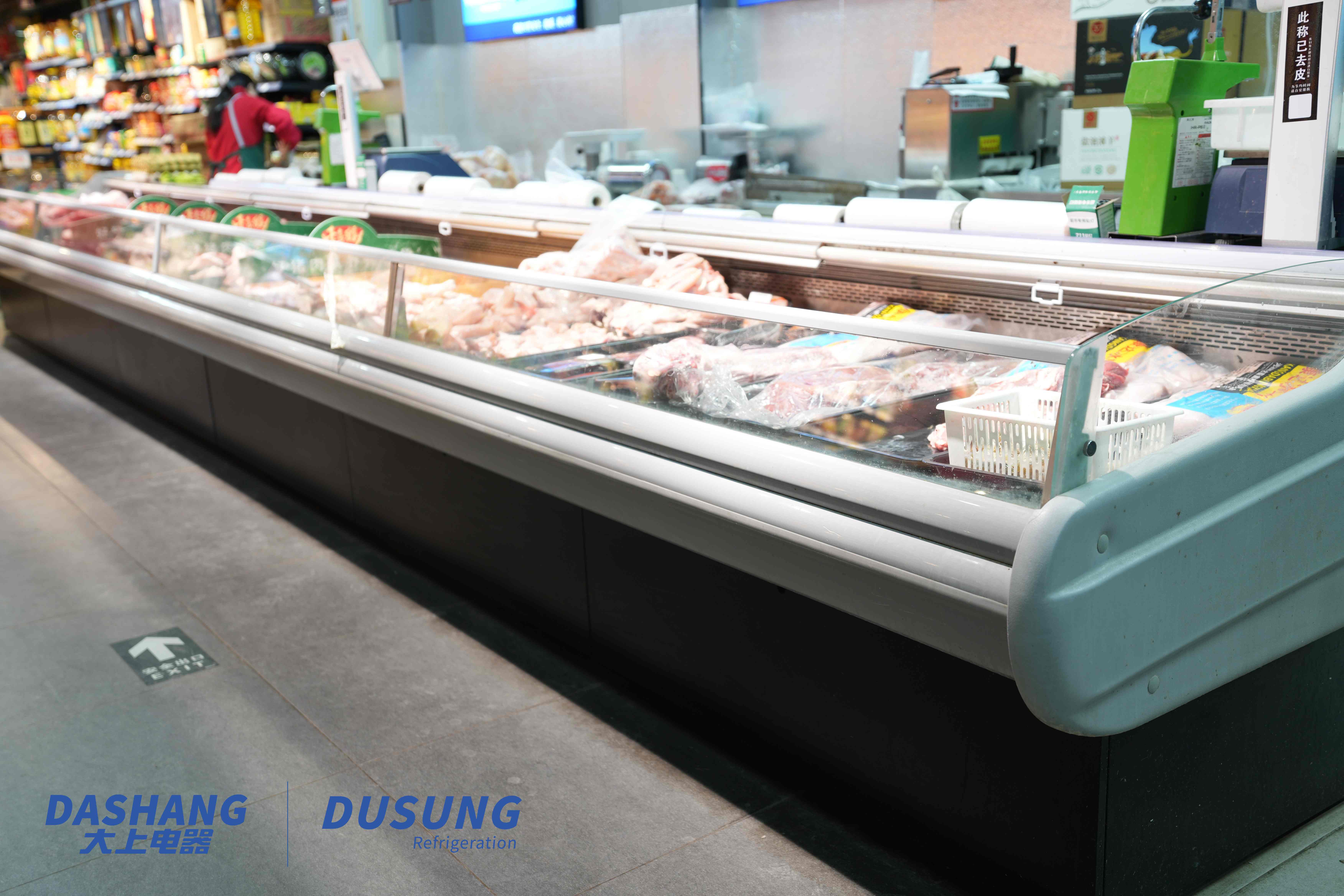
Impact on Merchandising Strategy and Customer Behavior
Beyond refrigeration functionality, the double-tier structure plays a direct role in influencing purchasing decisions by shaping how products are visually organized and presented.
Retail psychology shows that structured layering improves decision speed and increases customer engagement, especially in categories with high product variety.
By dividing products into upper and lower visual zones, retailers can guide attention more effectively and create a more intuitive shopping experience.
Retail advantages include
● Stronger product differentiation through layered presentation
● Improved visibility of premium product categories
● More effective use of eye-level merchandising zones
● Enhanced product storytelling through structured placement
● Increased customer dwell time in refrigerated sections
This makes the equipment not just a storage unit, but a strategic merchandising asset.
Energy Efficiency and Long-Term Operating Value
Energy consumption is one of the most critical operational factors in supermarket refrigeration systems, especially for equipment running continuously in high-demand environments.
Double-tier fresh food display cabinets are designed to improve energy performance through optimized thermal insulation and intelligent cooling distribution.
Instead of increasing cooling load for larger capacity, the system distributes refrigeration more efficiently across vertical layers.
Energy-saving design elements include
● High-density thermal insulation reducing cold air loss
● Low-emissivity glass panels improving heat resistance
● Energy-optimized compressors supporting stable long operation cycles
● LED lighting systems reducing heat output and electricity use
● Aerodynamic airflow design improving cooling efficiency per watt
These improvements help supermarkets reduce operational costs while maintaining consistent product quality and display performance.
Operational Maintenance and System Reliability
In commercial environments where refrigeration equipment operates continuously, maintenance plays a critical role in ensuring long-term reliability and efficiency.
Double-tier systems require structured maintenance procedures to preserve airflow balance and refrigeration stability across both display levels.
Maintenance focus areas include
● Regular cleaning of airflow channels to maintain circulation efficiency
● Inspection of sealing components to prevent energy leakage
● Monitoring of temperature sensors for calibration accuracy
● Cleaning of internal surfaces to ensure food hygiene compliance
● Preventive servicing to reduce unexpected system downtime
With proper maintenance, these systems can maintain stable performance over extended operational cycles even under heavy retail usage.
Conclusion
A double-tier fresh food display cabinet represents a modern approach to refrigerated merchandising that combines space efficiency, temperature stability, and structured product presentation.
By integrating vertical display architecture with advanced refrigeration engineering, it allows retailers to maximize commercial space while maintaining strict freshness standards for deli and dairy products.
As supermarket competition continues to intensify, equipment that enhances both operational efficiency and customer experience becomes increasingly important. Double-tier display systems provide a balanced solution that supports long-term retail performance, improved product visibility, and stronger sales outcomes.
FAQ
1. What products are suitable for a double-tier fresh food display cabinet?
It is suitable for deli products, cheese, dairy items, refrigerated ready-to-eat foods, and desserts that require stable temperature control.
2. What are the advantages of a double-tier structure compared to a single-tier cabinet?
A double-tier structure increases display capacity within the same floor space while improving product categorization and visual hierarchy.
3. Is this equipment energy efficient?
Yes, it uses high-efficiency compressors, thermal insulation materials, and LED lighting systems to effectively reduce overall energy consumption.
4. How often should maintenance be performed?
Regular cleaning is recommended, along with periodic professional maintenance to ensure long-term stable operation and cooling efficiency.
Post time: May-25-2026


