
In commercial refrigeration, storage depth, temperature stability, and product accessibility are essential factors that directly influence equipment performance. The Deep Island Freezer is designed to provide large-capacity frozen storage while maintaining efficient cooling and organized product presentation. Compared with standard island freezers, the deeper cabinet structure allows higher storage volume and improved space utilization, making it suitable for environments requiring continuous frozen product storage and display.
With advancements in refrigeration engineering, modern deep island freezers now combine thermal efficiency, durable construction, and optimized internal organization into a single integrated product solution.
What Is a Deep Island Freezer?
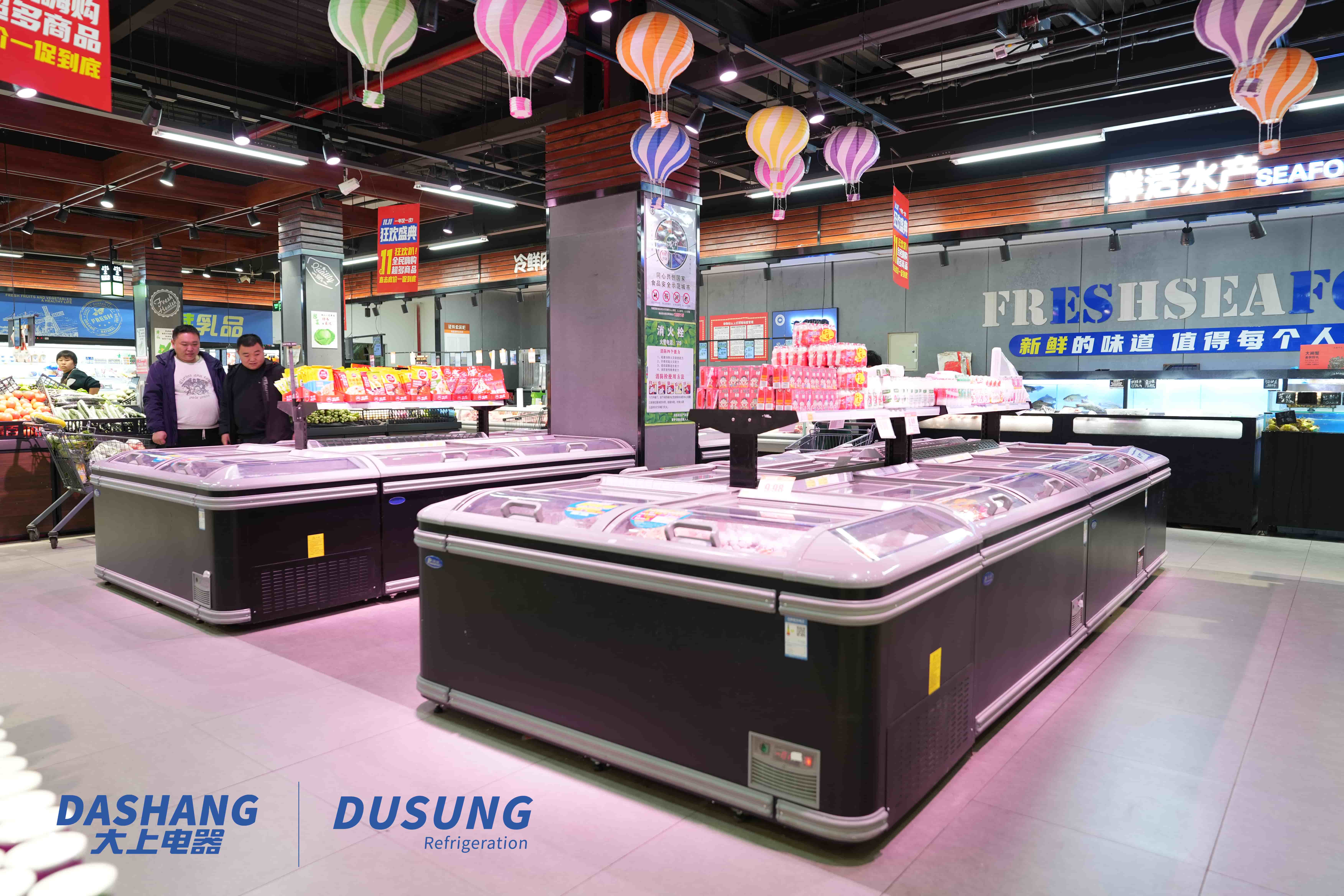
A Deep Island Freezer is a horizontal commercial freezer designed with an enlarged cabinet depth to increase frozen storage capacity. It is commonly equipped with sliding glass lids or transparent top covers, allowing products to remain visible while reducing cold air loss during operation.
Unlike upright freezers, the island-style structure provides a lower center of gravity and a wider storage layout, which helps maintain stable low temperatures and supports bulk product organization. The deep internal configuration also improves loading flexibility for different frozen product sizes and packaging formats.
Structural Design and Cabinet Construction
The structure of a deep island freezer is specifically engineered to support heavy-duty freezing applications while ensuring long-term durability.
● Deepened cabinet body
The increased internal depth provides higher storage capacity without significantly increasing floor occupation.
● Reinforced external shell
The cabinet exterior is generally manufactured from powder-coated steel or corrosion-resistant metal materials for improved structural stability.
● Thick insulation layer
High-density polyurethane insulation minimizes heat transfer and maintains consistent low temperatures.
● Integrated frame structure
The reinforced base and sidewall design improve load-bearing performance and overall durability.
Sliding Glass Lid System and Visibility Features
The lid structure of a Deep Island Freezer combines accessibility with thermal protection.
● Tempered sliding glass lids
Provide clear visibility while reducing cold air leakage during opening and closing operations.
● Anti-condensation glass treatment
Helps maintain transparent visibility even in humid retail environments.
● Smooth sliding rail system
Ensures stable and low-resistance operation over extended usage cycles.
● Split-opening configuration
Allows partial access to the freezer interior, reducing unnecessary temperature fluctuation.
Cooling System and Low-Temperature Performance
A deep island freezer requires a high-performance refrigeration system to maintain stable freezing conditions across a larger internal space.
● High-efficiency compressor system
Provides strong cooling capacity and rapid temperature recovery after lid openings.
● Static or fan-assisted cooling
Static systems support stable freezing environments, while fan-assisted circulation improves temperature consistency.
● Uniform airflow distribution
Optimized airflow channels ensure even cooling throughout the entire cabinet depth.
● Ultra-low temperature capability
Typically operates between -18°C and -25°C for reliable frozen product preservation.
Internal Storage Configuration
The internal layout of a Deep Island Freezer is designed to maximize storage flexibility while maintaining organized product separation.
● Removable storage baskets
Allow products to be grouped and accessed more efficiently.
● Adjustable divider systems
Support categorized storage for different frozen product types.
● Large-capacity storage area
Accommodates bulk packaging and oversized frozen items.
● Open internal airflow pathways
Prevent blocked circulation and maintain temperature consistency.
Thermal Efficiency and Energy-Saving Design
Energy efficiency is closely connected to insulation quality and airflow management in deep island freezers.
● High-density insulation materials
Reduce external heat infiltration and improve thermal retention.
● Optimized refrigerant circulation
Enhances cooling performance while minimizing energy consumption.
● Tight lid sealing structure
Prevents cold air leakage and stabilizes internal temperatures.
● Balanced cooling system design
Reduces compressor workload and improves operational efficiency.
Defrosting and Moisture Management
Ice buildup and condensation can affect freezing performance, making moisture management an important product feature.
● Automatic or manual defrost systems
Depending on model configuration, frost removal can be controlled efficiently.
● Condensate drainage system
Allows water generated during defrost cycles to be removed effectively.
● Frost-resistant interior structure
Helps minimize ice accumulation inside the cabinet.
● Moisture-controlled airflow design
Improves internal stability and reduces condensation formation.
Durability and Material Engineering
Long-term operational stability depends heavily on material quality and structural engineering.
● Corrosion-resistant coating
Protects the cabinet exterior from environmental exposure and wear.
● Heavy-duty sliding lid construction
Designed for repeated opening and closing without structural deformation.
● Reinforced edge protection
Improves impact resistance in high-traffic environments.
● Stable support base
Ensures structural balance even when the cabinet is fully loaded.
Noise Reduction and Operational Stability
The operational quality of a deep island freezer is reflected in its vibration and sound control systems.
● Low-noise compressor technology
Maintains quieter operation while delivering strong freezing performance.
● Anti-vibration structural design
Reduces mechanical stress and extends equipment lifespan.
● Stable airflow channels
Maintain smooth internal cooling circulation with minimal turbulence.
Product Adaptability and Storage Flexibility
One advantage of the Deep Island Freezer is its ability to accommodate multiple frozen product categories.
● Frozen meat storage
Supports stable low-temperature preservation for packaged meats.
● Ice cream and frozen dessert storage
Maintains product texture and prevents temperature fluctuation.
● Frozen seafood preservation
Provides consistent cooling for moisture-sensitive frozen products.
● Bulk frozen food organization
Suitable for large-volume frozen packaging and mixed product storage.
Conclusion
The Deep Island Freezer is a specialized commercial refrigeration product designed around storage depth, thermal stability, and structural durability. Through its enlarged cabinet design, optimized cooling system, and efficient insulation structure, it delivers stable low-temperature performance while supporting flexible frozen product organization.
From reinforced construction and sliding glass systems to airflow optimization and moisture management, every design element contributes to long-term freezing efficiency and operational reliability. For applications requiring large-capacity frozen storage with stable performance, a deep island freezer provides a technically advanced and durable solution.
FAQ
- What is the main advantage of a deep island freezer compared with standard island freezers?
Its increased cabinet depth provides larger frozen storage capacity and improved internal organization. - What temperature range does a deep island freezer typically maintain?
Most models operate between -18°C and -25°C for frozen product preservation. - Why are sliding glass lids important in this freezer design?
They improve product visibility while reducing cold air loss during access. - How does the freezer maintain even cooling in a deep cabinet structure?
Through optimized airflow channels and balanced refrigeration circulation systems.
Post time: May-06-2026


