
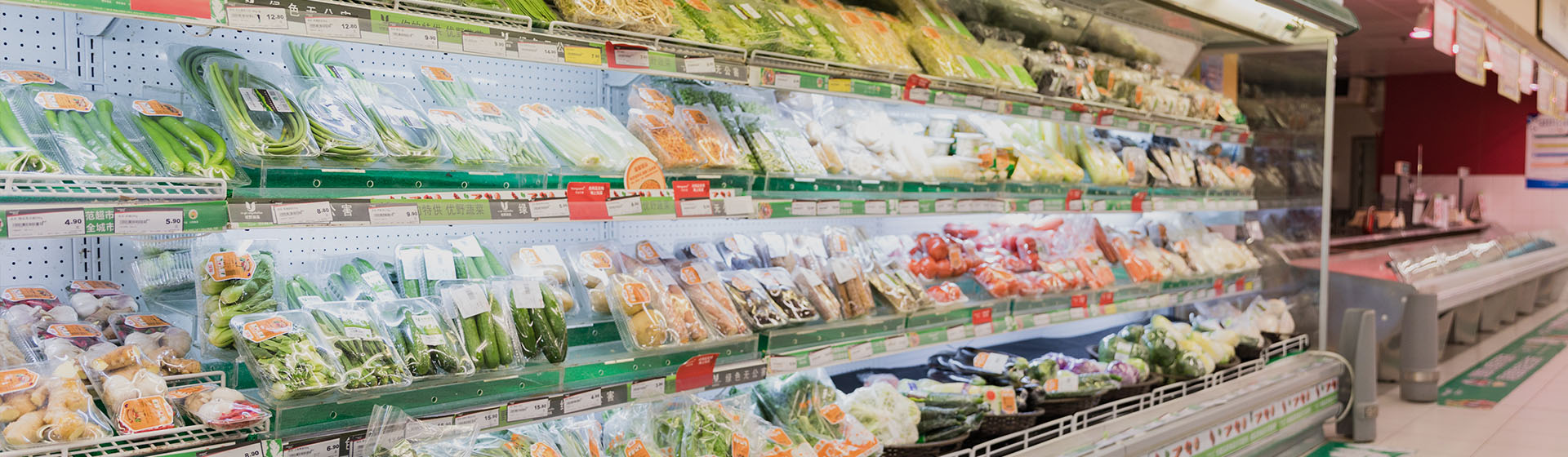
A commercial fridge is one of the most frequently used pieces of equipment in restaurants, supermarkets, cafés, hotels, convenience stores, catering facilities, and professional kitchens. Unlike a household refrigerator, it is expected to fit into a working environment where products are moved, accessed, replenished, and organized throughout the day.
This means the value of a commercial fridge is not determined by capacity alone. The cabinet configuration, door design, internal layout, accessibility, and installation environment can all affect how easily staff work around the equipment.
A useful commercial refrigerator should support the food operation rather than become another obstacle within it.
What Types of Commercial Fridge Are Used in Professional Environments?
Commercial refrigeration is available in several formats because food businesses have different spatial and operational requirements.
An upright commercial fridge provides substantial vertical storage and is suitable for operations that need a larger organized inventory.
An undercounter fridge can place chilled ingredients close to preparation areas without taking up additional wall space.
A countertop or worktop refrigerator can combine food preparation space with refrigerated storage.
A display commercial fridge focuses more strongly on product visibility and is often used in retail environments.
These configurations are not simply different shapes of the same product. Each one supports a different working pattern.
Why Does Door Design Matter?
In a commercial kitchen or retail environment, the refrigerator door may be opened repeatedly throughout the day.
A glass door allows users to see the products before opening the cabinet. This can be useful when staff need to locate ingredients quickly or when the refrigerator is customer-facing.
Solid doors provide a more enclosed storage environment and are commonly used where product presentation is not a priority.
Sliding doors can be useful where the available space does not allow a conventional hinged door to swing outward.
The most suitable door configuration depends on the surrounding workspace and the way products are accessed.
How Should the Interior Be Organized?
The internal layout of a commercial fridge has a direct impact on workflow.
If products are placed without a clear system, staff may need to search through multiple shelves to find one ingredient. This can increase door-open time and make the working process less efficient.
A more practical arrangement may separate products according to use, category, or turnover. Frequently used ingredients can be positioned in accessible areas, while reserve stock can be stored where it does not interfere with daily work.
Adjustable shelving can also help accommodate containers of different sizes.
The objective is not to create a perfect-looking refrigerator. It is to create an internal layout that makes everyday work easier.
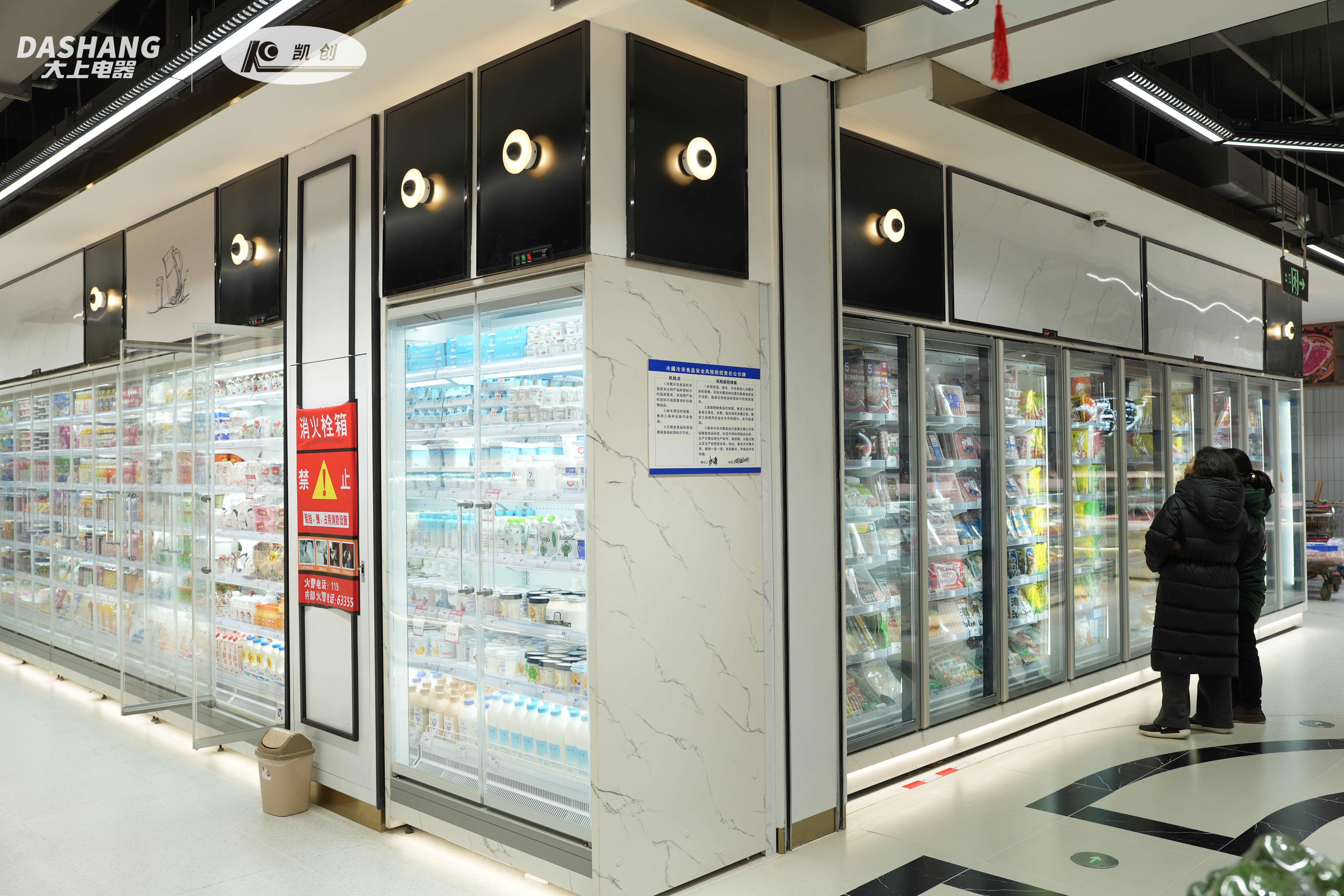
Why Does Airflow Matter When Loading a Commercial Fridge?
A commercial refrigerator needs sufficient internal circulation to distribute cooling effectively.
If products are packed too tightly or placed directly against airflow paths, circulation can be restricted.
This is especially important in busy operations where staff may be tempted to use every available space.
A well-used commercial fridge should have enough capacity for the expected inventory while still allowing products to be organized and accessed without excessive congestion.
How Does the Installation Environment Affect Refrigeration?
Commercial refrigeration equipment is influenced by the environment around it.
A refrigerator installed in a hot kitchen may experience a greater refrigeration load than one operating in a cooler storage room. Equipment placed near ovens, cooking appliances, or direct sunlight may also face additional heat.
This does not mean that commercial fridges cannot operate in demanding environments. It means the equipment and installation conditions need to be considered together.
Ventilation, clearance, surrounding temperature, and equipment positioning can all influence practical performance.
Why Is Access Speed Important in Commercial Food Operations?
Food-service staff often work under time pressure. The refrigerator is part of a larger sequence that may include preparation, cooking, plating, serving, and cleaning.
If an ingredient takes too long to locate, that delay can be repeated throughout the day.
For this reason, access should be considered when arranging the refrigerator. Products that are used constantly should not be hidden behind rarely used inventory.
A well-organized refrigerator can support a smoother workflow without requiring staff to repeatedly rearrange the cabinet.
How Does Commercial Refrigeration Differ Between Businesses?
The same commercial fridge configuration may not work equally well in every business.
A restaurant may prioritize ingredient access and compact placement near preparation areas.
A supermarket may need strong product visibility and customer access.
A hotel kitchen may need to manage larger quantities of ingredients across several categories.
A convenience store may require refrigerated display for beverages and packaged food.
These differences explain why commercial refrigeration is available in many configurations rather than as one standard product.
What Role Does Cleaning Play?
Commercial refrigeration is part of the food-handling environment, so cleaning should be practical enough to fit into everyday routines.
Removable shelves, accessible internal surfaces, and easy-to-reach corners can make regular cleaning less time-consuming.
Door seals also deserve attention because food residue and wear can affect their condition over time.
Cleaning is therefore not only a hygiene issue. It is also part of maintaining the refrigerator as a reliable piece of working equipment.
How Can Everyday Use Affect Refrigeration Efficiency?
The way a commercial fridge is used can influence its workload.
Repeatedly leaving doors open, blocking internal airflow, placing the unit beside unnecessary heat sources, or ignoring damaged seals can all increase the demand placed on the refrigeration system.
Simple operating habits can help:
- Keep products organized so they can be located quickly.
- Avoid blocking air circulation areas.
- Close doors when products have been retrieved.
- Keep the surrounding area suitable for refrigeration equipment.
- Inspect door seals and internal components regularly.
These practices help the refrigerator perform more consistently in everyday use.
Choosing a Commercial Fridge Around the Workflow
The most useful commercial fridge is not necessarily the largest or most feature-heavy model. Its value comes from how well its configuration fits the business.
Capacity, door style, internal organization, installation space, product turnover, and access frequency should be considered together.
A restaurant, supermarket, hotel, and convenience store may all need commercial refrigeration, but they may need very different configurations.
That is why the starting point should be the working environment rather than a generic list of refrigerator specifications.
FAQs
Why do commercial fridges come in so many different configurations?
Professional food environments have very different space and workflow requirements. Upright, undercounter, worktop, and display configurations allow refrigeration to fit different preparation, storage, and retail situations.
Is a glass door always better than a solid door?
No. A glass door is useful when product visibility matters, while a solid door may be more appropriate for back-of-house storage. The better configuration depends on how the refrigerator will be used.
Why can overloading a commercial fridge reduce its practical performance?
Excessive loading can make products harder to access and may interfere with internal airflow. Efficient refrigeration requires both sufficient capacity and sensible product organization.
How does refrigerator placement affect operation?
The surrounding temperature and heat sources can influence refrigeration workload. Proper positioning and sufficient ventilation can help the equipment operate more effectively.
Post time: Aug-21-2026


