
Seasonal changes influence what customers drink, how beverages are packaged, and how quickly different products sell. Cold water, sparkling drinks, and ready-to-drink teas may move faster during warmer months, while juice, flavored milk, and other packaged beverages may follow different demand patterns throughout the year. Retailers need to adjust their refrigerated storage without making daily restocking unnecessarily complicated.
A Beverage Fridge Glass Door can support these changes by keeping refrigerated products visible and organized while allowing staff to modify the product mix as demand shifts. However, seasonal flexibility depends on more than the refrigerator itself. Shelf arrangement, stock rotation, packaging dimensions, and replenishment routines all influence how effectively the available space is used.
How Seasonal Demand Changes Beverage Storage
Beverage demand rarely increases equally across every product category. During hot weather, customers may purchase chilled water, sports drinks, and carbonated beverages more frequently. In cooler periods, other products may account for a larger share of sales. These changes affect the quantity of each item that needs to remain refrigerated and the amount of shelf space it should occupy.
Keeping the same arrangement throughout the year can create avoidable problems. Fast-selling beverages may run out before the next replenishment, while slower-moving products take up space that could serve more immediate demand. Excess stock can also become harder to manage when the product mix changes.
The practical response is to adjust storage according to actual sales patterns. Products with higher turnover may need more accessible shelf positions or larger allocations of space. Items with stable, lower demand can occupy smaller sections, provided that their storage requirements remain suitable.
A Beverage Fridge Glass Door makes it easier for staff to review the product mix at a glance. Clear visibility can help identify empty spaces, uneven stock levels, and products that need replenishment before they become unavailable.
Planning Shelf Space for Different Beverage Categories
Seasonal changes often affect not only how much stock is needed but also which packaging formats are most common. A display that mainly holds slim cans in one season may need to accommodate taller bottles or wider containers in another. If shelf spacing is unsuitable, the usable capacity can be lower than the refrigerator’s nominal storage volume suggests.
Shelf planning should begin with the dimensions and movement of the products being stored. Taller bottles may require more vertical clearance, while small cans can often be arranged in compact rows. Large containers need enough room for removal without disturbing adjacent products. These practical differences influence how many items can be stored and how easily staff can maintain the display.
When seasonal demand changes, review the arrangement before increasing inventory. Adjustable shelves can help accommodate different container heights, but every adjustment should preserve stable placement and convenient access. Overcrowding shelves simply to fit more products can make restocking slower and block the movement of refrigerated air.
A well-planned Beverage Fridge Glass Door should support a changing product assortment without requiring a complete rearrangement every time demand shifts. Keeping frequently sold items in consistent locations can also help staff replenish stock more efficiently.
Common Seasonal Storage Problems and Their Solutions
Seasonal transitions can reveal weaknesses in storage routines. These problems are often related to inventory planning and product placement rather than a sudden change in refrigeration performance.
- Too much space allocated to slow-moving drinks: Compare recent sales with the current shelf arrangement. Reduce unnecessary allocations for products with declining demand and reserve suitable space for faster-moving alternatives.
- Frequent shortages during peak periods: Establish replenishment levels based on sales speed and delivery frequency. Check high-turnover items more often instead of relying on a single daily inspection.
- Packaging changes that disrupt shelf layout: Review bottle heights, can sizes, and container widths before introducing a new seasonal assortment. Adjust shelves where possible and test whether products can be removed without moving neighboring items.
- Older stock left behind after a product change: Rotate inventory when replenishing shelves. Move earlier stock forward and place newer stock behind it, while checking product dates and following the storage instructions for each beverage.
- Uneven product availability across the refrigerator: Review how different categories are distributed. Avoid concentrating all popular drinks in one crowded area if other suitable shelf space is available.
These adjustments help maintain an orderly display while reducing unnecessary handling. They also make seasonal changes easier to repeat, because staff can follow a consistent process instead of rebuilding the arrangement from scratch.
Keeping Refrigerated Conditions Consistent During Seasonal Changes
A different product mix can change how often the refrigerator is opened, how quickly shelves are replenished, and how much stock is introduced at one time. During busy periods, staff may load multiple cases in quick succession or leave the door open while arranging products. These practices can temporarily affect the conditions inside the cabinet.
Seasonal planning should therefore include operating routines, not just shelf allocation. Check the displayed temperature according to the equipment instructions, keep door seals clean and intact, and avoid leaving the door open longer than necessary. When loading new beverages, follow the recommended storage conditions and do not assume that a refrigerator can rapidly cool large quantities of warm stock under every operating condition.
Air circulation also matters. Products should not obstruct vents or be packed so tightly that refrigerated air cannot move as intended. If the cabinet repeatedly struggles to maintain its required temperature, inspect loading practices and door closure first. Persistent temperature deviations may indicate a need for professional assessment.
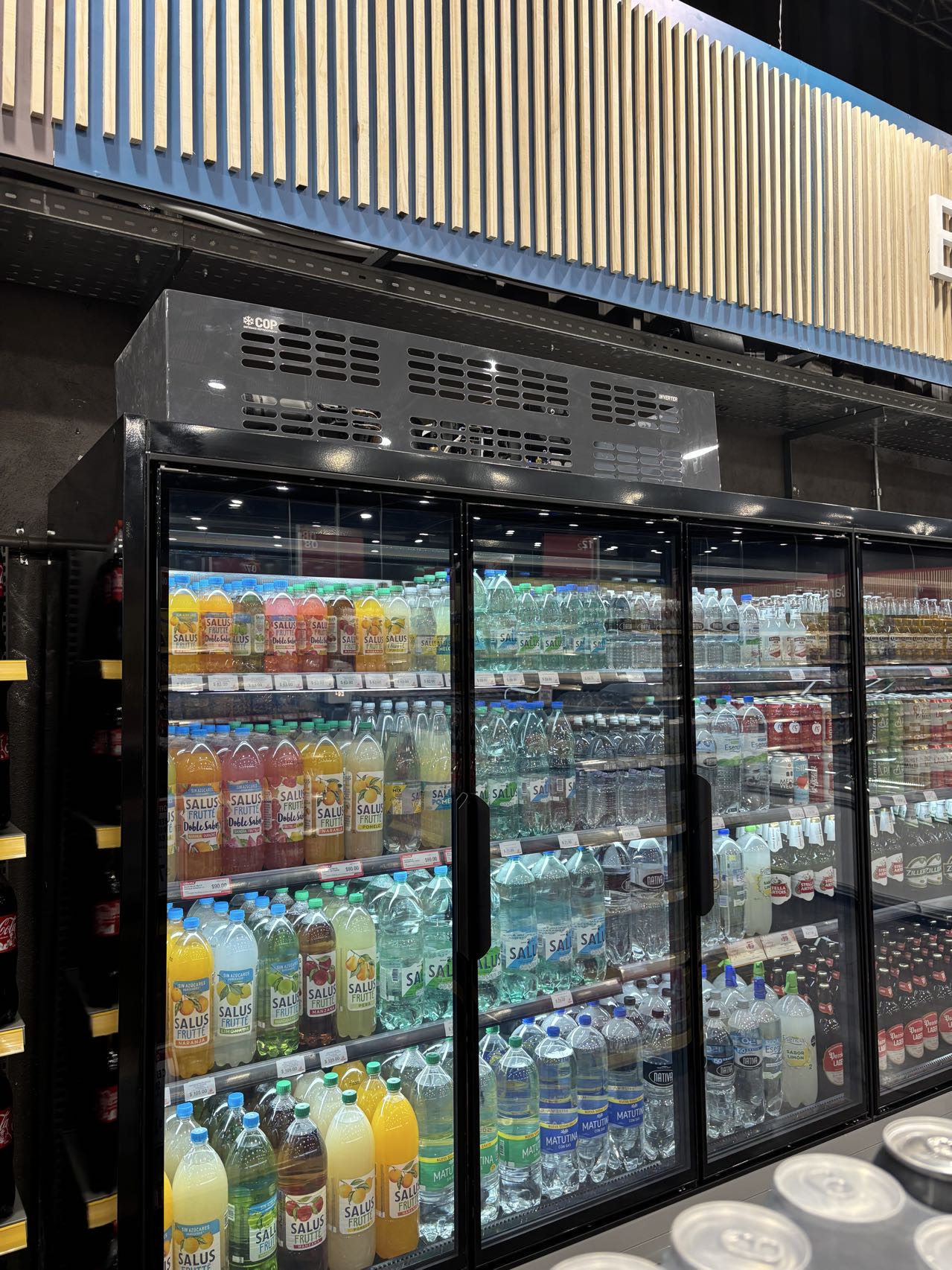
A Beverage Fridge Glass Door is most useful when its storage layout and operating routine work together. Changing the product assortment should not compromise the temperature conditions needed to preserve beverage quality.
Building a Repeatable Seasonal Restocking Routine
A repeatable process makes it easier to respond to changing demand without relying on guesswork. Rather than redesigning the entire refrigerator each season, staff can review sales, identify the products that need more or less space, and make targeted adjustments.
Useful checks include:
- Review sales and remaining inventory before changing the product mix.
- Confirm that shelf spacing suits the incoming containers.
- Set replenishment priorities for fast-moving beverages.
- Rotate older stock and check product dates during every restocking cycle.
- Monitor cabinet temperature and ensure that the door closes properly after loading.
The process should also account for delivery schedules and available backroom storage. Increasing the amount of a seasonal product in the refrigerator is not always necessary if additional stock can be stored appropriately elsewhere and replenished as needed. The goal is to maintain availability without overfilling the cabinet or making daily handling less efficient.
Matching Beverage Refrigeration to Changing Retail Needs
Retail environments experience different seasonal patterns depending on their customers, location, and product range. A convenience store may prioritize quick access to popular individual drinks, while a café may need room for several beverage categories and different packaging sizes. The most useful refrigerator arrangement is therefore one that fits the actual assortment and can be adjusted as sales change.
When evaluating a Beverage Fridge Glass Door, consider the usable shelf layout, visibility of stored products, access for restocking, and ability to maintain suitable refrigerated conditions during regular operation. These practical requirements help determine whether a unit can support both peak-season demand and quieter periods. Dashang Global offers commercial refrigeration solutions for different retail and food-service settings. Matching equipment configuration to the intended application can help businesses establish a more practical refrigerated display and adapt it to changing product requirements over time.
Conclusion
Seasonal beverage demand requires retailers to manage inventory, shelf space, and refrigerated conditions as a connected process. Adjusting product allocations, accommodating different packaging formats, rotating stock, and maintaining consistent operating routines can help reduce shortages and make better use of available capacity. A well-organized Beverage Fridge Glass Door supports these efforts by keeping products visible and accessible while allowing the display to evolve with changing customer needs.
FAQ
1. How can retailers identify which beverages deserve more space during peak season?
Compare sales velocity, stockout frequency, and replenishment lead times to identify products that need more frequent restocking or a larger share of refrigerated space.
2. Should seasonal beverages replace regular products completely?
Not necessarily. Retaining space for consistently popular drinks helps maintain a reliable core assortment, while temporary adjustments can accommodate seasonal products without disrupting everyday availability.
3. What happens when seasonal beverage demand is difficult to predict?
Use smaller initial stock allocations and review sales frequently. Gradual adjustments help limit excess inventory while allowing retailers to respond when demand becomes clearer.
4. When does a beverage fridge need additional storage support during peak season?
Additional capacity may be necessary when the cabinet cannot accommodate the required product range without obstructing airflow, restricting access, or causing frequent stock shortages despite efficient replenishment.
Post time: Oct-28-2026


