
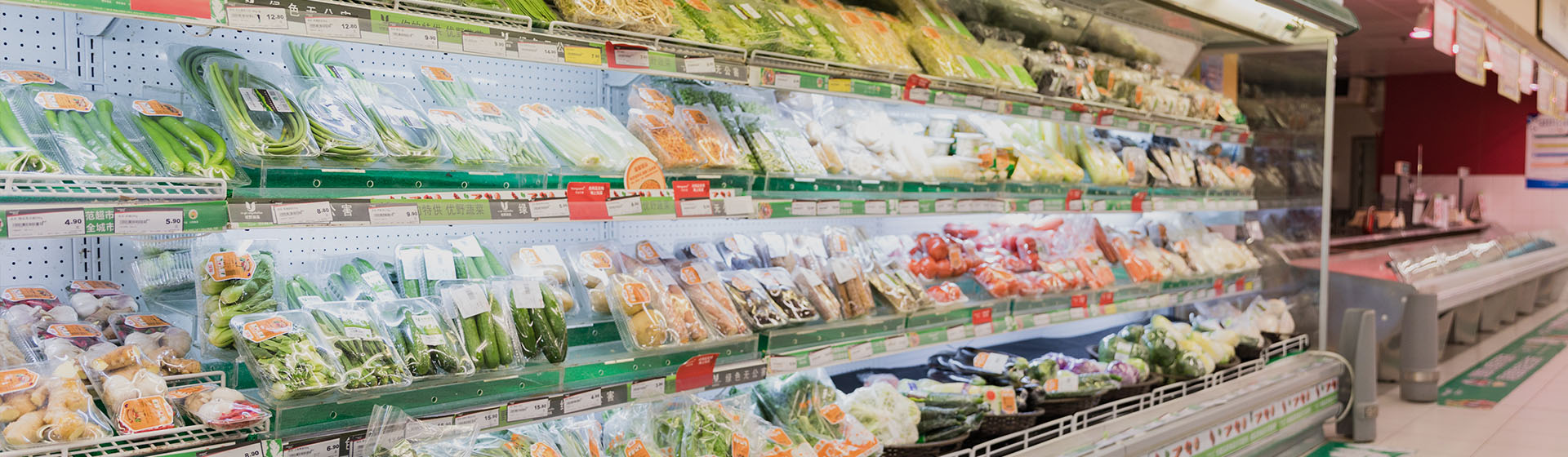
A Bakery Display Cabinet must present bread, cakes, pastries, sandwiches, and desserts clearly while protecting the qualities that make them appealing. A bright display is not enough if cream cakes become warm, bread dries quickly, or condensation covers the glass. Strong refrigeration is also unhelpful if cold air damages delicate surfaces.
For a bakery, café, hotel, dessert shop, or food service area, the cabinet becomes part of product handling. Temperature, humidity, airflow, shelf position, lighting, and access frequency all affect product quality during display. The correct cabinet should therefore be matched to the actual product range rather than selected only by external size.
Different Bakery Products Lose Quality in Different Ways
Bakery products do not react to the display environment in the same way. Crusty bread needs protection from excessive moisture, while cream cakes and mousse desserts require controlled refrigeration. Cookies may soften in humid air, but sliced cakes can dry out if airflow is too strong.
A practical display plan separates products according to how they change over time:
- Bread and rolls can lose crust quality when humidity is too high.
- Cream-filled cakes need a stable chilled environment.
- Chocolate decorations may lose their appearance if temperature fluctuates.
- Fruit-topped desserts can release moisture onto trays.
- Sandwiches and savory pastries require cooling and hygienic separation.
- Cookies and dry pastries need protection from ambient moisture.
One cabinet arrangement should not be expected to handle every bakery product equally well. The display condition should follow the product.
Ambient and Refrigerated Display Zones Serve Different Purposes
A Bakery Display Cabinet may be designed for ambient display, refrigerated display, or a combination of both. The correct format depends on the product and display duration.
Ambient Display for Dry Products
Ambient cabinets are commonly used for bread, cookies, packaged pastries, and items that do not require refrigeration. Their main functions are visibility, dust protection, orderly presentation, and convenient access.
Ventilation still matters. A completely sealed space may trap moisture from warm products, while an overly open cabinet may expose food to drafts and dust. Products should usually be cooled appropriately before display.
Refrigerated Display for Sensitive Products
Refrigerated cabinets suit cream cakes, cheesecakes, mousse desserts, fruit pastries, sandwiches, and other temperature-sensitive foods. The system must maintain the required temperature without directing harsh cold air onto exposed surfaces.
A cabinet that is too warm can shorten display life. One that is unnecessarily cold may harden fillings, dull glazes, or increase energy use. Stability matters more than an extreme setting.
Airflow Should Cool Without Drying the Product
Air circulation supports temperature consistency, but direct or excessive airflow can damage bakery products. Cakes may develop dry edges, whipped cream can lose its smooth appearance, and delicate decorations may become unstable.
Balanced airflow should reach all display levels without creating strong cold jets across the products. Shelf spacing, outlet position, return-air design, and loading depth all influence the result.
When loading the cabinet:
1. Keep air outlets and return-air openings clear.
2. Avoid pushing trays tightly against the rear panel.
3. Leave small spaces between large products.
4. Do not stack packaging above the loading line.
5. Check temperatures on upper, middle, and lower shelves.
6. Place sensitive products in the most stable zones.
Good airflow is controlled movement that maintains temperature without visible quality loss.
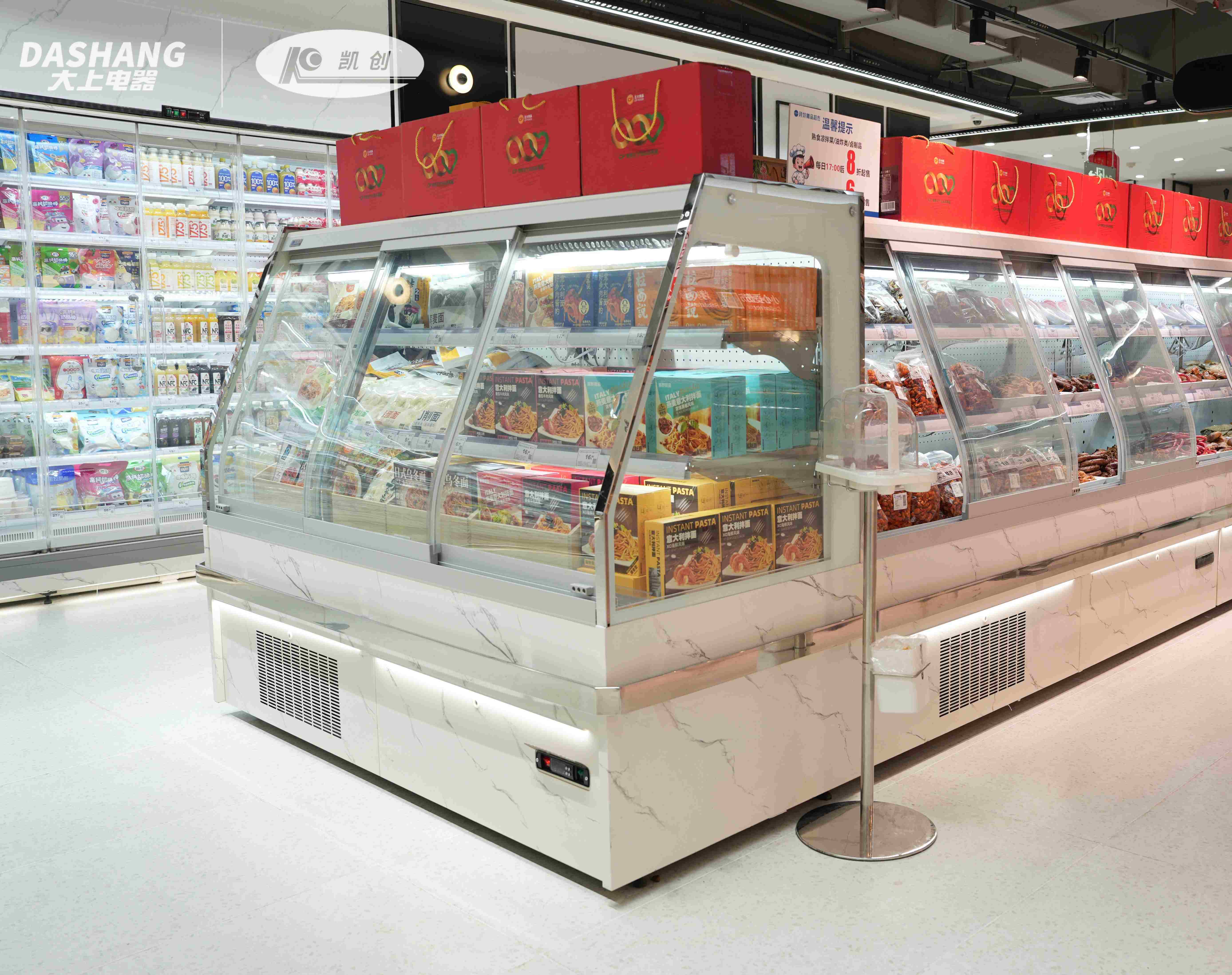
Glass, Lighting, and Viewing Angles Shape the Display
The front glass determines how clearly products can be seen. Curved glass creates a soft display line, while straight glass may provide a modern appearance and easier alignment with other equipment.
Cleaning and access also matter. Hinged, sliding, or lift-up glass structures affect how staff reach trays and clean inner surfaces.
Lighting should show the true color and detail of the products. Excessively warm light can make cream look yellow, while strong reflections may hide labels. LED lighting is often used because it provides clear illumination with relatively low heat output.
An effective lighting arrangement:
- illuminates every shelf without dark corners;
- avoids glare on the front glass;
- does not heat the top shelf;
- makes labels readable;
- keeps color consistent across the display.
Shelf Planning Should Follow Product Size and Turnover
A large internal volume does not automatically create a useful display. Shelf depth, spacing, angle, and load capacity must match trays and packaging.
High-turnover products should be easy to reach. Large celebration cakes need wider clearance, while small desserts benefit from tiered presentation. Adjustable shelves make it easier to change the layout for seasonal products.
A useful shelf plan should answer:
- Can the largest product fit without touching the glass or airflow path?
- Are smaller items visible behind taller products?
- Can trays be removed without disturbing nearby items?
- Is there enough space for cleaning?
Clear product zones simplify stock rotation and reduce open-door time during restocking.
Condensation Is Often an Environmental Problem
Fogged glass is not always caused by a cabinet defect. High room humidity, warm products, frequent opening, poor air-conditioning control, or damaged seals can cause condensation.
Heated glass or anti-condensation structures improve visibility, but the surrounding conditions still matter. A refrigerated cabinet should not be installed beside an entrance bringing in humid air, directly under an air-conditioning outlet, or next to ovens and proofing equipment.
If condensation appears, check:
- room temperature and humidity;
- door and gasket condition;
- product temperature before loading;
- drain and defrost operation;
- cabinet ventilation clearances;
- nearby heat or moving air.
Correcting the environment may be more effective than lowering the temperature setting.
Cleaning Access Affects Daily Food Safety
A cabinet used for cakes, cream, fruit, chocolate, and pastry crumbs needs regular cleaning. Spills can collect around shelf supports, door tracks, drains, and lighting covers.
A practical cabinet should provide removable shelves, smooth surfaces, accessible drains, and room to clean the glass from both sides. Cleaning should include:
- removing crumbs and damaged packaging;
- wiping shelves and tray supports;
- cleaning glass without abrasive tools;
- checking drains for blockage;
- inspecting door tracks and seals;
- keeping air grilles free from debris.
The cabinet should be cleaned and restarted according to its operating instructions.
FAQ
1. What products can be placed in a Bakery Display Cabinet?
It can display bread, cakes, pastries, cookies, sandwiches, desserts, and other bakery items. Products requiring refrigeration should be placed only in a cabinet designed for the necessary chilled temperature.
2. Why do cakes dry out inside a refrigerated bakery cabinet?
Drying may be caused by excessive airflow, direct cold air, long display time, low humidity, or insufficient product protection. Shelf position and loading should also be checked.
3. Why does the front glass become foggy?
Fogging may result from high humidity, frequent opening, warm product loading, damaged seals, or installation near entrances and heat sources.
4. Should all bakery products use the same temperature setting?
No. Bread, cookies, cream cakes, sandwiches, and frozen desserts have different storage needs. Display conditions should match the product category.
Post time: Aug-03-2026


