
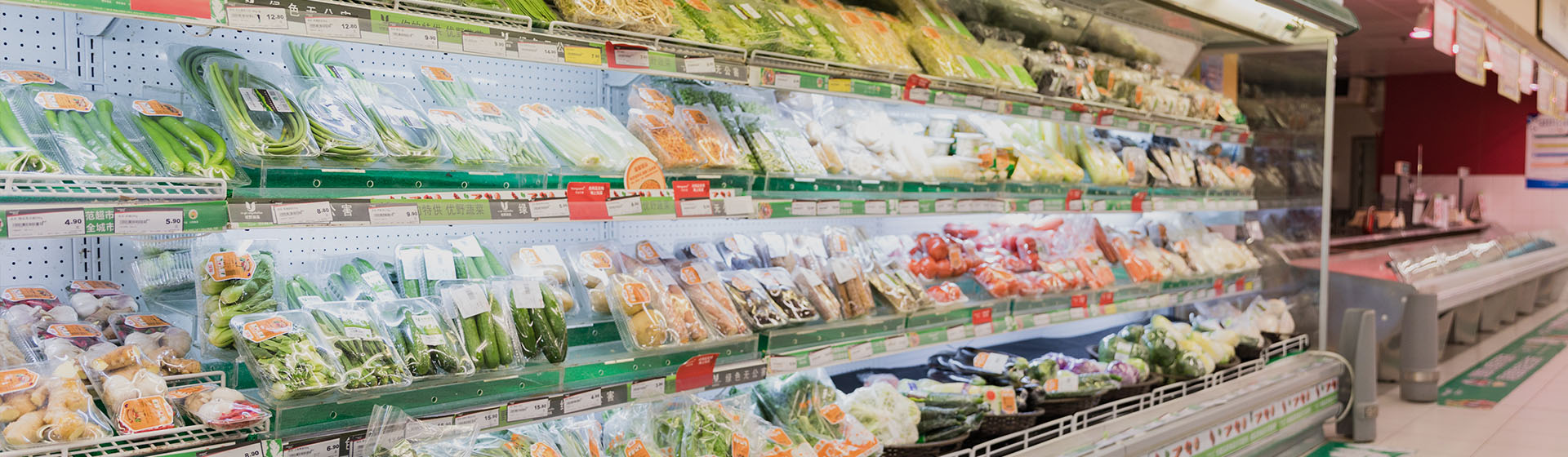
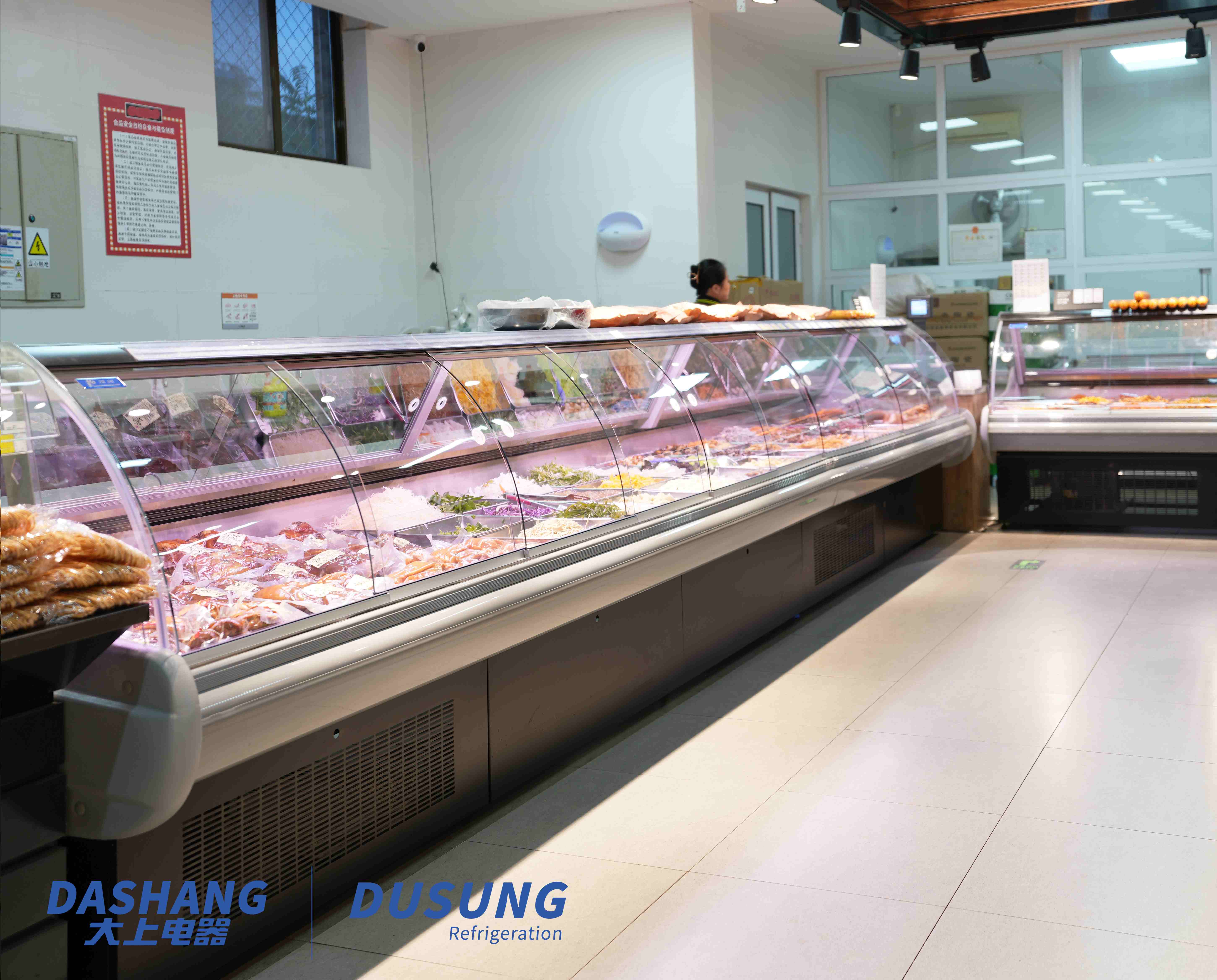
A Curved Glass Refrigerator is more than a refrigerated cabinet with a decorative front. The curved glass changes how the display area is viewed, how shelves use the available depth, and how the transparent surface becomes part of the thermal envelope. For a commercial display refrigerator, those details matter because the product has to keep food at a controlled temperature while also maintaining clear visibility across several display levels.
The value of the curved front therefore comes from coordination. Glass radius, shelf geometry, airflow, lighting and access cannot be designed independently. A cabinet can look attractive and still perform poorly if the curved front creates excessive reflection, limits airflow or leaves part of the display difficult to reach.
How a Curved Glass Refrigerator Changes the Viewing Angle
The radius of the front glass determines how much of the internal display can be seen from a normal standing position. A flat panel creates one direct viewing plane. A curved panel gradually changes angle from top to bottom, which can make several display levels visible without increasing the overall cabinet height.
More curvature is not automatically better. A tight radius can create stronger reflections and make internal depth appear distorted. A very shallow curve may provide little practical difference from flat glass. The most useful profile is one that matches the cabinet depth and the height of the shelves.
Shelf fronts also influence the effect. If an upper shelf projects too far forward, it can hide products below. If the shelf is too shallow, usable refrigerated display area is lost. The glass profile and the shelf line therefore have to be designed as one visual system.
The Glass in a Curved Glass Refrigerator Is Also an Insulated Boundary
The transparent front is exposed to warm room air on one side and refrigerated air on the other. That makes the glass part of the cabinet’s thermal structure. Its heat-transfer performance affects refrigeration load, surface temperature and the likelihood of condensation.
Different commercial designs may use insulated glass, coatings or other anti-condensation methods. The exact construction can vary, but the objective is consistent: keep the display clear without allowing the large transparent surface to become a major path for heat gain.
The frame matters as much as the glass. A well-insulated panel can still perform poorly if the frame creates strong thermal bridges or if joints are not sealed correctly. Curved glass therefore needs to be integrated into the cabinet rather than treated as a separate decorative cover.
Shelf Geometry Must Follow the Curved Front
A Curved Glass Refrigerator often has a stepped internal profile. The distance between the glass and the rear wall changes at different heights, so identical shelf depths are not always the best use of space.
Upper shelves can be shallower to maintain visibility, while lower shelves can use more depth for larger trays or packages. This creates a layered display without forcing every product into the same footprint. Adjustable shelves add flexibility, but each position still needs to preserve airflow and sufficient clearance from the glass.
Useful capacity should be measured by how well the shelves can actually be loaded, not by the apparent size behind the curved panel. If products have to be pushed against the glass or stacked in front of return-air openings, the extra volume does not function as good refrigerated display space.
Airflow Has to Work Around the Display Structure
Refrigerated display cabinets depend on controlled air movement to remove heat from products and internal surfaces. In a Curved Glass Refrigerator, the airflow path has to work around shelf edges and a front enclosure whose distance changes with height.
If supply air is concentrated in one area, another part of the display can operate under different conditions. If packages block the return path, local warm zones can develop even when the controller looks normal. Loading height and package placement therefore affect refrigeration performance.
A practical design keeps supply and return paths clear and uses shelf spacing that does not trap warm air near the glass. This is one reason why internal organization is part of the product design rather than a separate merchandising decision.
Lighting Should Work with the Glass, Not Against It
The large transparent front makes lighting important. Poorly placed lights can create bright reflections on the curved surface while leaving products in shadow. A better arrangement directs light toward the display levels and reduces glare at normal viewing angles.
Low-heat lighting is also useful because heat generated inside the cabinet becomes part of the refrigeration load. The purpose is not simply to make the interior brighter. Good lighting improves color recognition and product separation without increasing unnecessary heat.
The curved panel can amplify both good and bad lighting choices, so glass shape, interior finish and light direction should be considered together.
Access Design Affects Refrigeration Stability
A Curved Glass Refrigerator can use different access methods. Service counters may open from the rear, while other designs may use sliding or hinged glass sections. The size and position of the opening affect how much refrigerated air is exposed during use.
Smaller sliding sections can limit the open area, while a larger hinged section provides broader access but creates a larger temporary opening. Tracks, handles and seals have to remain easy to clean because residue or ice can prevent complete closing.
These mechanical details are less visible than the curved front, but they are essential to stable operation. Air leakage through a poorly closed section can add more continuous heat load than the glass shape itself.
Curved Glass vs Flat Glass: A Product Comparison
Curved and flat glass serve different priorities. Flat glass creates straight lines and can be easier to combine into long modular runs. It also produces a simple, direct viewing plane.
Curved glass creates a softer profile and can improve visibility across multiple vertical levels. It works particularly well with stepped shelves and products that benefit from a layered display. However, the shaped glass and frame can be more complex to manufacture and clean.
The choice should therefore be based on cabinet function. If strict alignment and modularity are the main goals, flat glass can be more practical. If the display needs a wider vertical viewing field and a more open front profile, curved glass can offer a better fit.
Cleaning and Condensation Are Part of the Design
A curved surface needs to be reachable from the inside for routine cleaning. Removable shelves and access to the lower glass edge make maintenance easier, especially in food applications where residue can collect near the frame.
Condensation depends on room humidity, glass temperature, cabinet temperature and local airflow. A cabinet near an entrance, warm air outlet or humid zone may fog more easily than the same cabinet in a stable indoor environment. Anti-condensation design can help, but it does not remove the influence of installation conditions.
Regular cleaning also protects visibility. Even a technically clear glass panel loses its display value if fingerprints, grease or dried droplets remain on the surface.
Matching the Curved Cabinet to the Product
The Curved Glass Refrigerator is most useful when refrigerated storage and front-facing visibility are both important. Prepared food, bakery products, deli items and chilled packaged goods can all use the layered display area in different ways.
DUSUNG can configure commercial refrigerated display cabinets with different glass forms, shelf arrangements, cabinet dimensions and refrigeration layouts. For a curved-glass project, the useful starting information includes product size, display height, required access side, shelf load and installation environment.
If a Curved Glass Refrigerator is being planned for a new counter or replacement line, provide the available dimensions and the products that will occupy each display level. That makes it possible to match the glass profile, shelf depth and refrigeration layout to the actual cabinet function rather than selecting the shape only for appearance.
FAQ
1. Is curved glass only a decorative feature?
No. The glass profile affects viewing angle, shelf geometry, thermal performance and usable display depth.
2. Does curved glass cause more condensation than flat glass?
Not necessarily. Condensation depends on glass construction, surface temperature, humidity and installation conditions.
3. Can shelves be adjusted in a Curved Glass Refrigerator?
Many commercial designs use adjustable or removable shelves, but the positions must preserve airflow and clearance from the glass.
4. When is curved glass more suitable than flat glass?
Curved glass is useful when the cabinet benefits from layered presentation and a wider vertical viewing field. Flat glass may be preferable for strict modular alignment.
Post time: Sep-21-2026


