

A Commercial Freezer operates in a demanding environment where frozen products are frequently loaded, removed, and reorganized. Although low temperatures help preserve food, they do not eliminate the need for regular cleaning. Broken packaging, food residue, moisture, and frost can gradually accumulate inside the cabinet, particularly in areas that receive little attention during routine maintenance. As a result, the ease with which a freezer can be cleaned is closely related to how consistently it can be maintained during everyday use.
Cleanability is therefore more than a matter of convenience. When the interior layout allows staff to reach important areas without excessive disassembly or difficult manual work, routine maintenance can be completed more thoroughly and with less disruption to operations. This makes the internal structure of a Commercial Freezer an important consideration alongside capacity, temperature performance, and energy efficiency.
Why Is Regular Cleaning Important for a Commercial Freezer?
A freezer is not isolated from the conditions around it. Every time the door is opened, products are moved, or damaged packaging is replaced, small amounts of debris or moisture can enter the storage area. Even when products remain properly frozen, residue can collect on shelves, cabinet surfaces, door gaskets, and the bottom of the compartment.
Regular cleaning removes these materials before they become more difficult to handle. It also gives operators an opportunity to inspect the equipment while the interior is empty. Changes such as unusual frost accumulation, damaged seals, standing moisture, or deteriorating components may be easier to notice during cleaning than during normal operation. For this reason, cleaning should not be viewed as a task performed only when visible dirt appears. It is part of maintaining an organized storage environment and checking whether the freezer continues to operate under suitable conditions.
How Can Interior Dead Spots Increase Maintenance Work?
The internal geometry of a Commercial Freezer can significantly affect cleaning efficiency. Deep corners, narrow gaps, fixed supports, and poorly accessible areas can become collection points for food particles and moisture. These locations may be easy to overlook because they are outside the normal field of view when products and shelves are in place.
The problem is not necessarily the amount of residue in one cleaning cycle. The greater concern is repeated accumulation. If an area is difficult to reach, employees may spend more time cleaning it or clean it less frequently than more accessible surfaces. In a busy commercial environment, even small obstacles can make a noticeable difference when the same process is repeated throughout the service life of the equipment.
A more practical approach is to consider how a person actually cleans the cabinet. Can the bottom corners be reached easily? Can surfaces beneath shelving be wiped without removing multiple components? Can the door gasket and surrounding areas be inspected without difficulty? These questions reveal aspects of freezer usability that specifications alone may not show.
What Makes a Commercial Freezer Easier to Clean?
Easy cleaning usually comes from the combination of several structural decisions rather than one special component. The goal is to reduce places where residue can remain trapped while making frequently cleaned areas accessible.
- Accessible interior surfaces: Smooth, unobstructed surfaces are generally easier to wipe than areas divided by unnecessary joints or structural obstacles.
- Practical corner design: Corners and transitions should allow cleaning tools to reach them without requiring awkward movements or extensive manual work.
- Removable components: Shelves and other removable parts can make it easier to clean both the components and the surfaces underneath them.
- Accessible door seals: Gaskets can collect moisture and debris, so their surfaces should be easy to inspect and clean as part of normal maintenance.
- Manageable moisture and drainage areas: Where defrost water or condensation is present, these areas should be accessible enough for routine inspection and cleaning.
The importance of these details becomes more apparent in high-use applications. A feature that saves only a few minutes during one cleaning cycle may save considerably more time when the same procedure is repeated over hundreds of maintenance cycles.
How Does Cleanability Influence Long-Term Use?
The relationship between cleanability and long-term use is largely behavioral. Maintenance procedures that are complicated, time-consuming, or difficult to perform are more likely to be shortened or postponed when staff are under operational pressure. A well-designed freezer does not remove the need for maintenance, but it can make the required work more practical.
This can also improve the consistency of inspections. When shelves and interior areas are easy to access, operators have a better opportunity to identify small changes before they become more disruptive problems. For example, an unusual buildup of frost may prompt a check of the door seal or operating conditions, while moisture around a drainage area may indicate that further inspection is needed. In this sense, cleanability supports more than appearance. It can help connect everyday cleaning with basic equipment observation and preventive maintenance.
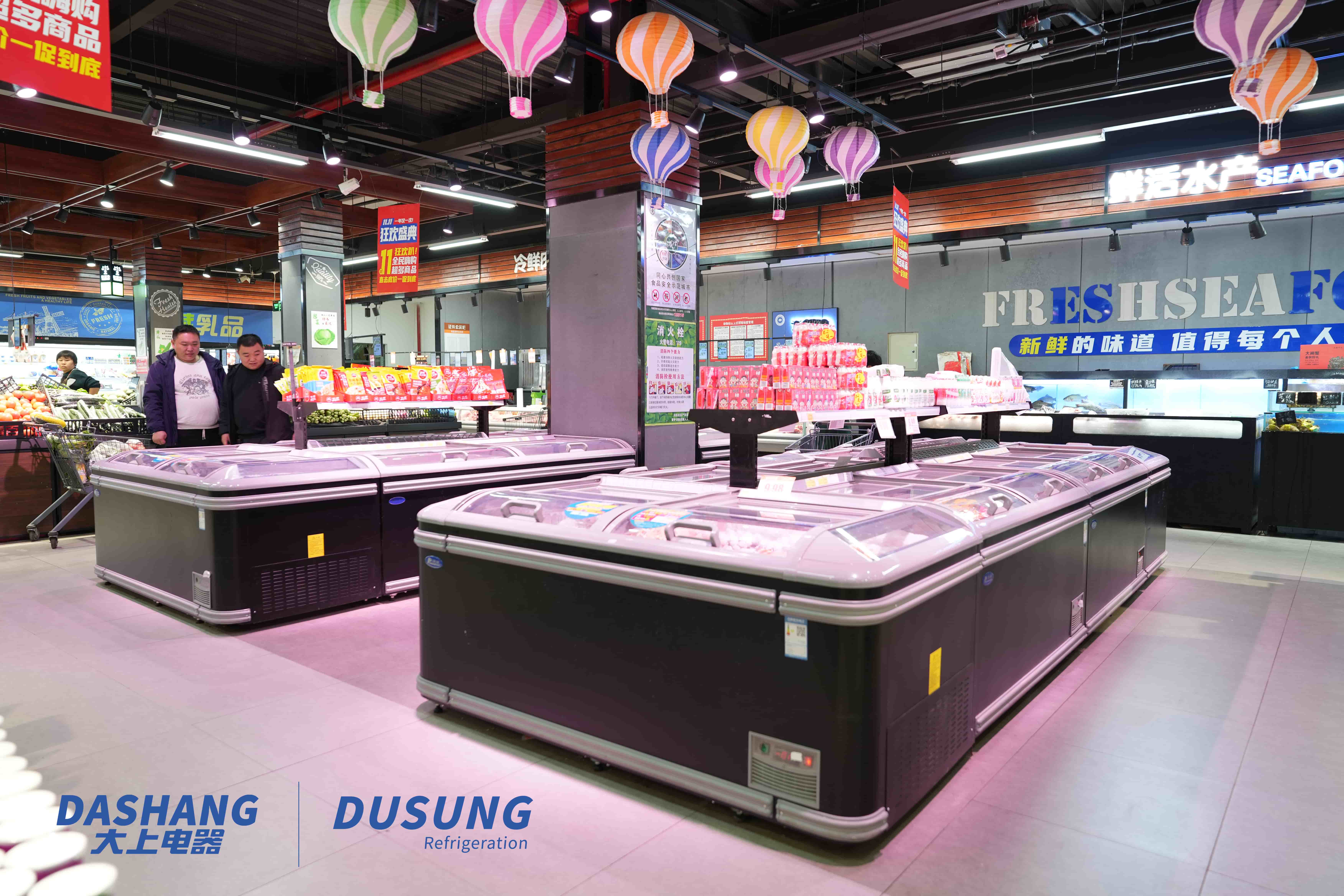
Does Frost Make Commercial Freezer Cleaning More Difficult?
Frost is a normal consideration in frozen storage, but excessive buildup can complicate both cleaning and product handling. Thick frost may cover surfaces, reduce usable space, and make it harder to access parts of the cabinet. It can also make residues more difficult to remove when they become frozen onto surfaces.
Instead of treating frost solely as a cleaning problem, operators should consider why it is accumulating. Frequent door opening, warm air entering the cabinet, unsuitable loading practices, or a compromised door seal can contribute to increased frost formation. Cleaning provides a useful opportunity to observe these conditions. If excessive frost repeatedly returns after cleaning, simply removing the frost may not address the underlying cause. Checking operating habits and relevant freezer components can provide a more useful long-term solution.
What Should Be Considered Before Choosing a Commercial Freezer?
Cleanability is often overlooked because capacity and refrigeration performance are easier to compare from product specifications. However, the freezer will need to be cleaned far more often than it will be replaced, so its maintenance requirements deserve attention before purchase.
Rather than asking only whether a unit is easy to clean, buyers can examine the actual cleaning process. Consider how shelves are removed, whether the bottom of the cabinet is accessible, how easily door gaskets can be inspected, and whether narrow spaces could trap residue. It is also worth considering whether routine cleaning can be completed without unnecessarily disrupting stored products or requiring complicated disassembly. The best choice ultimately depends on the operating environment. A freezer used in a busy restaurant may face different cleaning demands from one used for packaged products in a warehouse or retail store. Evaluating the expected workload and maintenance routine can therefore be more useful than relying on a single cleanability feature.
Conclusion
For a Commercial Freezer, easy cleaning is closely connected with everyday usability. Food residue, moisture, frost, and debris can accumulate even during normal operation, while inaccessible corners and fixed components can make routine maintenance unnecessarily difficult.
A practical design should therefore consider not only how well the freezer maintains low temperatures but also how easily its interior can be accessed, cleaned, and inspected. Smooth surfaces, accessible corners, removable components, and serviceable door and drainage areas can all contribute to a more manageable maintenance process. By considering these details before purchase, commercial operators can select equipment that better fits both their storage requirements and the realities of long-term daily use.
FAQ
1. Does Frequent Door Opening Affect Freezer Cleanliness?
It can. Frequent opening allows changes in temperature and moisture conditions and increases the movement of products in and out of the cabinet. This can contribute to condensation, frost, or the introduction of debris, making regular inspection and cleaning more important.
2. What Areas of a Freezer Are Commonly Overlooked During Cleaning?
The bottom corners, areas beneath shelving, door gaskets, shelf supports, and narrow joints are often more difficult to access than open interior surfaces. Their accessibility should therefore be considered when establishing a cleaning routine.
3. Should Shelves Be Removed During Routine Cleaning?
If the design allows easy removal, taking shelves out periodically can provide better access to both the shelves and the surfaces underneath them. The frequency can depend on the amount and type of residue present.
4. Does Easy Cleaning Mean Less Maintenance Is Required?
No. Easy cleaning does not eliminate maintenance requirements. Its main benefit is making necessary cleaning and inspection more manageable, which can support a more consistent maintenance routine.
Post time: Oct-16-2026


