
Frozen food displays need to do more than hold products at low temperatures. Customers must also be able to identify items, compare options, and reach the products they want without unnecessary effort. When products at the bottom of a freezer receive less attention, the problem may not be the assortment itself. The depth of the display, the arrangement of packages, and the structure of the equipment can all affect product visibility. A Supermarket Chest Freezer provides a large open storage and display area, but its depth can create practical challenges when different products are placed together.
How Freezer Depth Affects Product Visibility
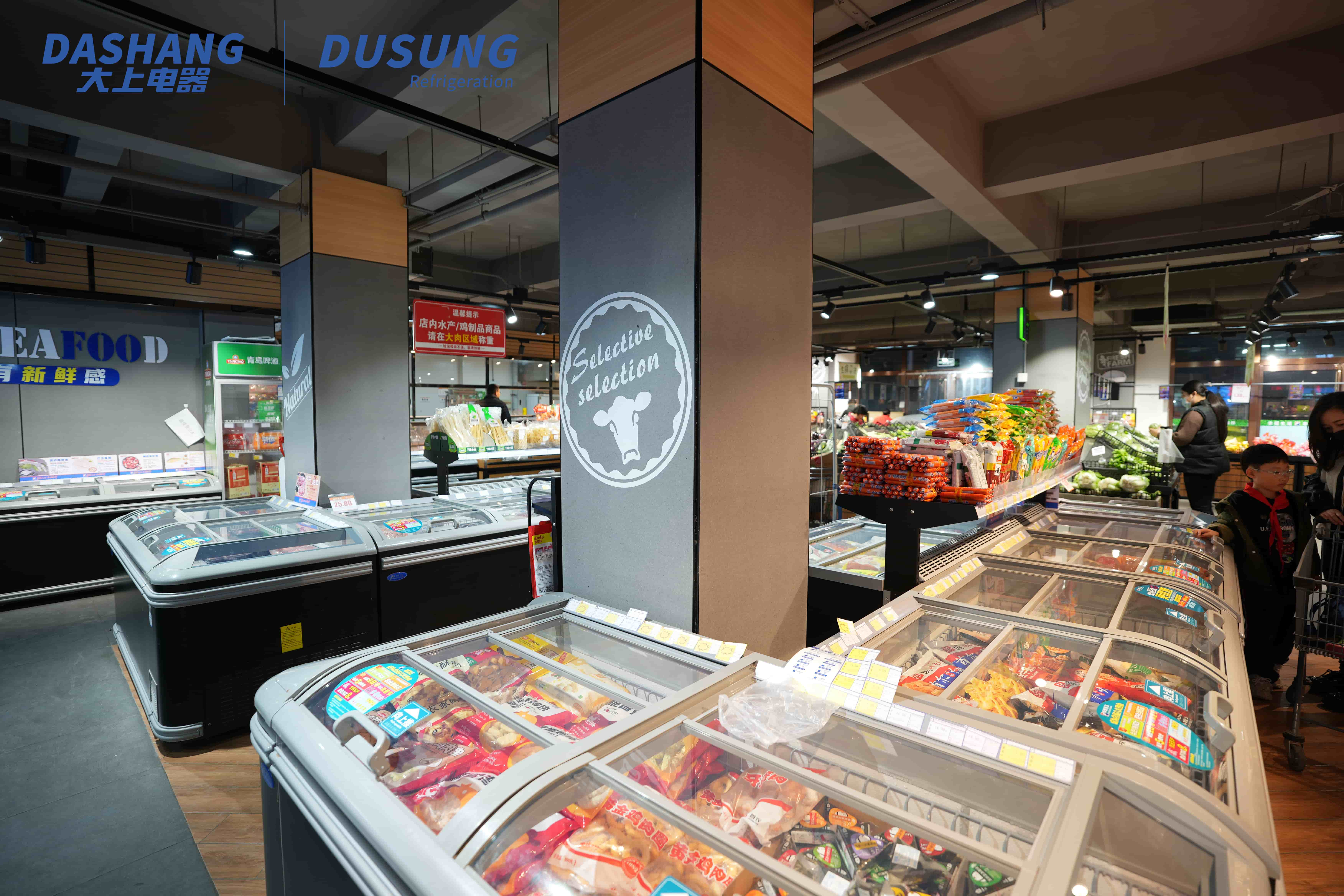
Chest freezers are designed with a horizontally arranged storage area. This configuration can accommodate a variety of frozen products, but it also means that customers may need to look downward and reach into the cabinet to examine items. Products placed near the bottom can become less noticeable, particularly when packages overlap or are covered by other products.
The effect becomes more pronounced when the cabinet is deep or heavily stocked. A customer standing in front of the freezer may see the upper layer clearly while having only a limited view of the items underneath. Even when a desired product is available, customers may not recognize it quickly enough to consider purchasing it. Instead, it often results from the relationship between the available depth and the way products are arranged. A Supermarket Chest Freezer needs to support both storage volume and practical access.
Why Products at the Bottom Are Easy to Miss
- Overlapping packages: Different package heights and shapes can obstruct product labels, making items beneath the top layer difficult to recognize.
- Excessive stacking: When products are piled too high, customers may see only the upper packages. Lower items become less visible and may require customers to move other products to reach them.
- Mixed product categories: Combining frozen vegetables, meat, seafood, and packaged meals in an unclear arrangement can make it harder to locate a particular item.
- Poor use of internal space: Products may accumulate in the center or at one end of the cabinet, leaving some areas crowded while others remain underused.
- Frequent replenishment: New stock placed on top of existing products can push older items deeper into the display, reducing their visibility and complicating stock rotation.
The Relationship Between Cabinet Design and Product Access
The design of a Supermarket Chest Freezer influences how customers interact with the products inside. Overall depth, opening dimensions, internal compartment arrangements, and the shape of the storage area all affect how easily customers can inspect the contents.
A deeper cabinet may provide more nominal storage space, but the additional depth is useful only when staff can arrange products effectively and customers can access them without difficulty. If the bottom of the cabinet is hard to inspect, the extra capacity may contribute less to the shopping experience than expected. The opening dimensions also matter. Customers need enough space to view the interior from a comfortable position and reach the relevant products. The relationship between the opening and the cabinet’s internal dimensions can affect whether the bottom remains visible when the freezer is stocked.
Internal baskets or dividers may help separate selected product groups, depending on the equipment configuration. They can reduce unnecessary mixing and make specific items easier to locate. However, compartment arrangements should suit the actual package sizes and product range. A layout that works for small frozen food bags may not work equally well for large cartons or irregularly shaped packages.
How to Arrange Products Without Hiding Lower Items
The most useful changes usually involve reducing obstruction, establishing clear product zones, and preventing unnecessary movement of stock.
- Group products by category and package type. Keep similar products together where practical. Clear grouping reduces the time customers spend searching and helps staff maintain a consistent layout during replenishment.
- Avoid creating unnecessarily tall piles. Stack products according to their packaging and stability, while keeping labels visible where possible. A lower, more organized arrangement may be more useful than filling every available gap.
- Assign consistent positions to regular products. When frequently purchased items remain in predictable locations, customers can find them more easily. Staff can also identify misplaced products during routine checks.
- Separate different package sizes when needed. Large packages can obstruct smaller items if they are placed directly above them. Positioning products with visibility in mind helps prevent smaller packages from disappearing beneath bulkier stock.
- Review the layout after replenishment. Adding new stock should not automatically mean placing it on top of everything already in the cabinet. Staff should maintain product groupings and rotate stock according to the store’s inventory procedures.
When a Different Freezer Configuration May Be Necessary
If customers repeatedly struggle to reach lower items, staff spend excessive time recovering products from the bottom, or certain categories remain difficult to display, the store may need to reconsider its equipment configuration.
A Supermarket Chest Freezer can be suitable for bulk frozen products and a broad assortment, but its usefulness depends on the relationship between the cabinet’s dimensions and the products stored inside. A model that is too deep for the store’s typical package sizes may encourage excessive stacking. Conversely, a cabinet with insufficient usable space may force staff to compress categories together, creating similar visibility problems.
Stores should assess the range of products they expect to display, including their package dimensions and replenishment frequency. They should also consider how often customers need to access items at the bottom and whether staff can safely retrieve products during busy periods. Where a broad product assortment changes frequently, the ability to reorganize the interior can be just as important as total capacity.
How to Evaluate a Supermarket Chest Freezer in Daily Use
An empty cabinet may appear spacious and easy to access, while the same unit can become difficult to navigate after packages are loaded. A practical evaluation should examine whether customers can recognize common products from their normal standing position, whether staff can retrieve items without repeatedly moving other packages, and whether the display remains organized after replenishment. It is also useful to observe whether certain products consistently end up at the bottom or become hidden behind larger packages.
If a revised arrangement improves access, staff procedures may be sufficient. If the same visibility problems continue despite consistent stocking, the equipment itself may not suit the product range. A Supermarket Chest Freezer should therefore be assessed according to its usable display area, not just its stated volume. The most effective configuration is one that supports storage, visibility, access, and routine stock rotation at the same time.
Choosing Equipment Around Real Display Requirements
When evaluating freezer options, stores should consider how the equipment will accommodate actual products rather than relying on capacity alone. Package dimensions, the depth of the display area, internal organization, and the frequency of replenishment all influence whether the available space remains useful throughout the day.
Suppliers such as Dusung Refrigeration provide commercial refrigeration equipment for different retail display requirements. When comparing available configurations, stores can review cabinet dimensions, internal arrangements, and the intended product application to determine whether a particular unit fits their frozen food assortment and day-to-day display needs. The aim is to select equipment that supports practical access as well as storage capacity.
Conclusion
Products at the bottom of a freezer are often overlooked because of deep storage areas, overlapping packages, excessive stacking, and unclear product grouping. These issues can reduce the practical value of the available display space, even when the cabinet has sufficient capacity. A well-matched Supermarket Chest Freezer, combined with a clear stocking arrangement and regular layout checks, can help improve product visibility and accessibility. Evaluating the cabinet under realistic loading conditions allows stores to distinguish between arrangement problems and equipment limitations, leading to a more functional frozen food display.
FAQ
1. Does a deeper chest freezer always provide better display capacity?
No. Greater depth increases potential storage volume, but it can also make lower products harder to see and reach. Effective capacity depends on how much of the space can be used without creating access or visibility problems.
2. How often should a chest freezer display layout be reviewed?
The layout should be checked during routine replenishment and whenever the product range changes significantly. Regular reviews help identify hidden packages, mixed categories, and areas where stock has accumulated unevenly.
3. Can internal baskets improve product visibility?
They can help separate product groups and reduce unnecessary mixing when their size and arrangement suit the products being stored. However, baskets must be configured carefully so they do not obstruct access or waste usable space.
4. What should stores check before replacing a chest freezer?
Stores should review the dimensions of their usual packages, the depth and opening of the cabinet, internal organization options, stock turnover, and the ease of retrieving lower-positioned products. These factors provide a more realistic basis for comparison than nominal capacity alone.
Post time: Oct-24-2026


