
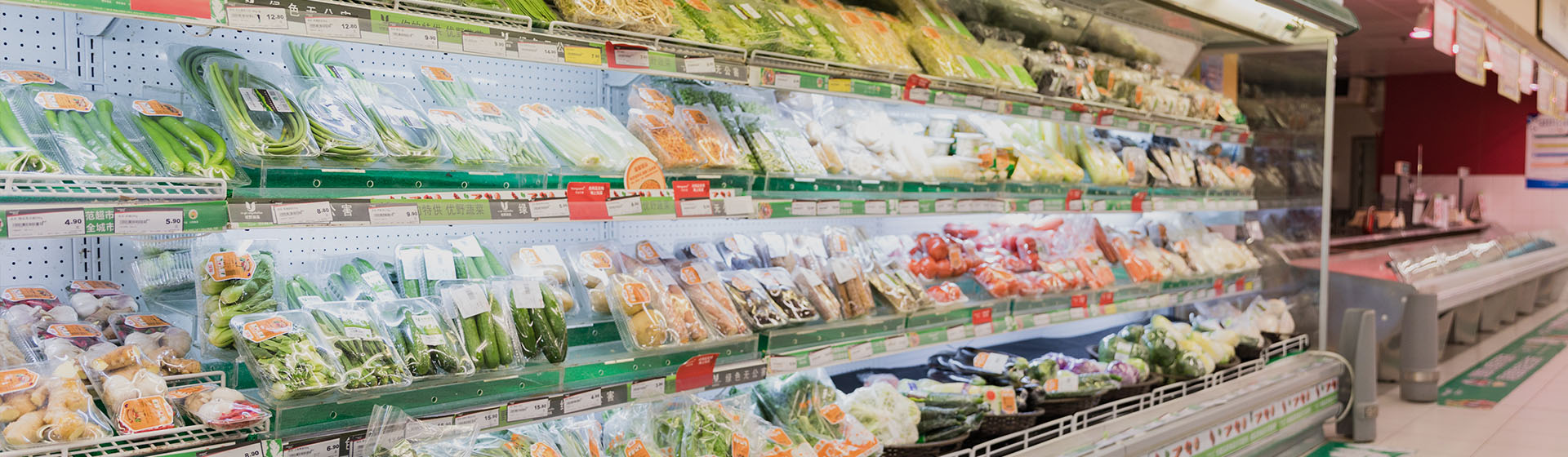
A Multi-Door Refrigerator is not simply a larger refrigerator with extra doors added to the front. The door arrangement divides a wide refrigerated cabinet into smaller access zones, and that changes how products are organized, how often the full interior is exposed to room air, and how staff or customers interact with the stored items. The practical value of a Multi-Door Refrigerator comes from this separation of access, not from the door count alone.
Two-door, three-door and four-door formats can all work well, but they solve different layout problems. A wider cabinet can carry more product categories, yet a useful multi-door design should keep each category easy to locate and reach. The most important comparison is therefore not “more doors versus fewer doors.” It is how the refrigerated space is divided into logical working or display zones.
Two Doors: A Simple Split Between Two Main Product Zones
A two-door format is often enough when the refrigerated assortment can be divided into two clear groups. In a commercial kitchen, one side may hold prepared ingredients while the other holds backup products. In a retail display, one door can serve beverages while the second serves dairy or ready-to-eat food. The door opening remains relatively large, but users do not need to expose the full width every time they access one group.
This format is also easier to understand visually. Each door can correspond to one clear category, and shelves behind the door can be adjusted to the package size of that category. A Multi-Door Refrigerator with two doors therefore works well when simplicity is more important than fine zoning.
Three Doors: More Product Categories Without Making Access Complicated
Three-door cabinets are useful when the product range is broader and one large door would expose too much of the interior. The middle door can become a high-turnover zone, while the two side doors hold slower-moving or more specialized products. In a beverage display, for example, water, soft drinks and dairy drinks can be separated into three clear vertical sections.
The three-door structure also affects shelf planning. Because each opening is narrower, the shelves behind one door should correspond closely to that door width. A shelf that crosses several door zones can make restocking awkward and weaken the logic of the cabinet. The best layout lets each door act as a clear access point to the products behind it.
Four or More Doors: Useful When Zoning Becomes More Important Than One Wide Opening
Larger multi-door cabinets are most useful when the assortment contains several categories or when the installation length is already substantial. Instead of one very wide refrigerated wall with large openings, multiple doors create smaller controlled access areas. This can help keep product categories separate and limit how much of the front is opened at one time.
However, adding doors endlessly does not automatically improve the product. More frames can reduce the uninterrupted viewing area, and narrower door modules can be less convenient for large trays or bulky packages. A Multi-Door Refrigerator should therefore use the number of doors that matches the product map, not the highest possible number.
Door Count Changes the Way Shelves Should Be Organized
The interior of a multi-door cabinet should follow the front-door rhythm. If one door is used for tall bottles, its shelf spacing may be wider. Another door may contain smaller dairy cups and use more levels. A third section can hold prepared foods with shallow shelves and clear labels. The cabinet becomes easier to use because each vertical zone has its own purpose.
- Use wider spacing behind doors assigned to tall packages.
- Use closer shelf spacing for compact cups, cans or small boxes.
- Keep high-turnover products at comfortable hand height in the most frequently used door zone.
- Avoid placing one product group across several doors unless the cabinet is intentionally designed as one continuous display.
This type of zoning is especially helpful when the same cabinet serves several product families. It prevents the interior from becoming one large mixed storage space where users open multiple doors simply to search for an item.
Glass Doors and Solid Doors Serve Different Priorities
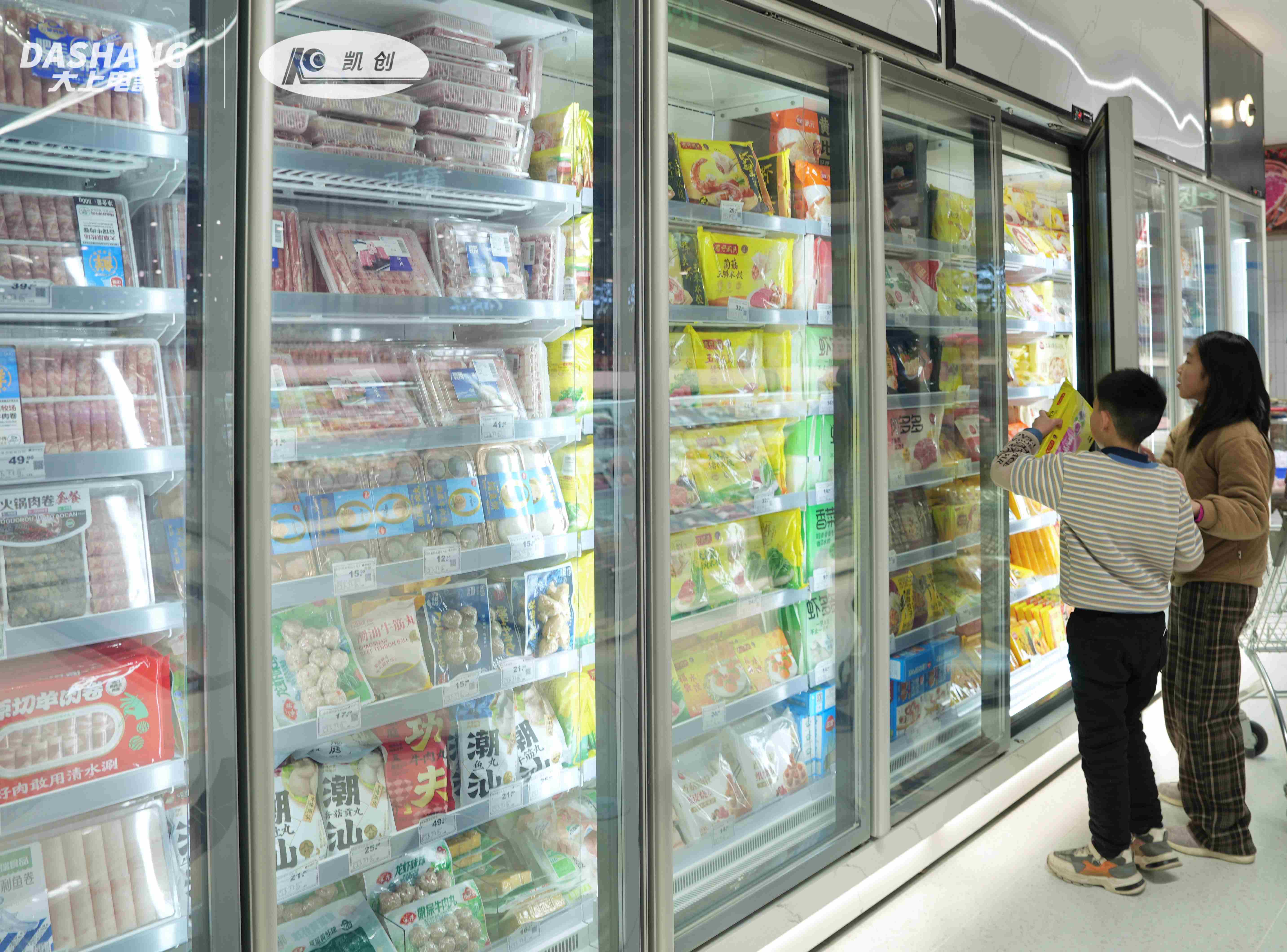
A Multi-Door Refrigerator can use glass doors or solid insulated doors depending on where it is installed. Glass doors make sense when product visibility is part of the function, such as beverage or packaged-food display. Solid doors are more suitable when the cabinet is primarily used for back-of-house refrigerated storage and the interior does not need to remain visible.
The two formats should not be judged by appearance alone. Glass-door cabinets require attention to condensation control, lighting and clear shelf presentation. Solid-door cabinets put more emphasis on insulation, durability and fast staff access. The door material should match the role of the cabinet.
Multi-Door Does Not Automatically Mean Multi-Temperature
One common misunderstanding is to assume that several doors always mean several independent temperature zones. In many cabinets, all door sections share the same refrigerated chamber or refrigeration system. The doors divide access, but they do not necessarily create independent temperature compartments.
If different products genuinely require different temperature ranges, the cabinet needs a design specifically intended for separate zones or dual-temperature operation. The important point is to distinguish access zoning from temperature zoning. A Multi-Door Refrigerator can improve organization even when all sections operate at the same temperature.
Which Door Configuration Fits Which Type of Use?
The most useful way to compare multi-door formats is by the number of distinct product groups, package size and access frequency. A compact two-door cabinet suits a simpler assortment. Three doors provide more separation for mixed commercial use. Four or more doors become practical when the refrigerated line is longer or when each product category needs its own visible section.
- Two doors: simple zoning, medium cabinet width, larger opening per door.
- Three doors: balanced zoning for mixed products and medium-to-large displays.
- Four or more doors: stronger category separation across longer refrigerated runs.
- Glass-door versions: suitable where visibility and self-service matter.
- Solid-door versions: suitable where storage and staff access are the main priorities.
From Door Configuration to a DUSUNG Product Solution
DUSUNG’s commercial refrigeration range includes multi-door configurations across upright refrigerated cabinets, glass-door display units and stainless-steel kitchen refrigeration. The project can be matched around cabinet width, number of doors, shelf structure, refrigeration method and whether the front needs clear product visibility or a solid insulated surface.
For a new refrigeration line, the most useful information is the product list, package size, required cabinet length and expected access pattern. Sharing these details helps determine whether two, three or more door zones are genuinely useful. If you are planning a multi-door refrigerated cabinet for a supermarket, convenience store, restaurant or kitchen, send the product categories and available installation width so the door layout can be configured around the real use rather than selected only by appearance.
FAQ
1. Is a Multi-Door Refrigerator always larger than a two-door refrigerator?
Usually it is wider, but door count and cabinet size are separate design decisions. Some compact cabinets use several narrow doors, while larger units may use fewer wide doors.
2. Does each door have its own temperature zone?
Not necessarily. Many multi-door cabinets share one refrigerated chamber. Independent temperature zones require a cabinet specifically designed for separate control.
3. Are glass doors or solid doors better for a Multi-Door Refrigerator?
Glass doors are useful for visible product display and self-service. Solid doors are more suitable for storage-focused kitchen or back-room applications. The better choice depends on the cabinet’s role.
4. Why should shelf layout follow the door layout?
When shelves correspond to door zones, products are easier to find, restock and access. It also reduces the need to open several doors to reach one product category.
Post time: Sep-15-2026


