
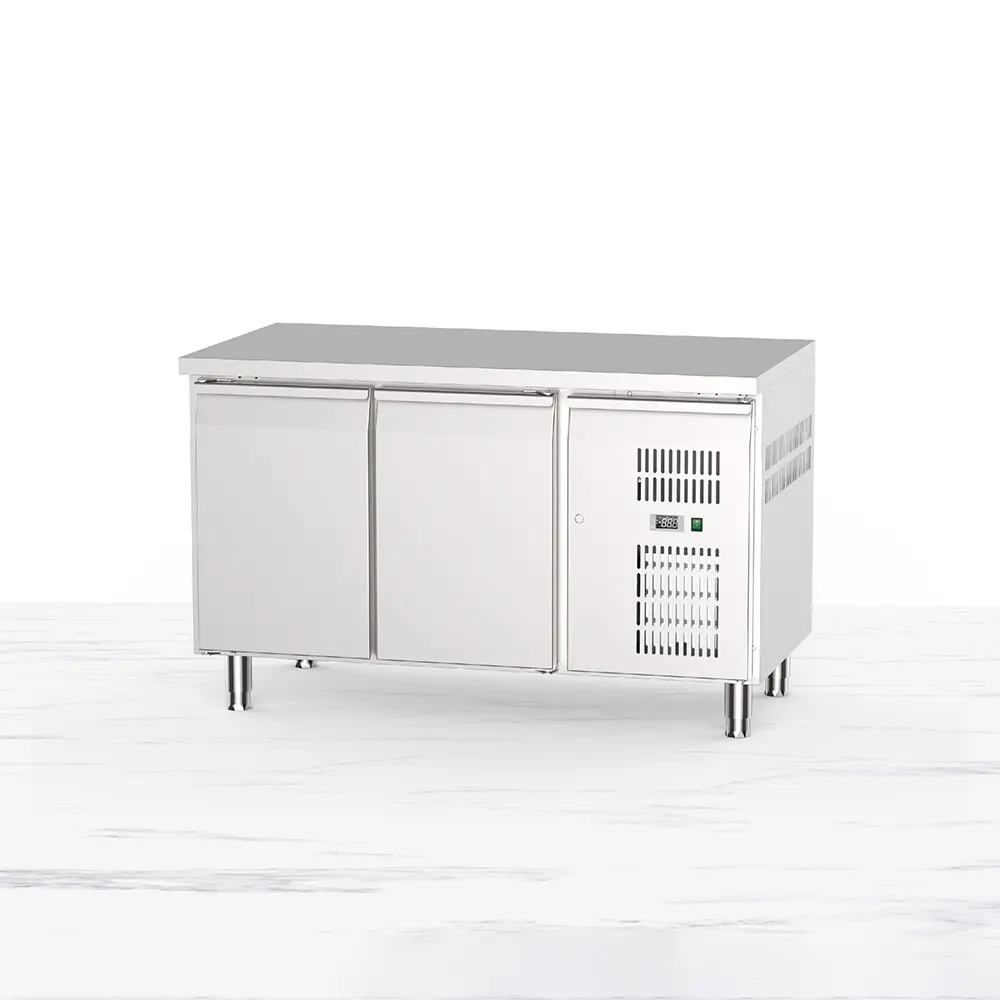
An Ultra-Low Temperature Freezer is not simply a normal freezer adjusted to a lower set point. Once storage moves far below the temperature range of ordinary frozen-food equipment, every part of the cabinet has to control heat gain more carefully. Insulation, door sealing, refrigeration capacity, temperature sensing, internal loading and recovery after door opening all become more demanding because the temperature difference between the cabinet interior and the surrounding room is much larger.
That is why the useful way to understand an Ultra-Low Temperature Freezer is to look at the entire thermal path. Heat is always trying to move into the cold chamber. The product has to slow that heat transfer, remove the remaining heat efficiently, and keep the stored load within a narrow and stable range. The value of the cabinet therefore comes from the interaction of several product systems rather than from one low number on the controller.
How an Ultra-Low Temperature Freezer Controls Heat Gain
The first task of an Ultra-Low Temperature Freezer is to reduce the amount of heat entering the cabinet. At very low temperatures, even a small weakness in the enclosure can create a much larger load than it would in a standard freezer. Thick insulation, a well-fitted inner liner, tightly closing doors and carefully designed joints are therefore not secondary details. They are part of the refrigeration system because every watt of heat that is kept outside is heat the compressors do not have to remove later.
The door is one of the most important parts of the enclosure. A large door opening creates direct air exchange, while small gaps around the gasket can create continuous heat and moisture entry. For this reason, gasket compression, hinge alignment and door-closing force matter. Some ultra-low cabinets also use inner doors or compartment doors to reduce the amount of cold air exposed when only one storage section needs to be reached.
A useful product evaluation should therefore include the enclosure as a complete thermal barrier:
- · insulation thickness and continuity around the cabinet;
- · gasket contact around the full door perimeter;
- · the way internal compartments limit air exchange;
- · cabinet joints, access ports and other potential thermal bridges;
- · the relationship between usable storage space and insulation volume.
Why an Ultra-Low Temperature Freezer Needs a Different Refrigeration Architecture
A standard commercial freezer usually works within a temperature range that can be handled by a conventional low-temperature refrigeration circuit. An Ultra-Low Temperature Freezer has to move heat from a much colder evaporating condition to the surrounding room. That larger temperature lift changes the demands on compressors, refrigerants, heat exchangers and controls.
Different ultra-low products may use different technical approaches. Some use cascade refrigeration with two linked circuits, while others may use specialized refrigerant systems designed for very low evaporating temperatures. The exact architecture matters less to the user than the result: the system has to remove heat reliably without allowing excessive discharge temperature, unstable pressure conditions or poor recovery.
The condenser side remains just as important as the cold side. Heat removed from the chamber must still be rejected into the room. If the condenser is blocked by dust, placed too close to a wall or surrounded by warm equipment, the refrigeration system has to work against a higher condensing temperature. At ultra-low conditions, that extra burden can noticeably affect pull-down time and operating stability.
Pull-Down Performance Is Different from Holding Performance
One of the most useful distinctions when discussing an Ultra-Low Temperature Freezer is the difference between pulling the cabinet down to temperature and holding an already cold load. These are not the same task.
Pull-down starts when the cabinet, shelves and internal air are warmer than the target temperature. The refrigeration system must remove stored heat from the structure itself before stable operation is reached. If relatively warm materials are then placed inside, their heat becomes an additional load. A cabinet that can maintain a cold empty chamber does not automatically have the same ability to freeze a large warm load quickly.
Holding performance begins after the cabinet and stored materials have reached the required condition. The product then mainly has to offset heat leaking through insulation, door openings, internal components and small air exchanges. For long-term storage, stable holding performance can be more important than an impressive short-term pull-down figure.
This distinction also explains why loading practice matters. Large additions of warm material should be planned according to the equipment’s intended use rather than assuming the freezer can instantly absorb any heat load.
Temperature Uniformity Matters More Than One Sensor Reading
The controller display of an Ultra-Low Temperature Freezer represents the value measured at a specific sensing point. It does not mean every location inside the cabinet is exactly the same temperature at every moment. Internal geometry, shelf loading, air circulation and proximity to walls or doors can create small differences across the chamber.
A useful cabinet design aims to keep those differences controlled. Storage containers should not block air paths, and the loading layout should leave enough space for cold air to move around the stored material. Dense packing may increase apparent capacity but can slow heat transfer and create local temperature variation.
For sensitive storage, ask:
- Are the upper and lower zones close in temperature during stable operation?
- Does the door-side area recover at a reasonable rate after access?
- Are temperature changes gradual and predictable rather than sudden?
- Does adding a normal operating load create a temporary change or a prolonged disturbance?
These questions describe actual storage performance better than a single set-point value.
Internal Storage Design Must Support the Temperature System
The inside of an Ultra-Low Temperature Freezer is not just empty volume. Shelves, racks, boxes and compartments influence how heat moves through the cabinet. Storage density, package material and container size all affect how quickly a load reaches equilibrium after it is added or moved.
A practical internal layout should provide enough organization to avoid long door-open times. Frequently accessed boxes can be placed where they can be reached without moving several other containers. Shelves need to support the expected load without sagging or obstructing air movement, and storage boxes should fit the cabinet depth so that the door can close without pressure on the gasket.
How an Ultra-Low Temperature Freezer Differs from a Standard Freezer
The difference is not simply that one cabinet is colder. Ultra-low operation changes the balance of the entire product.
A standard freezer can often tolerate more frequent door opening, thinner insulation and simpler refrigeration architecture because the temperature lift is smaller. An Ultra-Low Temperature Freezer has less margin for uncontrolled heat gain. The enclosure must be more effective, the refrigeration system must handle a more difficult operating condition, and storage practice has a greater influence on performance.
This is why comparing the two only by external size or nominal capacity is misleading. Two cabinets with similar dimensions may have very different usable volumes because the ultra-low model devotes more space to insulation and refrigeration components. That is a product requirement, not wasted space.
Integrating Ultra-Low Storage into a Refrigeration Project
When an ultra-low cabinet is selected for a project, the surrounding conditions should be considered together with the freezer itself. Room temperature, ventilation around the condenser, access frequency, storage quantity and the temperature of incoming loads all affect performance. A cabinet installed with sufficient ventilation and realistic loading conditions is more likely to deliver stable operation than one treated as an isolated box.
DUSUNG can support commercial refrigeration projects that require different cabinet formats, temperature ranges and storage arrangements. For ultra-low applications, the useful discussion should start with the required storage temperature, expected load, room conditions, access pattern and available installation space. From there, the refrigeration configuration and cabinet structure can be matched more accurately to the application.
If an Ultra-Low Temperature Freezer is being considered for a new storage area or an equipment replacement, provide the target temperature, approximate storage volume and operating environment. Those details make it possible to evaluate the cabinet as a complete low-temperature system rather than as a set-point number.
FAQ
1. Is an Ultra-Low Temperature Freezer the same as a normal commercial freezer?
No. Ultra-low equipment operates with a much larger temperature difference between the chamber and the room, so insulation, sealing, refrigeration design, controls and operating conditions become more demanding.
2. Why is insulation so important in an Ultra-Low Temperature Freezer?
Better insulation reduces heat entering the chamber. At ultra-low temperatures, reducing heat gain directly lowers the load on the refrigeration system and helps maintain stable conditions.
3. Can warm products be loaded directly into an Ultra-Low Temperature Freezer?
That depends on the product design and intended application. Large warm loads can create a substantial heat load, so loading practice should match the freezer’s rated operating purpose.
4. What should be checked around the installation area?
Provide sufficient condenser ventilation, avoid unnecessary heat sources near the cabinet, keep door access clear, and make sure the room conditions are suitable for the refrigeration system.
Post time: Sep-20-2026


