

A Commercial Grade Refrigerator is expected to work in conditions that are very different from light-duty domestic refrigeration. Doors may open repeatedly, warm products may be loaded during business hours, shelves may carry heavier packages, and the refrigerator may operate for long periods in a busy kitchen, store or service area. The value of a Commercial Grade Refrigerator therefore comes from how consistently the whole cabinet performs under repeated daily use, not from one specification viewed in isolation.
The useful way to understand commercial-grade refrigeration is to connect product design with workload. Cabinet construction, refrigeration capacity, airflow, door structure, shelf arrangement, temperature recovery and service access all matter because they affect what happens after the refrigerator is loaded and used continuously. A unit that performs well when empty is not automatically suitable for a demanding commercial routine.
Start with the Storage Load, Not the External Size
Two refrigerators with similar outside dimensions can behave very differently after loading. Bottles, food pans, cartons and packaged foods have different mass, spacing and airflow requirements. A Commercial Grade Refrigerator should provide enough usable refrigerated volume while still leaving the designed air paths open.
The important distinction is between gross internal volume and practical storage volume. If shelves are packed tightly to the rear wall or air outlets, the cabinet may appear full but circulation can become uneven. A better arrangement keeps high-load areas organized and allows cold air to move around the stored products.
Repeated Door Opening Is Part of Normal Commercial Operation
In a restaurant, convenience store or supermarket, the refrigerator door may open dozens or even hundreds of times during a working period. Each opening introduces warmer room air. A commercial refrigerator must therefore recover from normal access without allowing the entire storage environment to drift for long periods.
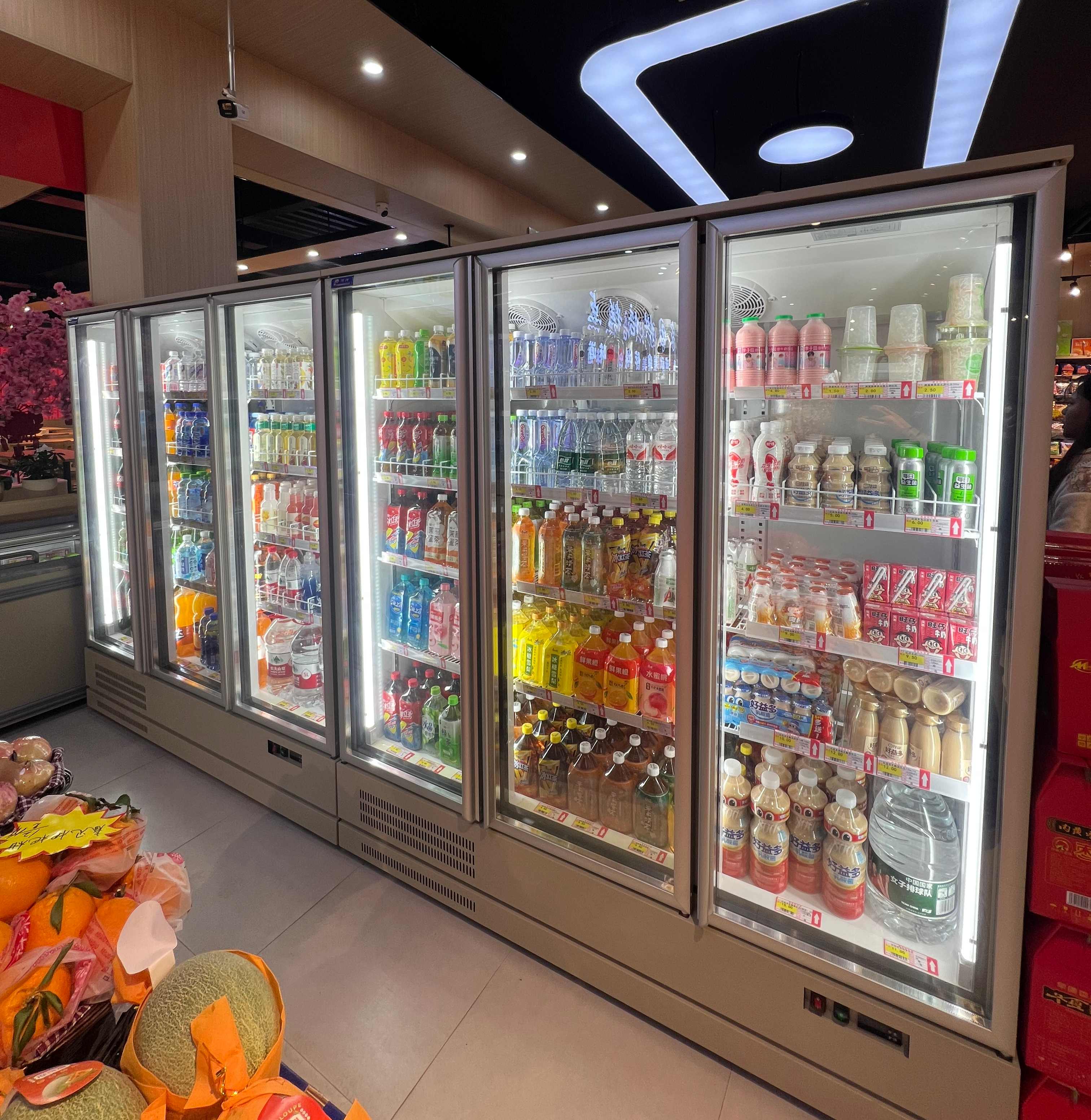
Door design influences this process. A well-fitted gasket, reliable hinge or sliding mechanism and a door size appropriate to the access pattern all help. Multi-door cabinets can reduce the amount of interior exposed during one opening, while glass doors allow users to identify products before opening. Solid doors can prioritize insulation in storage-focused applications.
Temperature Stability Depends on Airflow as Much as Cooling Power
A larger compressor does not automatically create a better Commercial Grade Refrigerator. If airflow is poorly distributed, some shelves may cool quickly while others recover slowly. Stable commercial refrigeration depends on moving cold air through the usable storage zone without allowing products to block the main supply and return paths.
This is especially important after new stock is loaded. Warm cartons or food containers add heat to the cabinet, and the system must remove that heat while protecting already chilled products. Shelf spacing, fan circulation and loading density all influence how quickly the cabinet returns to normal conditions.
Commercial Shelving Must Match Real Product Weight and Package Shape
Shelves in commercial use are rarely loaded with identical lightweight items. Beverage bottles, dairy crates, gastronorm containers, meat trays and prepared-food boxes create different loads. Shelf strength, adjustability and surface area therefore affect both safety and usable capacity.
- · Tall bottles need enough vertical clearance and stable support.
- · Heavy food pans need shelves that remain level under repeated loading.
- · Small packages benefit from closer shelf spacing and clear category separation.
- · Large cartons should not block fans, air ducts or door closure.
Adjustable shelves are useful, but every adjustment should preserve circulation and access. A commercial cabinet is most efficient when its internal layout follows the actual product mix rather than one fixed factory arrangement.
The Cabinet Exterior Also Has to Survive the Working Environment
Commercial refrigeration is installed where cleaning, movement and frequent contact are normal. In a kitchen, exterior surfaces may be wiped many times a day. In a retail area, door handles and glass are touched constantly. In a stock room, carts and boxes may come close to the cabinet. Materials, corners, handles and door hardware therefore need to suit the operating environment, not only the showroom appearance.
For stainless-steel kitchen refrigerators, easy-clean surfaces and practical work areas are often important. For retail glass-door cabinets, visibility and door clarity become part of the product function. For supermarket refrigeration, multiple cabinets may need to connect into a consistent line. Commercial-grade design changes according to application.
Different Commercial Environments Need Different Refrigerator Formats
A Commercial Grade Refrigerator is a broad category rather than one single cabinet shape. Restaurants may need upright solid-door storage or worktable refrigeration close to preparation areas. Convenience stores may need glass-door upright refrigerators for drinks and packaged food. Supermarkets may combine multidecks, glass-door cabinets, service showcases and freezer sections. The workload and product type determine the format.
This is why selection should begin with the operating role. Is the refrigerator primarily for visible display, back-of-house storage, food preparation, beverage access, fresh-food service or mixed use? Once that role is clear, door style, cabinet height, shelf structure and refrigeration configuration become easier to define.
A Practical Selection Framework for Commercial Refrigeration
A useful commercial selection process does not need to become a long buying checklist. It can begin with four basic questions that describe the real workload:
- · What products will be stored, and what are their typical package dimensions and weights?
- · How often will the doors or drawers be opened during a normal working period?
- · Does the equipment need to display products to customers or mainly serve staff?
- · Will the refrigerator stand alone, sit under a worktop, or form part of a longer refrigerated line?
These four questions usually reveal whether the project needs an upright storage refrigerator, glass-door display cabinet, worktable refrigerator, multi-door cabinet or another commercial refrigeration format. The product decision becomes more accurate because it is based on use rather than on a generic capacity number.
Matching Commercial Refrigeration Requirements with DUSUNG
DUSUNG’s commercial refrigeration portfolio covers multiple product roles, including stainless-steel upright and undercounter refrigeration, glass-door upright cabinets, multideck display refrigerators, fresh-food and deli showcases, island freezers and supermarket refrigeration systems. This makes it possible to start from the workload and then match the cabinet structure to the application.
For a commercial project, providing the product category, operating environment, required dimensions, door preference and installation layout gives a much clearer basis for configuration. DUSUNG can then discuss cabinet type, shelf arrangement, refrigeration method and appearance around the actual use. If you are planning new commercial refrigeration or replacing equipment in an existing line, send the main storage products and site dimensions so the solution can be matched to daily workload instead of selected only from a general specification table.
FAQ
1. What is the main difference between a Commercial Grade Refrigerator and a domestic refrigerator?
Commercial models are designed around repeated access, heavier loading, longer operating periods and commercial storage or display workflows. Cabinet structure and refrigeration configuration are selected for these working conditions.
2. Is a larger refrigerator always better for commercial use?
No. A larger cabinet can add capacity, but only if the internal layout, airflow and access suit the product load. Oversized equipment can also waste floor space when the storage pattern is poorly planned.
3. Are glass doors suitable for commercial-grade refrigeration?
Yes, especially for retail display and self-service products. Solid doors are often more appropriate for back-of-house storage where visibility is not required.
4. What information is most useful when planning a commercial refrigerator?
Product type, package size, expected loading, access frequency, available installation space and whether the cabinet is used for display, storage or food preparation are the most useful starting points.
Post time: Sep-16-2026


