
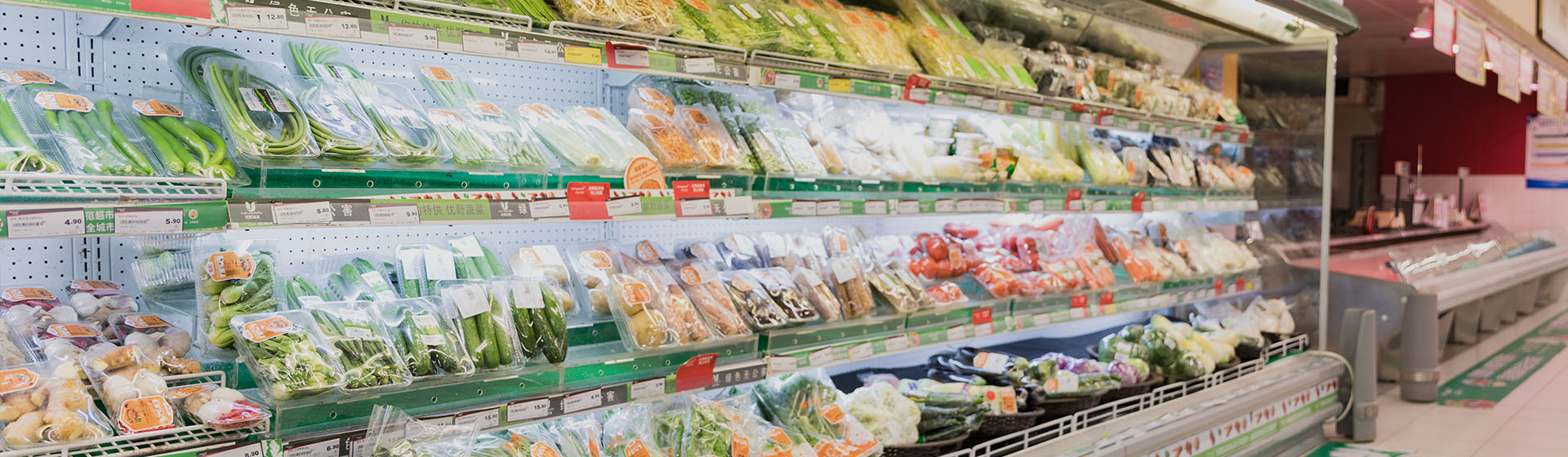
An Open Chiller allows customers to view and select refrigerated products without opening a door, making it a practical option for supermarkets, grocery stores, and convenience stores. However, fresh produce and packaged foods do not respond to refrigeration in the same way. Their differences in moisture sensitivity, packaging, display arrangement, and storage requirements influence how an open refrigerated cabinet should be configured and operated.
Why Do Fresh Produce and Packaged Foods Need Different Display Conditions?
Fresh produce remains biologically active after harvesting. Fruits and vegetables continue to respire, lose moisture, and change in texture and appearance over time. Their responses to refrigeration vary considerably by species, maturity, and storage duration. Leafy vegetables, for example, can be sensitive to water loss, while certain fruits and vegetables may suffer chilling injury if exposed to temperatures that are too low.
Packaged foods have a different set of considerations. Their packaging may reduce direct exposure to surrounding air, protect the product from handling, and help preserve its quality. Nevertheless, packaging does not eliminate the need for appropriate refrigeration. Dairy products, ready-to-eat meals, sandwiches, and packaged salads can have different temperature requirements even when displayed in similar containers.
These distinctions influence the role of the cabinet. A fresh produce display must account for the condition of exposed food surfaces and the sensitivity of individual varieties. A packaged food display, meanwhile, must accommodate package dimensions, product labels, stock rotation, and the temperature requirements stated for each food.
How Does Airflow Affect Fresh Produce and Packaged Foods Differently?
Airflow is one of the defining considerations in an open refrigerated cabinet. Because the front is not enclosed by a door, the refrigeration system must maintain a suitable chilled environment while interacting with warmer, often more humid store air. An air curtain helps separate these environments, but its effectiveness depends on cabinet design, installation conditions, and how products are loaded.
For fresh produce, the balance between cooling and moisture retention is particularly important. Strong, direct airflow across exposed leaves or cut surfaces can accelerate moisture loss in susceptible products. At the same time, insufficient circulation can contribute to uneven temperatures and localized warm areas. The objective is to distribute cooling effectively without exposing sensitive produce to unnecessarily harsh conditions.
Packaged foods are often less directly exposed to the air because wrappers, trays, or containers form a barrier. However, their packaging can affect airflow inside the cabinet. Large cartons, deep packages, and tightly arranged products may obstruct circulation or prevent cooled air from reaching certain areas. A cabinet that appears adequately chilled overall may therefore contain local temperature variations.
- Air distribution: Fresh produce may need protection from excessive direct airflow, while packaged foods require sufficient circulation around the loaded display to maintain suitable temperatures.
- Loading patterns: Loose produce can be arranged in accessible groups, whereas packaged products often form denser rows. Both arrangements must respect the cabinet’s intended loading limits and avoid blocking air outlets or return-air grilles.
- Ambient conditions: Store entrances, nearby air-conditioning outlets, lighting, and customer traffic can disrupt an open cabinet’s air curtain, affecting both product categories.
- Product placement: Items should remain within the designated display zone. Extending products beyond the loading line can interfere with airflow and reduce temperature consistency.
An Open Chiller should therefore be assessed under realistic operating conditions, not only by its nominal cooling capacity. The type of food, arrangement of products, surrounding environment, and expected customer activity all influence its performance.
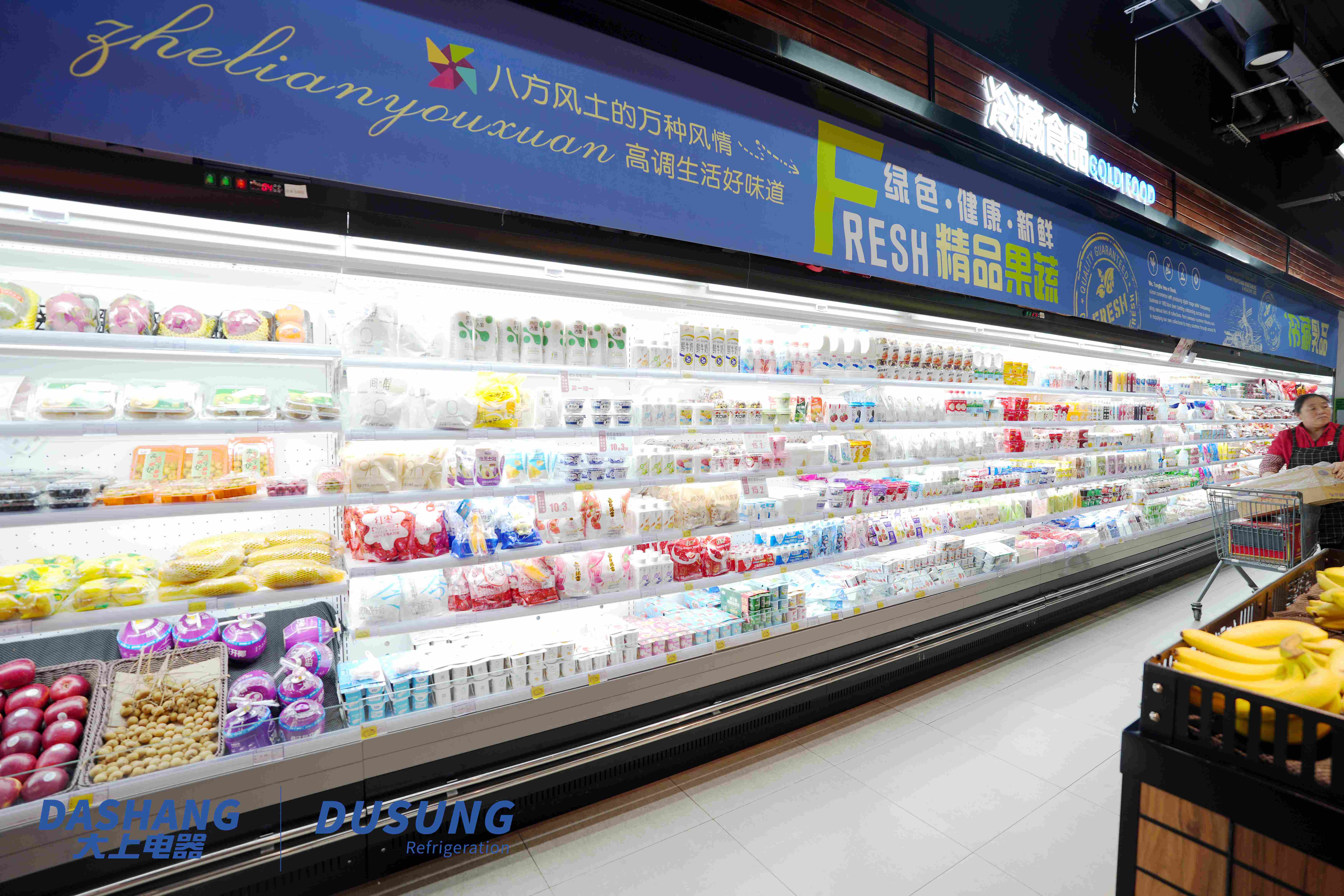
How Should Shelf Layout and Display Structure Differ?
Fresh fruits and vegetables are usually displayed to emphasize natural color, shape, and visible condition. Some products need shallow arrangements that make individual items easy to inspect, while others can be presented in deeper sections if their weight, packaging, and handling requirements allow it. Leafy produce may need particularly careful placement to reduce compression and preserve its appearance. The display should also support frequent inspection. Damaged, wilted, or deteriorating items need to be identified and removed without disturbing the entire arrangement. Clear separation between different varieties helps staff monitor product condition and makes replenishment easier.
Packaged foods typically require a more standardized layout. Bottles, cartons, sealed trays, and wrapped meals differ in height, width, and weight, so shelf spacing and depth affect how efficiently the available space can be used. Labels and product information should remain visible, and frequently selected items should be accessible without forcing customers to move other packages.
A practical layout also needs to account for stock rotation. These differences can influence the choice of shelving, shelf angles, dividers, and display depth. Adjustable shelves may help accommodate changing package sizes, while a produce-focused arrangement may prioritize easy inspection and careful handling. In both cases, display capacity should not be maximized at the expense of airflow or access.
When Is a Different Open Chiller Configuration More Appropriate?
The most suitable cabinet configuration depends on the products being displayed and the work that staff must perform around it. A produce section with frequent replenishment and several varieties may need a layout that provides clear visibility and easy access to individual items. A packaged-food section may benefit more from adjustable shelves, consistent product-facing positions, and enough space for orderly stock rotation.
Store conditions also matter. A cabinet positioned near an entrance or exposed to strong air currents may face different operating challenges from one installed in a stable interior aisle. Cabinet length, shelf arrangement, refrigeration system, and installation requirements should therefore be considered together.
Choosing an Open Chiller for Different Retail Applications
For supermarkets and other food retailers, refrigeration planning is more effective when the equipment is matched to the role of each display area. An open-front multideck cabinet may suit chilled products that need convenient self-service access, while fresh-food applications may require a different arrangement according to the products, handling method, and display structure.
Dusung Refrigeration offers supermarket refrigeration equipment for different retail applications, including open chillers, multideck display cabinets, and fresh-food display solutions. When evaluating a configuration, retailers can consider cabinet dimensions, shelf arrangement, refrigeration type, and the intended product category together, helping align the display equipment with the store layout and daily operating requirements.
Conclusion
The difference between an open chiller for fresh produce and one for packaged foods lies primarily in the interaction between product characteristics and the display environment. Fresh produce requires attention to moisture loss, variety-specific temperature needs, and careful handling, while packaged foods place greater emphasis on package dimensions, label visibility, and organized stock rotation. Both applications depend on effective airflow, appropriate loading, and reliable temperature management. Matching the cabinet configuration to the actual product mix helps retailers maintain suitable display conditions while making everyday operations more consistent.
FAQs
1. Can an open chiller be used for seasonal changes in product range?
Yes, provided the replacement products are compatible with the cabinet’s operating conditions, shelf configuration, and intended use. Seasonal changes may require adjustments to shelf spacing and product arrangement, but they should not override temperature or loading requirements.
2. Does sealed packaging guarantee that food will remain safe in an open chiller?
No. Packaging can provide a protective barrier, but it does not compensate for unsuitable storage temperatures, damaged seals, poor handling, or expired products. The food must still be stored according to its specific requirements.
3. Why should retailers check products at different positions inside the display?
Temperature and airflow may vary across a cabinet because of loading patterns, environmental conditions, or the arrangement of shelves. Checking representative positions can help identify localized problems that may not appear in a single central reading.
4. When should a retailer consider separate refrigerated display areas?
Separate areas are worth considering when products have incompatible temperature requirements, different handling needs, or display arrangements that interfere with one another. Dividing the product range can make temperature management, stock rotation, and daily replenishment easier to control.
Post time: Oct-22-2026


