
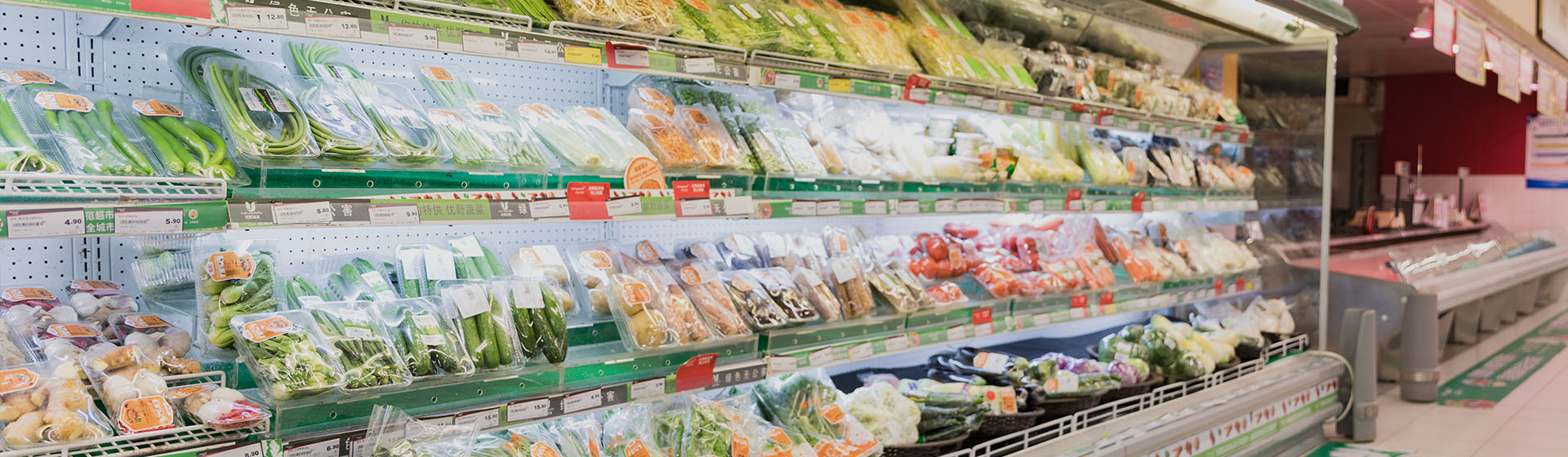
A vegetable display cabinet must accommodate products that vary in shape, weight, packaging, and selling format. Leafy greens, root vegetables, peppers, mushroom packs, and prepared trays use display space differently. If shelf depth, tray dimensions, or product separation are poorly matched, the cabinet can be difficult to merchandise even when its overall capacity appears sufficient. Choosing a Vegetable Display solution involves more than comparing cabinet length or shelf count. The internal arrangement should reflect product characteristics, customer access, and staff handling.
Start with Product Dimensions, Not Shelf Count
Identify the products that will occupy the cabinet and measure their typical display footprint. A shelf that works for compact packaged mushrooms may be unsuitable for large lettuce heads or bulky bunches of leafy vegetables. Shallow trays may suit small loose items but provide inadequate support for heavier produce.
Measure products in the condition in which they will be displayed. Whole vegetables, trimmed bunches, pre-weighed bags, and sealed trays can have very different space requirements even when they belong to the same category. Packaging also changes how products can be arranged: flat-bottomed packs can often be placed in orderly rows, while irregular loose produce may need wider containers or more open surfaces.
Do not base the layout on a single sample item. Measure common product sizes and identify unusually large or tall items that may determine the minimum shelf clearance. This prevents a design from being optimized for the smallest products while leaving the main assortment awkward to display.
Match Shelf Depth to the Way Products Are Presented
Shelf depth affects both display area and customer access. A deep shelf may appear to offer more space, but products at the back can be difficult to see or retrieve. A shallow shelf can improve access, yet may not support larger vegetables or wide trays.
The appropriate depth depends on product size and customer access. For loose vegetables arranged in baskets or bins, the usable surface must accommodate the container footprint without making it unstable or obstructing adjacent products. For packaged vegetables, the shelf should support packs in a consistent orientation and keep labels or contents visible.
Avoid layouts that force customers to reach across several rows or move one product to access another. Staff should also be able to remove and replace containers without disturbing neighboring sections. When evaluating a Vegetable Display cabinet, test the shelf with actual trays, baskets, or packages rather than judging its dimensions from a drawing alone.
Select Trays and Containers for Product Stability
Trays, baskets, and dividers define individual product spaces, but they should be selected according to the produce and handling method.
| Display requirement | Suitable design consideration |
|---|---|
| Small loose vegetables | Containers that prevent items from spreading into neighboring sections |
| Large or heavy produce | Stable support and sufficient base area |
| Packaged vegetables | Flat surfaces that keep packs aligned |
| Mixed-size produce | Removable dividers or separate zones |
| Delicate items | Containers that limit excessive stacking and handling |
Containers should support products without making replenishment or cleaning difficult. Very deep bins can hide products at the bottom and make stock rotation less convenient. Very shallow trays may allow products to roll or spill when customers select them. Removable components can simplify cleaning and product changes, but their dimensions and fixing method should be checked for stability during daily use.
For stores selling both loose and packaged vegetables, separate display zones are often more practical than placing every item in one large compartment. The aim is not to create the maximum number of divisions, but to make each product group easy to identify, reach, and replenish.
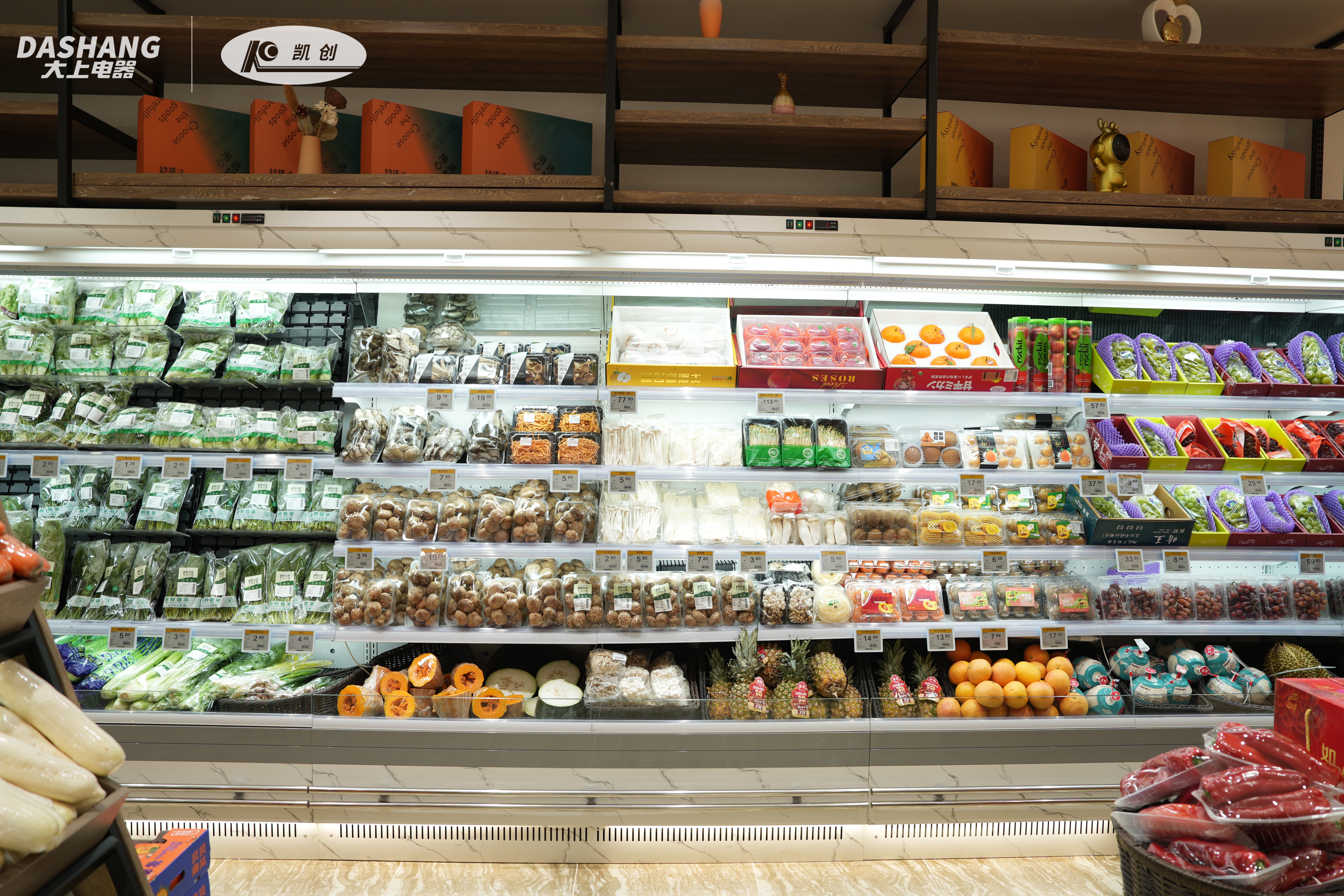
Plan Shelf Spacing Around Product Height
Shelf spacing is as important as shelf depth. Tall bunches, large cabbages, and stacked packages may need more vertical clearance than small bags or compact produce. If the distance between shelves is too limited, products may be compressed or difficult to remove. If it is excessive, available display height may not be used efficiently.
Assess the tallest regular product in each section, how it is positioned, and the space needed for a customer to lift it. Products should not need to be tilted sharply or pulled past the shelf above. Staff should also be able to replenish the section without repeatedly rearranging nearby items.
Adjustable shelves can provide flexibility when the assortment changes, but adjustability alone does not guarantee a suitable layout. Check the adjustment increments and whether shelves remain secure under the expected load. If the product range is stable, a fixed arrangement may be sufficient when it accommodates the main product dimensions.
Organize Product Groups Around Their Selling Format
A vegetable section may include loose produce, bagged vegetables, prepared salad packs, herbs, and specialty items. Grouping them only by color or broad category can create a display that looks organized but is inconvenient to use.
Plan zones according to how products are sold and handled. Loose vegetables may need containers that allow customers to select individual pieces. Packaged items usually benefit from orderly rows that make labels easy to identify. Small packs can be grouped together, while bulky products may need a wider, less divided area.
Dividers can help prevent products from mixing, but too many fixed partitions reduce flexibility when the assortment changes. A combination of defined sections and adaptable space is often more practical. Leave enough room for staff to remove a tray or replenish a product without shifting the entire display.
Check Loading and Cleaning Access Before Finalizing the Layout
A display must work for employees as well as customers. Staff need to lift containers, place new products, remove unsold items, and clean the surfaces around them. A shelf may look attractive when fully stocked but become inconvenient if its front edge makes trays difficult to lift or its rear area is hard to reach.
During evaluation, simulate a normal replenishment task. Check whether a full container can be removed safely, whether another can be positioned without obstruction, and whether products in neighboring sections remain in place. Consider the weight of filled trays, not just the empty container.
Cleaning access matters. Removable trays and accessible shelf surfaces can simplify routine care, but components should be easy to reinstall correctly. Avoid layouts that create narrow gaps where vegetable debris or packaging fragments can accumulate and become difficult to remove.
Match the Cabinet Configuration to the Store’s Product Mix
The right cabinet arrangement depends on product variety and presentation style. A small grocery store with a limited range may need a straightforward shelf and container layout. A larger supermarket with loose vegetables, packaged produce, herbs, and prepared items may benefit from several display zones with different shelf dimensions.
Before selecting a cabinet, prepare a simple product plan showing the main categories, approximate package or container dimensions, and preferred display positions. This gives the equipment provider a clearer basis for discussing shelf spacing, usable depth, dividers, and the overall cabinet format. It also helps identify which requirements are essential and which can remain flexible.
Discuss Your Vegetable Display Requirements
A suitable Vegetable Display cabinet should be configured around the products it will hold, not just its external appearance or nominal capacity. Dushung provides commercial refrigeration solutions for retail applications, including fresh-produce display equipment. When evaluating a configuration, share the produce categories, loose or packaged selling formats, typical container dimensions, desired shelf arrangement, and available installation space. These details help clarify which cabinet structure and internal layout are appropriate for the intended store.
Conclusion
Shelf depth, vertical clearance, tray design, and product separation all influence whether a vegetable display is practical in daily use. A cabinet with many shelves is not automatically the best choice; each surface and container must suit the size, weight, and selling format of the products placed on it. Evaluating the actual produce and handling process before ordering helps create a display that is easier to shop, replenish, and maintain.
FAQs
1. Should loose and packaged vegetables use the same display trays?
Not always. Loose vegetables may need baskets or containers that keep individual items within a defined area, while packaged products usually need flat, stable surfaces that keep packs aligned and visible.
2. Is a deeper shelf always better for a vegetable display?
No. Greater depth can increase the available surface, but products at the back may be harder to reach. Shelf depth should match the product footprint and the way customers access the display.
3. What should be measured before choosing a vegetable display cabinet?
Measure typical product or package dimensions, the containers used for loose produce, the tallest items, and the available installation area. Also consider the clearance needed to load and remove trays.
4. Are adjustable shelves necessary for every vegetable display?
No. Adjustable shelves are useful when product sizes or assortment change frequently. A fixed layout may be suitable when the product range is consistent and shelf spacing matches the main items.
Post time: Nov-26-2026


