
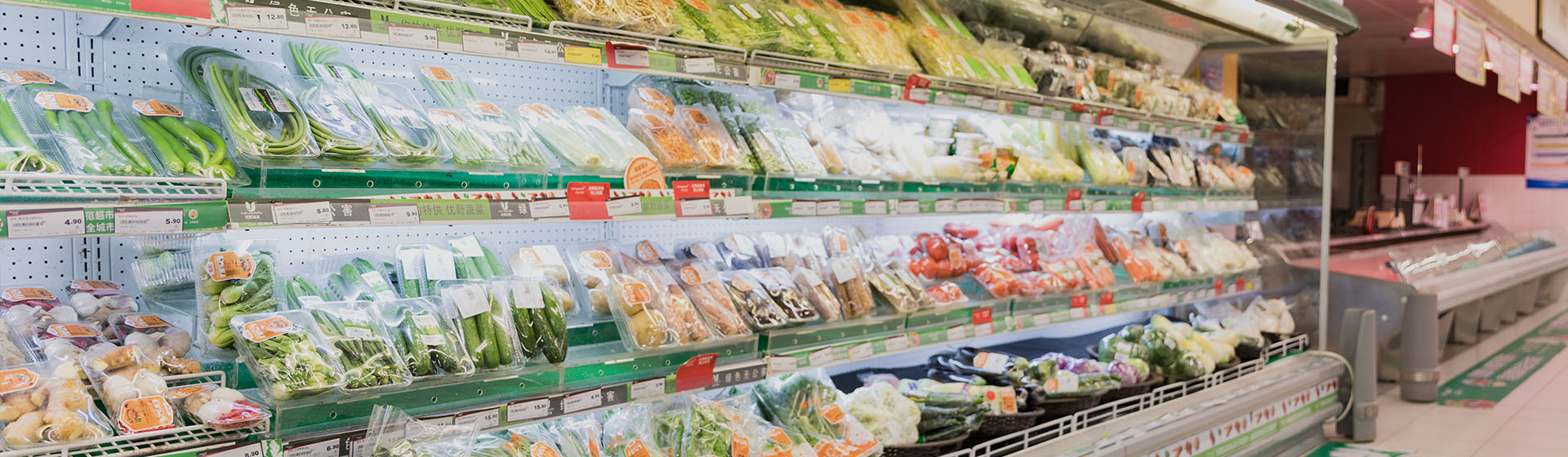
A supermarket needs different refrigeration solutions for different food departments. Fresh meat, dairy products, frozen meals, beverages, and fresh produce vary in packaging, storage requirements, and display methods. Using the same type of cabinet throughout the store may create problems with product presentation, accessibility, and space utilization.
A well-planned Supermarket Fridge Freezer arrangement should reflect the supermarket’s actual product range. By dividing the store into suitable refrigeration zones, retailers can select equipment that supports each department’s needs while maintaining a consistent shopping experience. The goal is not simply to install more refrigerators, but to match each cabinet type with the products it is intended to display.
Fresh Meat and Seafood: Select Equipment for Product Presentation
A refrigerated meat showcase or service counter is commonly used in this department. Its customer-facing display area presents products clearly, while the staff-side working space supports daily service. Depending on the store’s operating model, supermarkets can consider different counter sizes, display surfaces, and storage arrangements.
Prepackaged meat and seafood may also be displayed in glass-door refrigeration cabinets. These provide an enclosed refrigerated space while allowing customers to see the products without opening the doors.
The choice depends on how the products are sold. A supermarket offering fresh cuts through staff-assisted service may need a dedicated display counter, whereas a store focusing on sealed packages may prefer upright refrigerated cabinets.
Before selecting equipment, retailers should consider the packaging format, available display area, employee access, and applicable food storage requirements. The equipment must support both product presentation and the department’s daily handling routines.
Dairy Products: Maintain an Organized Chilled Display
Milk, yogurt, cheese, butter, and other dairy products come in different package sizes and shapes. Bottles, cartons, cups, and small boxes require sufficient shelf space and a clear display arrangement.
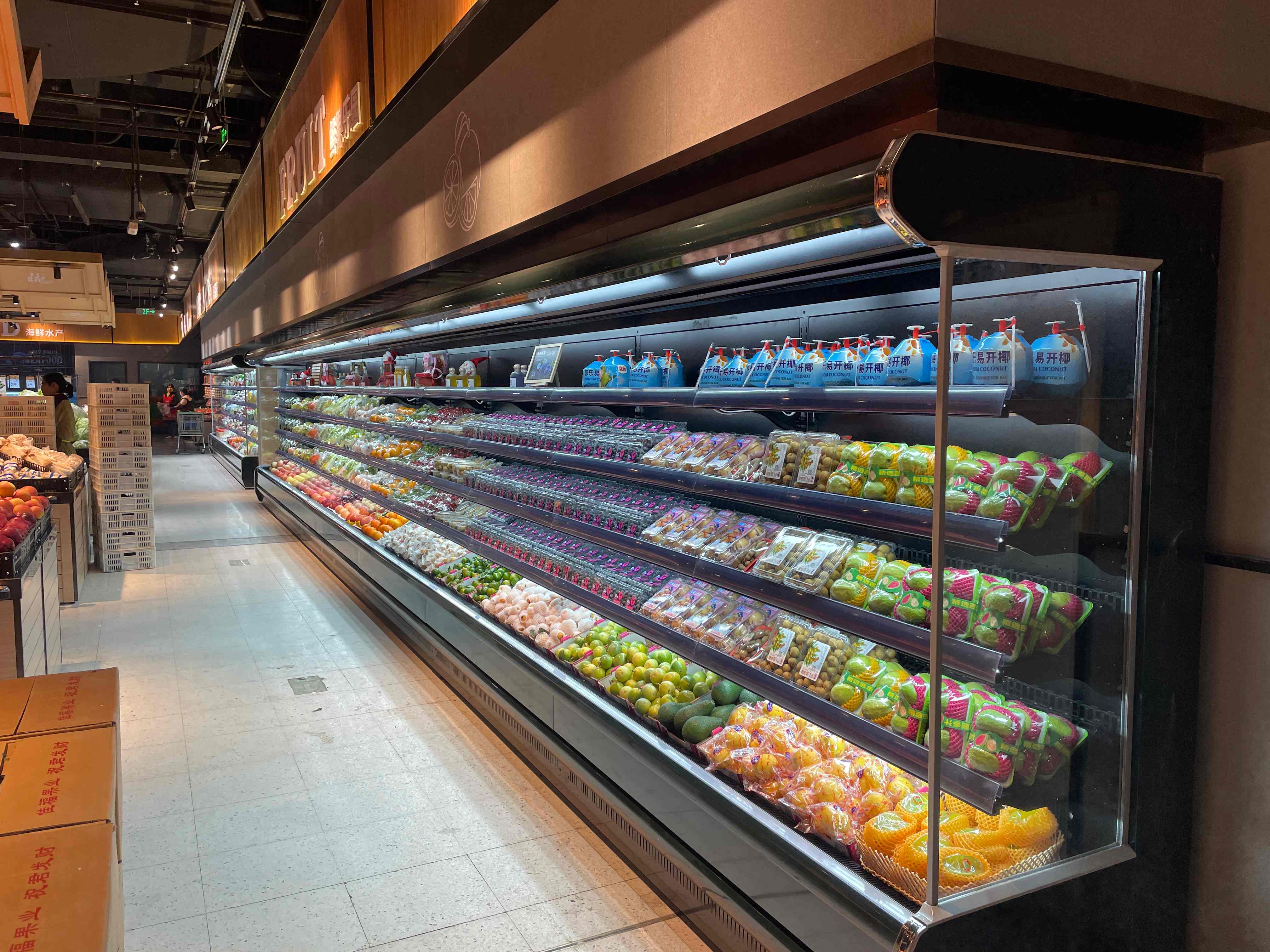
Open multideck chillers are widely used for self-service dairy sections. Their multiple display levels allow supermarkets to arrange different product groups within a continuous refrigerated area. Customers can access products directly, which is convenient for frequently purchased items.
Glass-door upright refrigerators offer another option. They provide an enclosed display while allowing shoppers to view products through transparent doors. This arrangement can be suitable when a supermarket prefers individual refrigerated sections or wants to keep certain products within enclosed cabinets.
The main difference is how customers access the products and how the store organizes its display area. Open multidecks support direct access across a wider display, while upright cabinets provide a more separated arrangement. Retailers should also check shelf spacing and usable display depth. If shelves are too narrow, larger packages may not fit properly.
Frozen Foods: Combine Island and Upright Freezers When Needed
Frozen food departments may include frozen vegetables, meat, seafood, ready meals, and ice cream. Although these products all require frozen storage, their packaging and shopping patterns can differ considerably.
An island freezer provides a horizontal display area with top access. Customers can look down into the cabinet and browse products from different positions. This format is useful for displaying packaged frozen foods in areas where the supermarket has sufficient floor space.
A glass-door upright freezer uses vertical shelves to present products at different levels. It can be suitable for boxed frozen meals, packaged foods, and products that benefit from front-facing presentation. Customers can identify items through the glass doors before opening them.
Some supermarkets use both formats in the same department. Island freezers can provide substantial horizontal display capacity, while upright freezers offer more structured product presentation. This combination allows retailers to use different areas of the store more effectively.
The following table summarizes how common refrigeration equipment can support different supermarket departments.
| Food department | Suitable equipment | Main application |
|---|---|---|
| Fresh meat and seafood | Refrigerated showcase or service counter | Presenting fresh products and supporting staff-assisted service |
| Dairy products | Open multideck chiller or glass-door upright refrigerator | Displaying packaged chilled products for self-service |
| Frozen foods | Island freezer or glass-door upright freezer | Storing and displaying different packaged frozen products |
| Beverages | Glass-door upright refrigerator or open multideck chiller | Organizing bottled and canned drinks for convenient access |
| Fresh produce | Suitable fresh-food display cabinet | Presenting products that require refrigerated display |
Beverages: Support Quick Product Identification
Beverage departments usually contain bottled water, soft drinks, juices, and other chilled drinks. Customers often make quick purchasing decisions, so product visibility and convenient access are important.
Glass-door upright refrigerators are a practical option for organizing bottles and cans in vertical rows. Their transparent doors allow customers to check the available selection, while different shelf levels can accommodate various package sizes.
Open multideck chillers may be more suitable in high-traffic areas where direct access is a priority. Customers can take products without opening a door, making this format useful for frequently purchased drinks. However, the equipment must be appropriate for the store environment and loaded according to its design.
The right Supermarket Fridge Freezer configuration for beverages depends on the size of the product range, expected customer traffic, and available floor space. A store with many brands and package sizes may prioritize shelf capacity, while one emphasizing quick self-service may prefer an open display.
Fresh Fruits and Vegetables: Consider Product-Specific Needs
For produce that requires refrigeration, suitable fresh-food display cabinets can provide accessible presentation space. The display should make products easy to inspect while leaving enough room for employees to remove damaged items and replenish stock. Overloading the display can make products difficult to identify and handle. A well-arranged cabinet should allow shoppers to browse without excessive stacking or unnecessary handling. Supermarkets should determine which products need refrigeration based on their characteristics, storage guidance, and intended display period. This helps avoid using refrigerated equipment where it is unnecessary or unsuitable.
Plan the Refrigeration Zones as One System
Selecting equipment for each department is only part of the planning process. The different cabinets must also work together within the supermarket’s overall layout.
For example, a store may place a meat showcase near its fresh food service area, use open multidecks for dairy products, and position island freezers within the frozen food section. Glass-door upright refrigerators can serve beverage and packaged frozen food displays where vertical presentation is preferred.
The arrangement should reflect customer movement and employee working routines. Frequently purchased products need convenient access, while staff-assisted departments require sufficient working space behind the display. Cabinet dimensions, door-opening clearance, ventilation, and maintenance access should also be checked before installation.
- Product requirements: Identify which categories need chilled storage, frozen storage, or non-refrigerated display.
- Display method: Decide whether each department needs open access, glass-door access, or staff-assisted service.
- Store layout: Check cabinet dimensions, installation clearance, and the relationship between equipment and customer routes.
- Daily operation: Consider replenishment, cleaning, maintenance, and employee access.
Planning these factors together helps prevent a situation where individual cabinets appear suitable but do not form an efficient overall arrangement.
Matching Supermarket Refrigeration Equipment to Your Project
The most suitable refrigeration arrangement starts with the supermarket’s product mix, not a standard equipment list. A store with a large frozen food department may require several freezer formats, while one with a stronger fresh food and dairy offering may need more chilled display equipment.
Dusung Refrigeration offers commercial refrigeration equipment for supermarket applications, including glass-door upright refrigerators and freezers, open multideck chillers, island freezers, and fresh-food display cabinets. These equipment categories can support different display requirements across supermarket departments.
When planning a new store or upgrading an existing department, retailers can first identify the food categories, preferred display methods, available space, and installation conditions. These details provide a practical basis for discussing cabinet dimensions and refrigeration configurations. Matching equipment to each department helps create a more coordinated setup instead of relying on a single cabinet type for every product.
Conclusion
A supermarket’s refrigeration equipment should reflect the different needs of its food departments. Fresh meat and seafood may require service-oriented showcases, dairy products often benefit from organized chilled displays, and frozen foods may need a combination of island and upright freezers. Beverages and fresh produce also have their own display considerations. By planning separate refrigeration zones around product characteristics and daily operating needs, retailers can build a more functional Supermarket Fridge Freezer arrangement.
FAQ
1. Does every supermarket need both island and upright freezers?
Not necessarily. Island freezers are useful for horizontal displays, while upright freezers provide vertical product presentation. The choice depends on the frozen food range, available floor space, and preferred shopping experience.
2. What type of refrigerator is suitable for packaged dairy products?
Open multideck chillers and glass-door upright refrigerators are both possible options. The decision depends on whether the store prioritizes direct customer access or an enclosed display.
3. Can fresh produce be displayed in standard commercial refrigerators?
Some produce can be displayed in refrigerated cabinets, but storage requirements vary by product. Supermarkets should confirm suitable conditions before placing different fruits and vegetables together.
4. Why should refrigeration equipment be planned before a supermarket opens?
Early planning helps retailers coordinate cabinet dimensions, installation space, customer routes, and department layouts. It can also reduce the need for costly adjustments after the equipment has been installed.
Post time: Nov-13-2026


