

Condensation and frost are common concerns in commercial refrigeration, particularly in sliding door freezers used for frozen food display and storage. Understanding how moisture forms on glass, door frames, and internal surfaces helps explain the role of door sealing, glass construction, insulation, and defrost systems in maintaining consistent freezer performance.
What Is the Difference Between Condensation and Frost?
Condensation occurs when water vapor in the surrounding air turns into liquid on a sufficiently cold surface. Frost forms when moisture freezes on a surface below freezing or when water droplets freeze after forming. Although both involve moisture, they can appear in different locations and indicate different operating conditions.
On a glass sliding door freezer, condensation often appears on the external glass or around the door frame when warm, humid air contacts cold surfaces. Frost is more commonly associated with internal refrigeration components, including evaporator surfaces and areas where moisture enters the cabinet and freezes. Ice may also develop around door seals when humid air repeatedly passes through gaps.
Neither condition automatically indicates a faulty freezer. Some moisture exchange is unavoidable during normal operation, especially when doors are opened frequently. The important distinction is whether the moisture remains manageable or starts affecting visibility, sealing, airflow, or temperature stability.
Where Do Condensation and Frost Commonly Appear?
The location of moisture provides useful clues about its possible cause. Different parts of a sliding door freezer experience different temperatures and exposure to surrounding air.
- Glass surfaces: Condensation may form when humid room air contacts cold glass, reducing product visibility.
- Door frames and seals: Moisture or ice around the perimeter may indicate air leakage, poor sealing, or alignment problems.
- Internal cabinet surfaces: Frost can form when moisture enters the freezer and freezes on sufficiently cold surfaces.
- Evaporator components: Some frost may develop during normal refrigeration, but excessive accumulation can affect heat exchange or airflow.
- Sliding tracks: Ice or debris around the track may interfere with door movement and make opening difficult.
The pattern matters as much as the amount. Occasional condensation on glass is different from persistent ice around the door perimeter or heavy frost accumulating inside the cabinet.
Why Does a Sliding Door Freezer Develop Condensation?
Humidity and Temperature Differences
Condensation depends largely on the temperature difference between the freezer surface and the surrounding air. When warm, humid air meets a colder glass panel, moisture can collect on the surface. The severity depends on relative humidity, glass temperature, air circulation, and the design of the door assembly.
This is particularly relevant in humid locations, kitchens, and retail spaces where doors are opened frequently. Each opening allows surrounding air to interact with colder surfaces, potentially increasing moisture around the door area.
Door Sealing and Alignment
Door seals help limit air exchange between the freezer interior and the surrounding environment. If a seal is damaged, unevenly compressed, contaminated, or incorrectly positioned, humid air may enter through small gaps.
Alignment matters as well. Worn rollers, damaged guides, or an uneven track can prevent the door from closing consistently against the sealing surfaces. Moisture around the door may therefore indicate a mechanical or sealing issue rather than a glass problem alone.
What Causes Excessive Frost Inside the Freezer?
Frost forms when moisture reaches surfaces below freezing. During normal operation, some frost may accumulate on refrigeration components, and the defrost system is designed to manage it. Problems arise when moisture enters faster than it can be removed or when defrosting does not work correctly.
Frequent or prolonged door opening introduces additional moisture from warm, humid air. Damaged door seals can produce a similar effect even when the door appears closed. Incorrect product loading may also restrict airflow, contribute to uneven temperatures, and increase the refrigeration system’s workload.
A malfunctioning defrost system is another possible cause. Depending on the design, problems involving controls, sensors, heating components, or drainage can prevent frost from being removed properly. Persistent heavy frost should therefore be investigated rather than repeatedly cleared without identifying the cause.
How Do Door Design and Insulation Affect Moisture Control?
The sliding door assembly and insulated cabinet work together to maintain internal conditions. The glass panel provides visibility, while the frame, seals, and insulation help limit unwanted heat transfer and air exchange.
If insulation is inadequate or the door frame creates a weak thermal boundary, cold surfaces may be more exposed to external temperature changes. Similarly, a poorly fitted seal can allow humid air to enter and create localized frost around the opening. These issues may become more noticeable in warm environments or where the freezer is accessed frequently.
The sliding mechanism can also contribute indirectly. If the door moves poorly or repeatedly becomes misaligned, users may find it difficult to close completely. Keeping the track aligned and ensuring consistent seal contact therefore supports both convenient access and moisture control.
How Can Condensation and Frost Be Reduced?
Moisture control depends on the source of the problem rather than one universal solution. External glass condensation may be associated with humidity and surface temperature, while heavy internal frost may involve air leakage, restricted circulation, or defrost performance.
The following checks can help identify the area requiring attention:
- For condensation on glass: Review surrounding humidity, opening frequency, glass configuration, and whether the freezer is operating under suitable ambient conditions.
- For frost around the door: Inspect visible seals, alignment, tracks, and any obstruction preventing complete closure.
- For heavy internal frost: Check loading practices and airflow, then arrange an inspection of the defrost system if accumulation continues.
- For recurring moisture: Look for an unresolved cause rather than treating surface water or ice as a cleaning problem alone.
- For persistent temperature changes: Monitor the internal temperature and seek qualified technical inspection if routine checks do not explain the problem.
Cleaning may improve visibility and remove surface debris, but it will not correct a faulty seal, defrost malfunction, or refrigeration system problem. Sharp tools should not be used to remove ice because they can damage glass, seals, internal panels, or refrigeration components.
Why Does Defrost System Design Matter?
A defrost system manages frost accumulating on cold refrigeration components during normal operation. The appropriate method depends on the freezer’s design, refrigeration arrangement, and operating conditions.
If a defrost cycle is too short, too infrequent, or interrupted by a control fault, frost may gradually accumulate. Excessive ice can reduce heat-transfer performance and restrict airflow in systems that rely on air circulation. The freezer may then struggle to maintain the required temperature despite continuing to run.
Defrost settings should follow the manufacturer’s specifications. Unsuitable adjustments can create additional temperature or energy problems. If frost returns quickly after proper defrosting, the door seals, drainage, airflow, sensors, and refrigeration system may require further inspection.
Selecting a Sliding Door Freezer with Condensation Control in Mind
When comparing sliding door freezers, condensation control should be considered alongside cabinet dimensions and storage capacity. Glass construction, door sealing, frame design, insulation, and the defrost system all influence how the unit manages moisture during daily operation.
For display applications, glass visibility and anti-condensation features may deserve particular attention. For storage-focused applications, reliable sealing, suitable insulation, and convenient maintenance access may be more important. The environment also matters because a freezer in a humid shop may face different moisture conditions from one installed in a climate-controlled storage area.
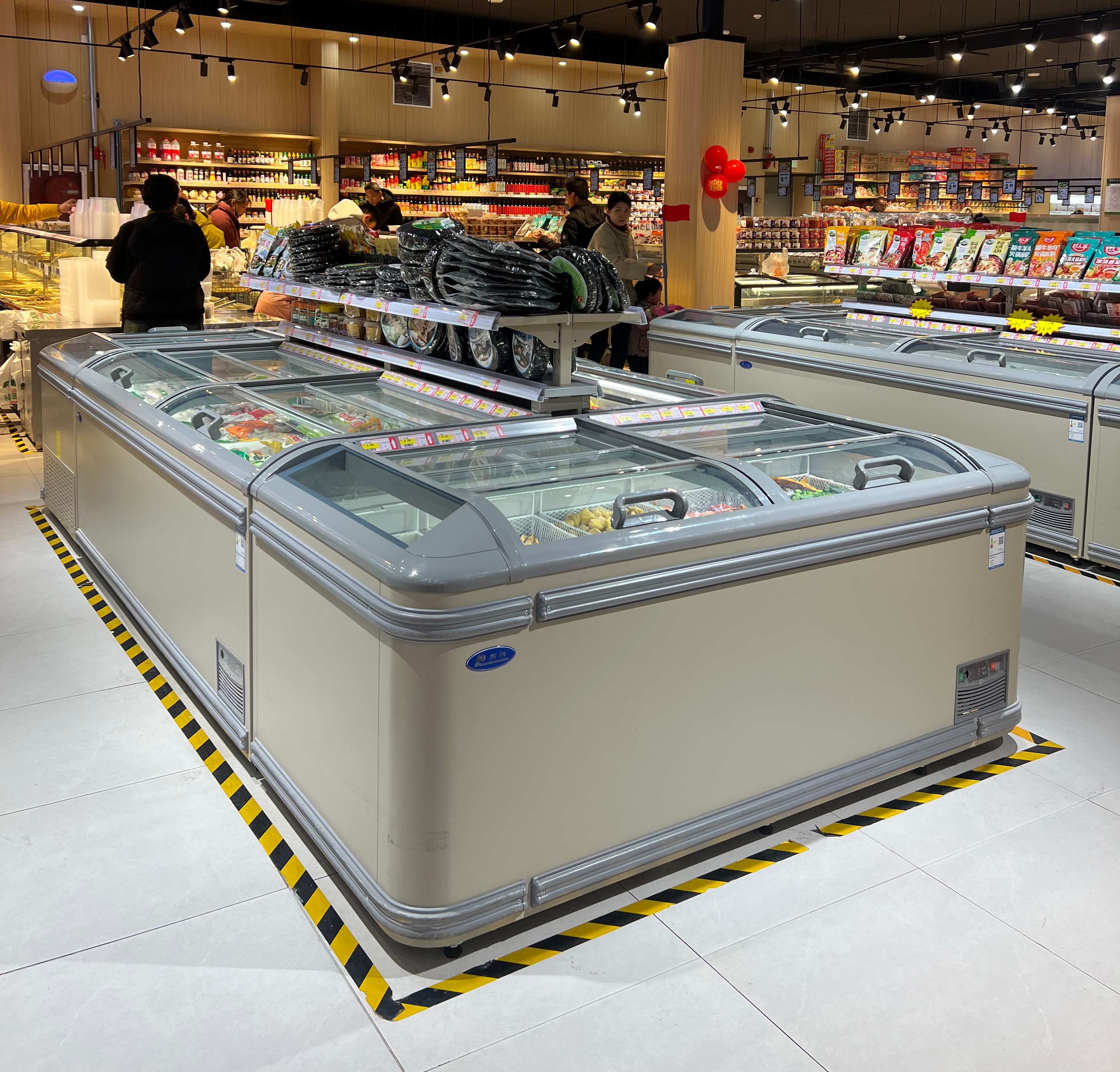
For applications requiring a particular door arrangement or glass configuration, Dashang’s commercial refrigeration range includes island freezer designs with sliding-door options. Discussing cabinet dimensions, door construction, glass requirements, and installation conditions early can help determine whether a standard configuration is suitable or whether adjustments are needed.
Conclusion
Condensation and frost in a sliding door freezer can result from several interacting factors, including humidity, door-opening frequency, glass performance, sealing, insulation, airflow, and defrost operation. Identifying where moisture forms and how quickly it accumulates helps distinguish normal operating conditions from problems requiring attention.
Glass construction, correct door alignment, effective sealing, suitable insulation, and a properly functioning defrost system all contribute to moisture control. Evaluating these elements together provides a more reliable understanding of freezer performance than focusing on a single component.
FAQ
1. Why does a sliding door freezer develop condensation on the glass?
Condensation can form when warm, humid air contacts glass that is colder than the surrounding air’s dew point. Humidity, glass construction, airflow, and door-opening frequency can all influence the amount of condensation.
2. What causes frost to form around a sliding freezer door?
Frost around the door may result from humid air entering through gaps, damaged seals, poor alignment, or repeated exposure to cold surfaces. Persistent problems warrant inspection of the sealing and sliding mechanisms.
3. Can Low-E glass help reduce condensation in a sliding door freezer?
Low-E glass is designed to reduce radiative heat transfer and may be part of a door design intended to manage condensation. The actual result depends on the complete glass assembly, sealing, surrounding humidity, and operating conditions.
4. Why does frost keep returning after defrosting?
Repeated frost accumulation may indicate moisture entry, poor door sealing, restricted airflow, drainage problems, or a defrost system fault. If frost returns quickly despite correct operation, further technical inspection may be necessary.
Post time: Oct-09-2026


