
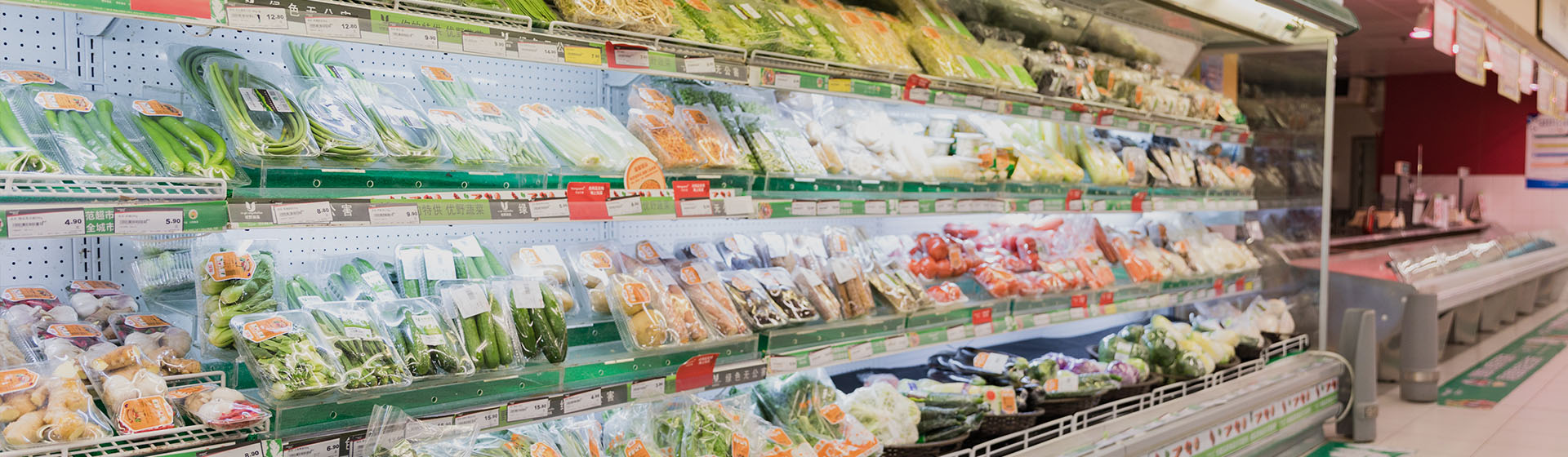
Fresh seafood is more demanding to refrigerate than many packaged foods. Fish, shrimp, shellfish, and other seafood products can be exposed to air, moisture, ice, and repeated handling during display. Because of this, a Seafood Display Refrigerator needs to do more than simply maintain a low temperature. Its refrigeration system, cabinet structure, display surface, airflow, drainage, and accessibility all affect how seafood behaves during the display period.
For fresh seafood, the main challenge is not only reaching the required temperature. It is maintaining suitable conditions across the entire display area without creating excessive drying, temperature fluctuation, water accumulation, or uneven cooling. A well-designed Seafood Display Refrigerator therefore needs to balance refrigeration performance with the practical requirements of fresh seafood presentation.
Why Does Seafood Require a Different Refrigerated Display Environment?
Fresh seafood is often displayed differently from packaged products. Fish fillets, whole fish, shrimp, crabs, and shellfish may be placed directly on trays or ice rather than kept inside sealed packages. This leaves the product more exposed to the surrounding refrigerated environment.
That exposure creates several challenges. If the cabinet becomes too dry, exposed seafood can gradually lose surface moisture. If cooling is uneven, products located in different areas of the cabinet may experience different conditions. If meltwater is not handled properly, water can collect around the display surface and create unnecessary cleaning problems.
The refrigeration environment therefore has to support the product itself rather than simply cool the cabinet air. Temperature stability, moisture management, airflow, and drainage need to work together.
How Does Temperature Stability Affect Seafood Quality?
Low temperature is essential for fresh seafood, but temperature stability is equally important. A cabinet that repeatedly warms and cools can create conditions that are less suitable than a consistently controlled refrigerated environment.
Temperature changes can occur when doors or covers are opened frequently, when warm products are introduced, or when refrigerated air is distributed unevenly. The effect may be particularly noticeable in a display cabinet where some products are positioned closer to the cooling source than others.
A suitable Seafood Display Refrigerator should therefore distribute cold air in a controlled way and maintain relatively consistent conditions throughout the usable display area. The objective is not simply to make the coldest possible cabinet, but to create a stable refrigerated environment that can support fresh seafood over the intended display period.
Why Is Moisture Management Important?
Moisture is one of the differences between seafood display and ordinary refrigerated storage. Fresh seafood naturally contains a high amount of water, while the exposed surface can also interact directly with refrigerated air.
Excessive airflow or an overly dry environment may accelerate surface moisture loss. On the other hand, uncontrolled water accumulation can make the display surface wet and difficult to manage. This is why refrigeration performance cannot be considered separately from moisture management.
The design of the display area, airflow direction, surface materials, and drainage system can all influence how moisture behaves inside the cabinet. For seafood applications, these details are part of the refrigeration solution rather than secondary features.
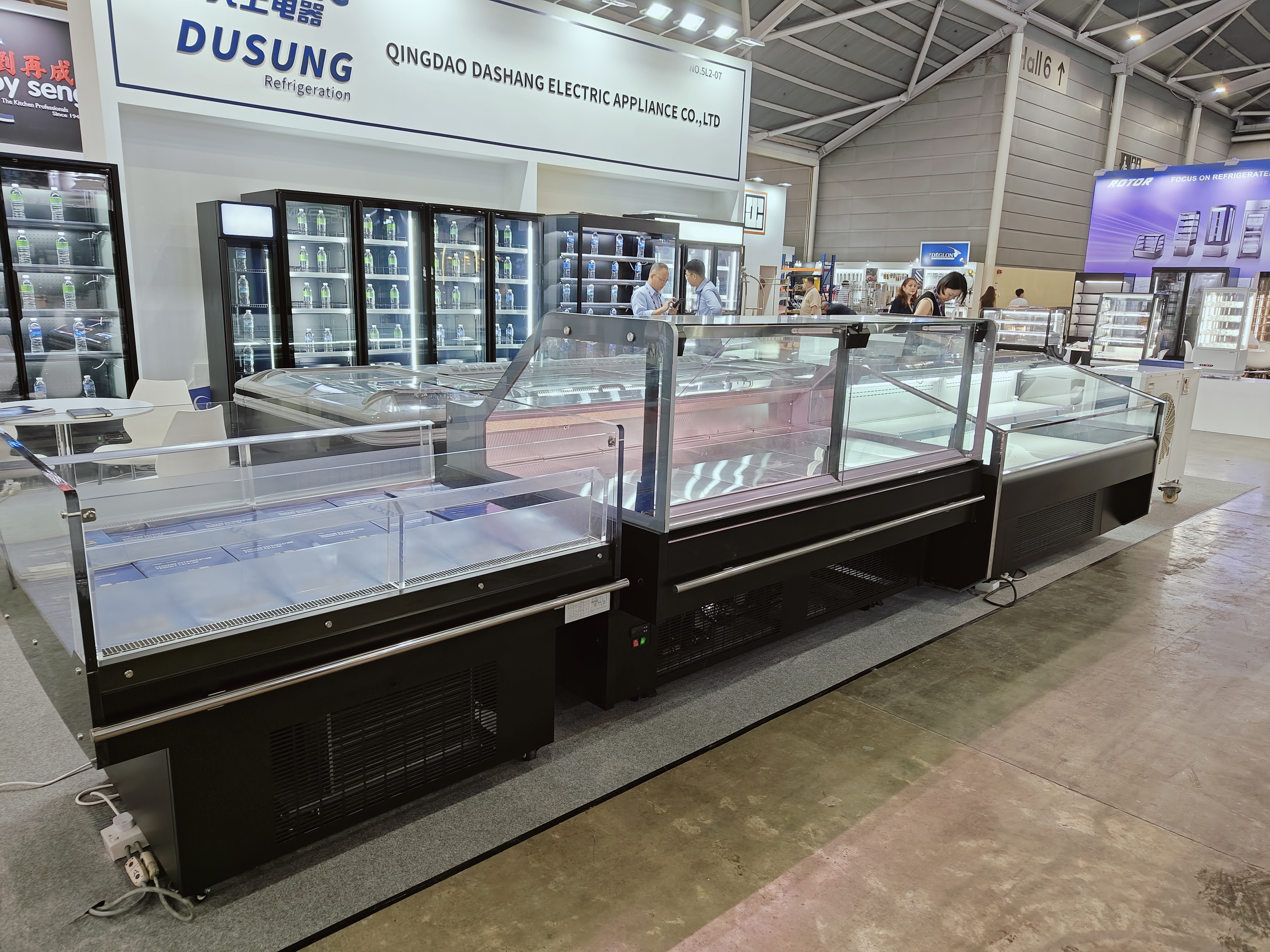
How Is Seafood Display Different From Packaged Food Display?
Packaged food is generally protected by its packaging. Seafood displayed without sealed packaging has direct contact with the refrigerated environment, so the cabinet has a more immediate influence on the product.
The display method can also be different. Seafood may be arranged on ice, in shallow trays, on inclined surfaces, or in dedicated compartments. These arrangements require sufficient usable depth and a display surface that can accommodate the product without obstructing cold-air circulation.
This means that the internal dimensions of a Seafood Display Refrigerator should be considered according to the actual seafood products being displayed. A cabinet with a large overall capacity is not necessarily suitable if its usable display area does not match the required product arrangement.
What Role Does the Display Surface Play?
The display surface is one of the most important parts of a seafood refrigeration cabinet because it directly supports the products.
A suitable surface should be easy to clean and capable of handling moisture generated by melting ice, condensation, or product handling. It should also allow seafood to remain stable during display instead of creating unnecessary movement or pooling water.
For seafood displayed with ice, the surface needs to work with the drainage system. Meltwater should have a controlled path away from the product area rather than accumulating underneath or around the seafood.
This is also where cabinet construction becomes important. A practical display surface should combine product support, hygiene, drainage, and refrigeration requirements rather than treating them as separate issues.
Why Does Airflow Matter When Seafood Is Displayed With Ice?
Airflow is necessary for refrigerated cabinets, but more airflow is not automatically better. The direction and intensity of cold air can affect exposed seafood, especially when products remain uncovered for extended periods.
If cold air moves too directly across the product surface, it may contribute to excessive drying. If airflow is too weak or poorly distributed, some areas may not receive sufficient cooling.
A well-designed system aims for controlled circulation rather than strong airflow alone. Cold air needs to reach the relevant areas while avoiding unnecessary disturbance to the seafood display. This balance becomes particularly important when the cabinet contains products with different sizes and arrangements.
What Should a Seafood Display Refrigerator Make Easier?
A seafood refrigerator should support the daily requirements of the products as well as the people handling them. Three practical areas are especially important.
Product arrangement: The cabinet should provide enough usable display space for the intended seafood formats, whether whole fish, fillets, shrimp, shellfish, or mixed products.
Cleaning and drainage: Seafood display naturally involves water, ice, and frequent handling. Surfaces and drainage paths should therefore be practical to clean and maintain.
Access and visibility: The display should allow products to be inspected and handled without unnecessarily disturbing the rest of the refrigerated area.
These factors influence the actual usability of the equipment. Refrigeration performance matters, but a cabinet that is difficult to clean, arrange, or access can create problems during everyday operation.
How Should Different Seafood Products Be Considered?
Different seafood products do not necessarily require the same display arrangement. Whole fish may need greater depth, while fillets can often be arranged across a wider surface. Shrimp and shellfish may require trays or ice beds that handle moisture differently.
Product size also affects airflow and usable space. Large pieces can obstruct circulation if the display area is too tightly arranged, while smaller products may require greater surface area for organized presentation.
For this reason, choosing a Seafood Display Refrigerator should begin with the products that will actually be displayed. The cabinet dimensions, display depth, refrigeration arrangement, drainage design, and accessibility should then be evaluated around those requirements.
Choosing a Seafood Display Refrigerator Around the Actual Product
There is no single cabinet configuration that is suitable for every seafood application. The right design depends on the products, display method, available space, expected loading pattern, and required operating conditions.
Before selecting equipment, it is useful to define several basic requirements:
- What types of seafood will be displayed?
- Will the products be displayed on ice, trays, or another surface?
- How much usable display depth is required?
- How will meltwater and condensation be removed?
- How frequently will products be added or removed?
- Does the cabinet need open access or a covered display area?
- How should different products be separated within the refrigerated space?
Answering these questions first makes it easier to identify the appropriate cabinet structure and refrigeration configuration instead of selecting equipment based only on overall dimensions or nominal capacity.
Product-Specific Refrigeration Design Matters
A Seafood Display Refrigerator is not simply a standard refrigerator with a different product inside. Fresh seafood creates specific requirements for temperature stability, moisture control, drainage, display surface design, airflow, and cleaning.
When these elements are considered together, refrigeration equipment can provide a more suitable environment for fresh seafood while making the display area easier to manage. This is particularly important when different seafood products need to remain visible, organized, and properly refrigerated within the same cabinet.
For manufacturers and suppliers working with different seafood display requirements, customized cabinet dimensions and refrigeration configurations can also provide greater flexibility. The final equipment should be matched to the actual product and operating conditions rather than relying on a one-size-fits-all design.
FAQ
1. Can seafood be displayed directly on ice?
Yes. Some seafood display configurations use ice to help maintain suitable product conditions and create a practical presentation surface. When ice is used, the cabinet should provide appropriate drainage and a display structure that can manage meltwater effectively.
2. Why is airflow important in seafood refrigeration?
Airflow helps distribute refrigerated air throughout the cabinet, but excessive or poorly directed airflow may affect exposed seafood. Controlled circulation is important for maintaining cooling performance while reducing unnecessary surface drying.
3. What seafood products can be displayed in this type of refrigerator?
Depending on the cabinet design, it can be used for products such as whole fish, fish fillets, shrimp, crabs, shellfish, and other fresh seafood. The required display depth and arrangement should be considered according to the specific products.
4. Why is drainage important in a seafood refrigerator?
Fresh seafood display can involve ice, condensation, and water released during handling. Effective drainage helps prevent water accumulation and makes the display area easier to clean and maintain.
5. What should be considered when selecting a Seafood Display Refrigerator?
The main considerations include the seafood type, display method, usable display area, temperature stability, airflow, drainage, insulation, cleaning requirements, and available installation space. The equipment should be selected according to the actual application rather than capacity alone.
Post time: Sep-30-2026


