
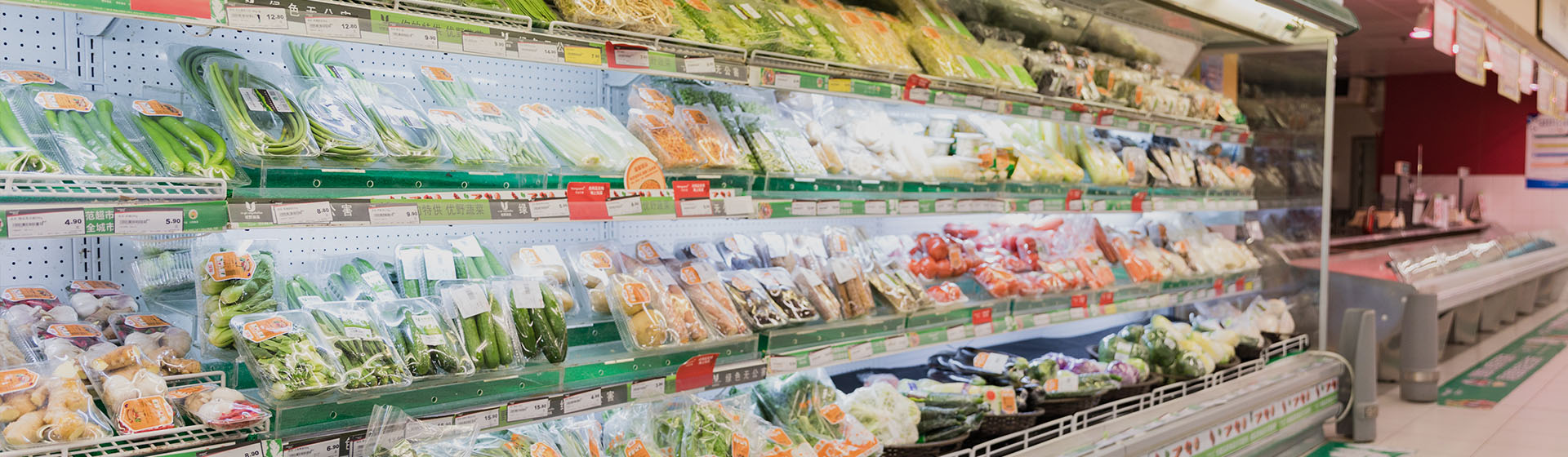
Open refrigerated displays are widely used in environments where product visibility and easy access are important. However, keeping products visible while maintaining stable refrigeration conditions requires careful consideration of airflow, product arrangement, and daily usage patterns. A Remote Double Air Curtain Display Fridge is designed for open display applications where refrigeration stability and product accessibility need to be balanced. Understanding how air management, installation planning, and display organization influence performance can help create a more suitable refrigerated environment.
Challenges in Open Refrigerated Display Environments
Open refrigerated displays provide a convenient way for customers to view and access products, but the open structure also creates challenges that differ from traditional closed refrigeration equipment. Since the display area is continuously exposed to the surrounding environment, factors such as room temperature, air movement, and frequent product access can influence internal conditions. Maintaining a stable refrigerated area requires more than simply providing cooling capacity.
Common challenges in open refrigerated display environments include:
- External environmental influence: Changes in surrounding temperature and airflow may affect the conditions inside the display area.
- Frequent product access: Regular opening and product handling can create fluctuations that need to be managed.
- Product arrangement limitations: Improper placement may affect airflow circulation and reduce display clarity.
- Balancing visibility and refrigeration: Products need to remain easy to view while maintaining suitable storage conditions.
These challenges show that open refrigerated display is not only about storing products. The way air moves, products are arranged, and equipment is installed all influence the overall performance of the display area.
How Air Curtain Technology Supports Temperature Management
Air curtain technology plays an important role in open refrigerated displays. Instead of relying on physical barriers, it uses controlled airflow to create a separation between the refrigerated space and the surrounding environment. A double air curtain design focuses on improving airflow management by creating multiple layers of air movement. This helps reduce the direct impact of external conditions and supports more consistent conditions across the display area.
The effectiveness of an air curtain system depends on several factors, including airflow design, surrounding conditions, and product placement. A well-planned system needs to work together with proper usage habits to maintain stable performance. For open display refrigeration, the purpose of an air curtain is not to completely isolate the product area but to manage the interaction between internal cold air and external air. This balance allows products to remain accessible while reducing unnecessary environmental impact.
Why Product Arrangement Matters in Open Refrigerated Displays
Even with suitable refrigeration technology, product organization remains an important part of display performance. The position, height, and quantity of products can influence both visibility and airflow.
A crowded or poorly arranged display may block air movement and make certain areas harder to access. On the other hand, a well-organized layout allows products to be easier to identify while supporting more consistent refrigeration conditions.
When planning product placement, several aspects should be considered:
- Product categories: Similar products should be grouped together to make selection easier and create a clearer display structure.
- Product height: The arrangement should avoid blocking visibility or affecting airflow paths.
- Restocking frequency: Products that require frequent replenishment should be positioned for convenient access.
- Display balance: The product quantity should match the available space to maintain an organized appearance.
Product arrangement is closely connected with refrigeration performance. A well-planned display area considers both customer experience and practical management requirements.
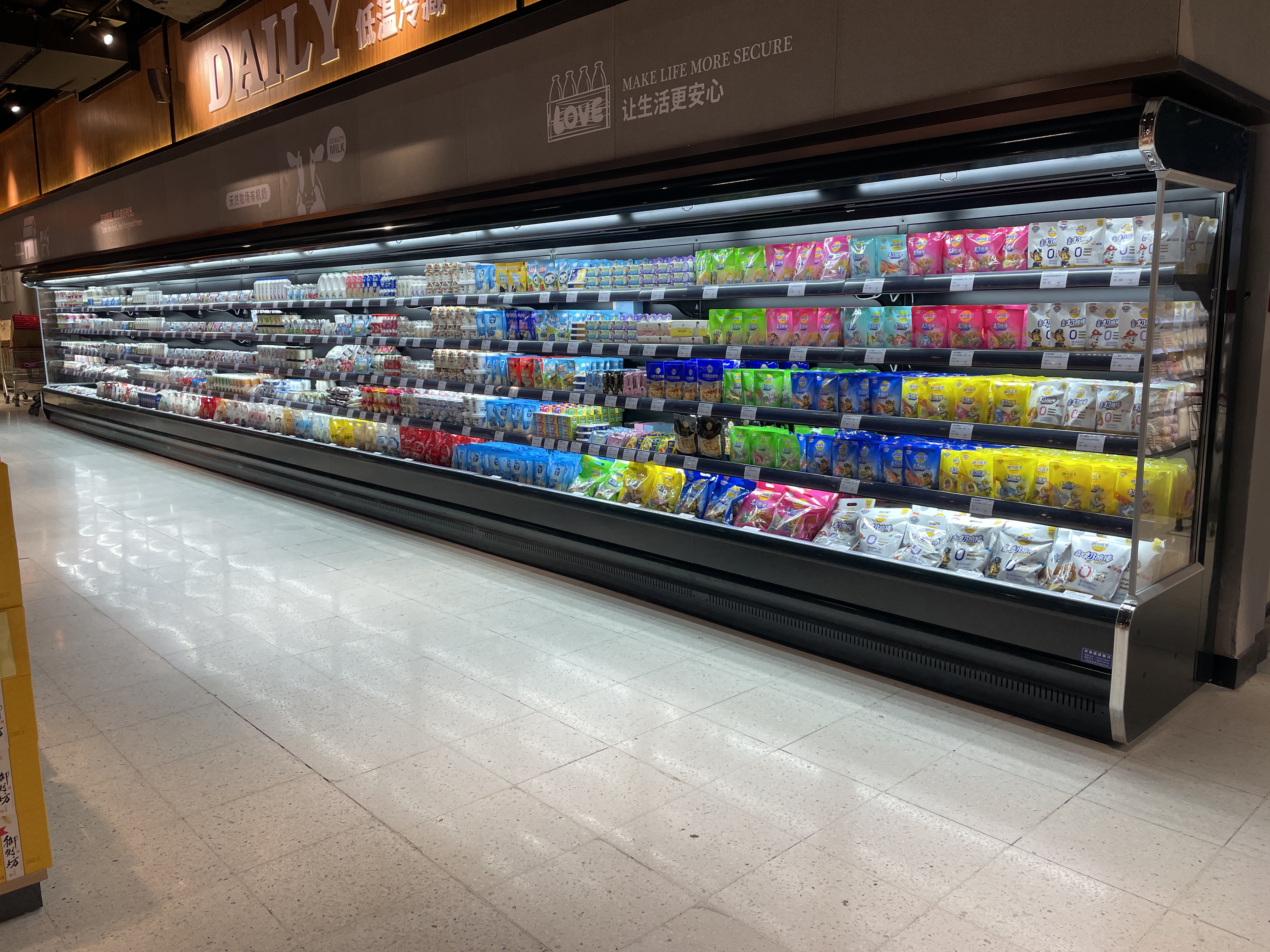
The Role of Remote Refrigeration Systems in Display Planning
Remote refrigeration systems separate the refrigeration components from the display cabinet, which can influence how the overall space is planned. In larger refrigerated display areas, equipment placement is often affected by available space, customer movement, and environmental conditions. Separating refrigeration components can provide more flexibility when designing the layout. A remote system is often considered in applications where the display area needs to remain focused on product presentation while refrigeration equipment placement requires additional planning.
However, the suitability of a remote refrigeration system depends on the specific application. Factors such as installation environment, maintenance requirements, and operating conditions should all be evaluated before making a decision.
Factors to Consider When Evaluating an Open Display Refrigerator
Choosing suitable refrigeration equipment requires understanding how the display area will be used. Different applications may have different priorities depending on product types, space conditions, and operating patterns.
Important considerations include:
- Product characteristics: Different products may have different requirements for temperature control and display methods.
- Installation environment: Surrounding temperature, available space, and airflow conditions can affect refrigeration performance.
- Usage frequency: Areas with frequent customer access may require more attention to airflow management.
- Maintenance conditions: Regular cleaning and inspection are important for maintaining consistent operation.
A suitable refrigeration system should match the actual environment rather than focusing only on equipment appearance or basic capacity. Understanding daily usage conditions helps create a more practical refrigerated display layout.
Creating Suitable Refrigerated Display Solutions for Different Applications
Different commercial environments have different requirements for refrigerated product presentation. Supermarkets, food stores, and other retail spaces may need different approaches depending on product categories, available space, and display objectives. Dashang provides commercial refrigeration solutions, including Remote Double Air Curtain Display Fridge configurations designed for different refrigerated display applications. By considering product requirements, installation conditions, and usage environments together, suitable refrigeration arrangements can be developed for various display needs.
Conclusion
A Remote Double Air Curtain Display Fridge is part of a larger refrigerated display system that involves airflow management, product organization, installation planning, and daily operation.
For open refrigerated environments, maintaining a balance between product accessibility and stable conditions is an ongoing challenge. By understanding the factors that influence display performance, it becomes easier to create a more organized and practical refrigeration area.
FAQ
1. Why do open display refrigerators need air curtain systems?
Open display refrigerators use air curtain systems to help manage the interaction between cold air inside the display area and warmer surrounding air. This supports more stable conditions while keeping products accessible.
2. What factors affect temperature stability in an open refrigerated display?
Temperature stability can be influenced by surrounding conditions, airflow management, product placement, usage frequency, and regular maintenance practices.
3. How does product arrangement influence refrigerated display performance?
Product arrangement affects visibility, airflow circulation, and accessibility. Proper organization helps maintain a clearer display while supporting more consistent refrigeration conditions.
4. When is a remote refrigeration system suitable for a display fridge?
A remote refrigeration system may be considered when space planning, equipment placement, and display area design require more flexibility. The choice depends on the specific installation environment and operating requirements.
Post time: Oct-12-2026


