
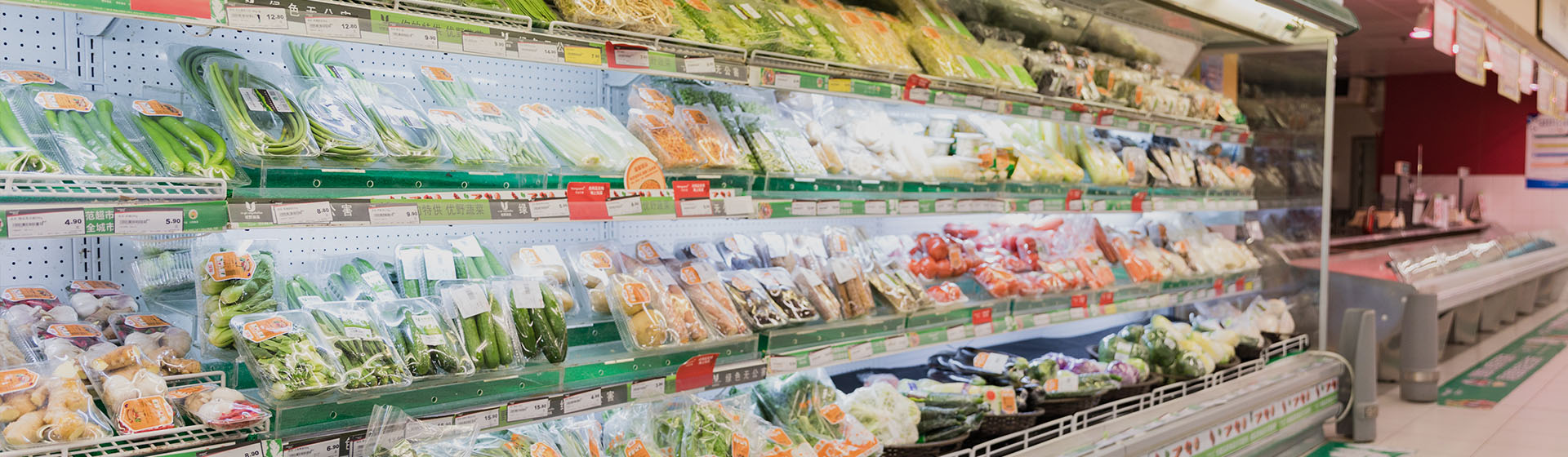
Maintaining energy efficiency in glass-door upright fridges is essential for modern commercial businesses, including supermarkets, convenience stores, cafes, and restaurants. These refrigeration units play a crucial role in showcasing products effectively while preserving freshness. However, without proper energy optimization, they can significantly increase operating costs. This guide provides practical, expert tips for improving energy efficiency, reducing energy consumption, and ensuring your fridge operates at peak performance.
Understanding Glass-Door Upright Fridges
A glass-door upright fridge is a commercial refrigeration unit designed for easy product visibility and effective storage. Transparent doors allow customers to see items inside without opening the fridge, which helps maintain consistent temperatures and reduces energy loss. These fridges vary in size, from single-door compact units to multi-door models with adjustable shelving, LED lighting, and digital temperature control.
Key features of modern glass-door upright fridges include:
● Transparent glass doors for product visibility
● Adjustable shelves for customized storage
● LED lighting for energy-efficient illumination
● Digital temperature controls for precise cooling
Understanding these features is the first step in optimizing energy efficiency and ensuring reliable, long-term operation.
Top Energy-Saving Tips for Glass-Door Upright Fridges
1. Optimize Temperature Settings
Maintaining the correct temperature is critical for food safety and energy efficiency. Set the refrigerator section between 35°F and 38°F (1.7°C to 3.3°C) and the freezer compartment below 0°F (-17.8°C). Regularly monitor and adjust temperature settings using digital controls or a thermometer to ensure optimal performance.
2. Ensure Proper Door Sealing
Improper door sealing is a common cause of energy loss. Regularly inspect door gaskets for wear, cracks, or deformation. Replace damaged gaskets promptly to prevent cold air from escaping and warm air from entering. A simple dollar-bill test—closing a bill inside the door and pulling it gently—can indicate whether the seal is tight.
3. Smart Shelving Practices
Correct shelving improves airflow and cooling efficiency:
● Avoid overloading shelves, which blocks airflow and causes uneven cooling
● Use adjustable shelves to optimize storage for various product sizes
● Organize products to minimize gaps while allowing air circulation around items
Proper internal arrangement ensures consistent temperatures and reduces energy consumption.
4. Upgrade to LED Lighting
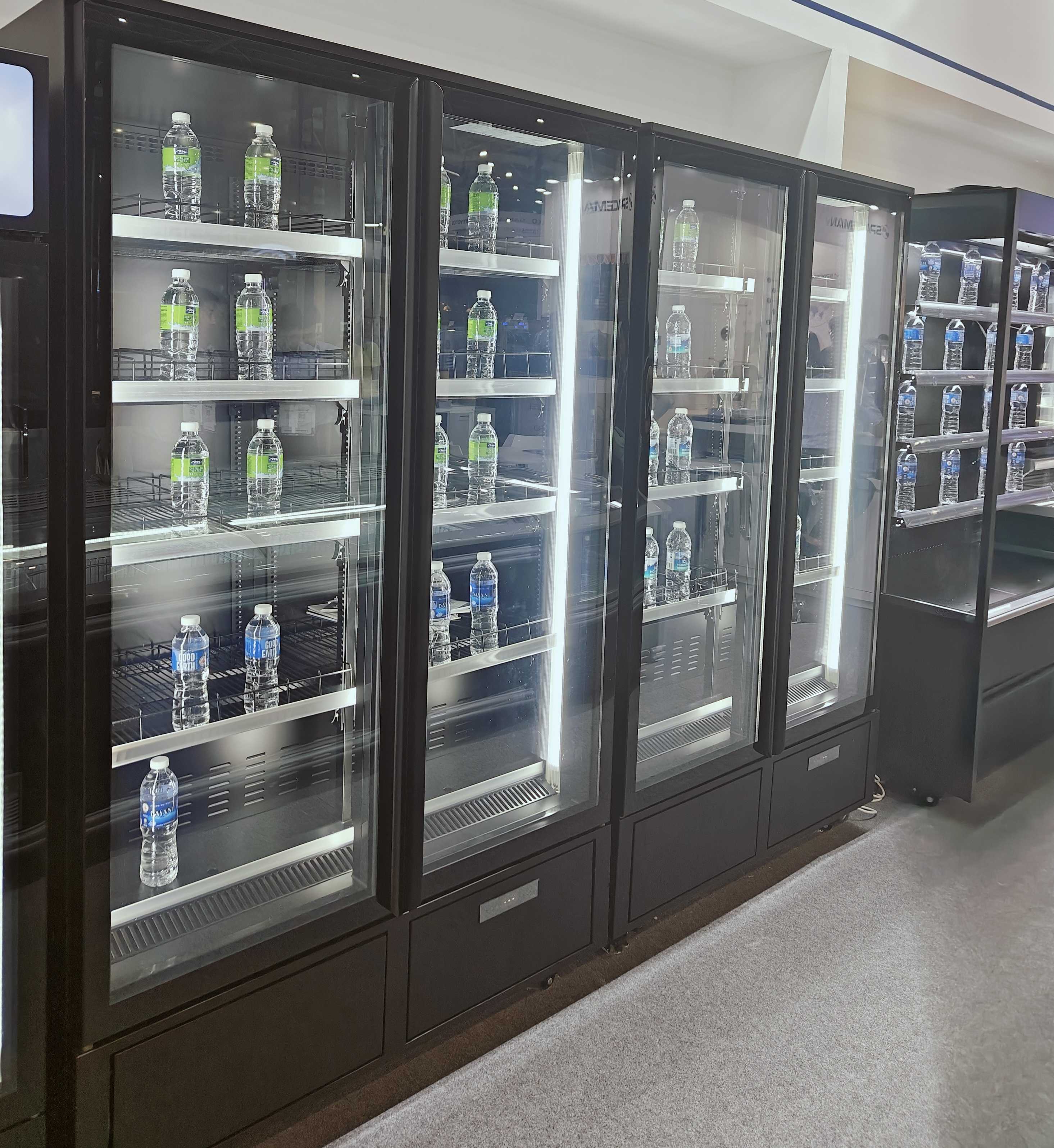
Replacing traditional bulbs with LED lights can save energy and reduce heat inside the fridge. LEDs use less electricity, have a longer lifespan, and maintain optimal display lighting. Well-lit shelves also enhance product visibility, which can increase sales while lowering energy costs.
5. Minimize Door Openings
Every time the door is opened, cold air escapes, and the fridge works harder to restore the temperature. Train staff and customers (in self-service areas) to reduce unnecessary door openings. Position frequently sold items at eye level for faster access and convenience.
6. Regular Cleaning and Maintenance
Dust buildup on coils, dirty vents, and blocked fans reduce efficiency:
● Clean condenser coils regularly to maintain proper heat dissipation
● Inspect fan motors for proper airflow
● Wipe down shelves and interior walls to prevent contamination and airflow obstruction
Routine maintenance improves efficiency and prolongs the lifespan of your glass-door upright fridge.
7. Consider Energy-Efficient Upgrades
Modern commercial fridges often come with energy-saving features:
● Motion-sensor doors for short openings
● Energy-efficient compressors
● Smart temperature management systems
Investing in these upgrades can further reduce energy consumption while maintaining reliable cooling performance.
FAQ: Optimizing Energy Efficiency in Glass-Door Upright Fridges
Q1: How can I reduce energy use without compromising food safety?
Maintain optimal temperature settings, check door seals, use proper shelving, and install LED lighting. These steps preserve food freshness while reducing energy consumption.
Q2: Are energy-efficient fridges worth the investment?
Yes. Energy-efficient units reduce operating costs, have longer lifespans, and contribute to sustainable business practices. Savings often offset the initial investment within a few years.
Q3: How often should I inspect my fridge?
Daily: Quick visual inspection and temperature check
Weekly: Clean interior surfaces, check door gaskets
Monthly: Clean condenser coils and verify airflow
Q4: Can lighting choices impact energy efficiency?
Absolutely. LED lighting produces minimal heat and consumes less power, which directly improves overall energy efficiency.
Choosing the Right Glass-Door Upright Fridge for Energy Efficiency
When selecting a commercial fridge, prioritize models with energy-saving features such as LED illumination, digital temperature control, efficient compressors, and adjustable shelving. Ensure the design allows easy maintenance, coil cleaning, and airflow inspection. By selecting energy-efficient models and following proper operational practices, businesses can lower electricity costs and reduce their environmental footprint.
Conclusion
Optimizing energy efficiency in glass-door upright fridges is essential for commercial success, cost savings, and sustainability. Key strategies include maintaining ideal temperature settings, ensuring door seals are tight, using smart shelving practices, upgrading to LED lighting, minimizing door openings, and performing regular maintenance. Implementing these tips not only improves performance and reduces energy consumption but also enhances product display and customer satisfaction.
For businesses aiming to reduce operating costs and carbon footprint, energy-efficient practices combined with strategic equipment selection provide significant long-term value. Start optimizing your glass-door upright fridge today and enjoy reliable cooling, lower energy bills, and improved operational efficiency.
Post time: Jan-13-2026


