
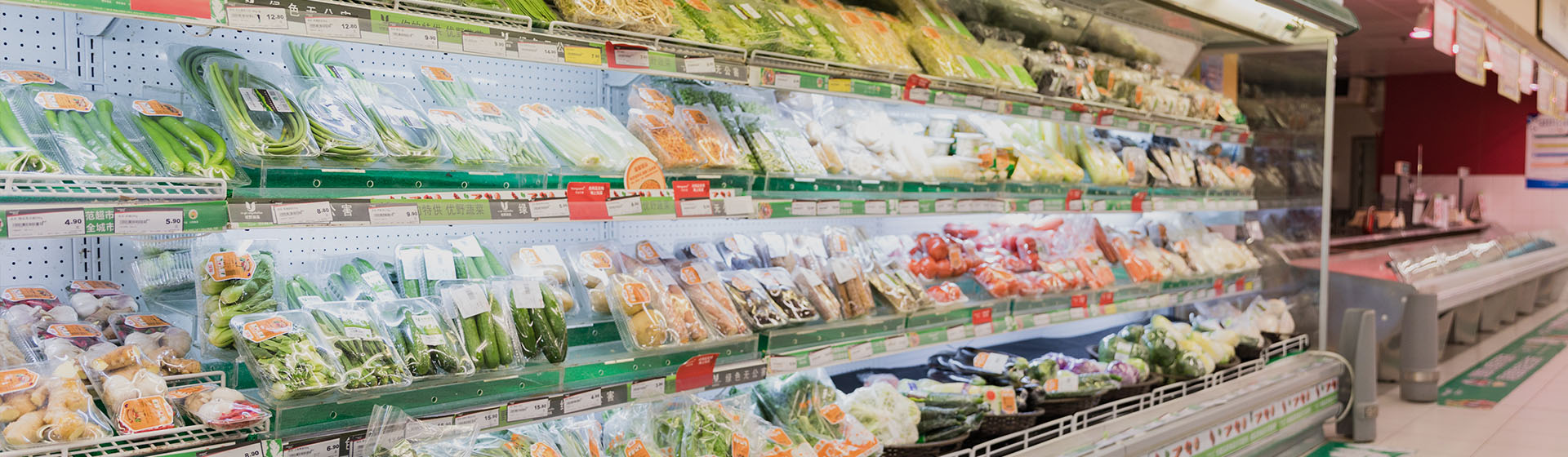
A Display Freezer For Supermarket should not be planned only as a cold box placed wherever floor space is available. Frozen food is discovered in different ways depending on where the shopper is standing. Some products need a clear package front, some are chosen from a large promotional pile, some belong in a central island, and some need staff-controlled service. The freezer format should follow that shopping behavior.
This gives supermarket freezer planning a different starting point. Instead of asking which freezer type is “best,” it is more useful to ask what job the freezer must perform at a specific point in the frozen-food journey. A successful frozen department often uses several display formats because one cabinet cannot optimize visibility, capacity, access and replenishment in every zone at once.
How a Display Freezer For Supermarket Shapes the Shopper’s Frozen-Food Route
From the customer’s perspective, the frozen department is a sequence of decisions. The first freezer may introduce a category. The next may allow comparison between brands. A central cabinet may hold promotional packs. A service counter may present premium or portioned products.
This sequence matters because attention changes as the shopper moves. A vertical glass-door freezer can create a strong product wall and make package fronts easy to compare. An island freezer can bring products into a central traffic area and support top-view browsing. A combination freezer can use both lower and upper display levels. The equipment should therefore be considered as part of the route, not as isolated machines.
Display Freezer For Supermarket: Zone 1 as the Category Wall
When the goal is to let shoppers compare many packaged frozen products, a vertical Display Freezer For Supermarket can turn the wall into organized refrigerated shelving. Frozen vegetables, prepared meals, pizzas, desserts and boxed seafood often benefit from front-facing presentation because the package itself carries important information.
The strength of this zone is not simply height. It is the ability to create recognizable blocks: brand by brand, flavor by flavor or category by category. Glass doors keep the products visible while creating a physical boundary between the cold interior and the shopping aisle.
Shelf spacing has a strong effect on how much of the package front remains visible. If too many shelf levels are added, the display can look compressed. If products are stacked too deep, front rows may look full while rear stock becomes difficult to rotate. The category wall therefore works best when shelf density supports the packaging rather than competing with it.
Display Freezer For Supermarket: Zone 2 for Central Promotions
A different job appears in the center of the aisle. Here, the retailer may want high-volume frozen products, seasonal packs or promotional items to be seen from several directions. An island-style Display Freezer For Supermarket can be more effective because customers approach it from the side rather than facing a wall.
Top-view shopping changes product presentation. The upper layer becomes especially important, because shoppers often make the first judgment from above. Large bags, family packs and visually distinctive packaging can work well here.
However, an island should not be treated as a deep storage box. If the load becomes too high, lower products become difficult to see and reach. The best use of an island is often a balance between visible top-layer variety and sufficient reserve below.
Zone 3: When One Footprint Needs Two Display Levels
Some supermarket layouts have limited floor area but still want both bulk frozen capacity and additional package-facing display. A combination format can place a lower frozen cabinet beneath an upper display level.
This arrangement changes the value of the footprint. The lower section can hold larger quantities or products suited to top access, while the upper section can support smaller packs, secondary categories or products that benefit from a more vertical presentation.
The challenge is visual balance. If the upper section is too dense, it can block sightlines across the aisle. If the lower section is overloaded, customers may struggle to reach products comfortably. A successful combination freezer treats the upper and lower sections as two related merchandising zones rather than one oversized cabinet.
Zone 4: Staff-Controlled Frozen Display
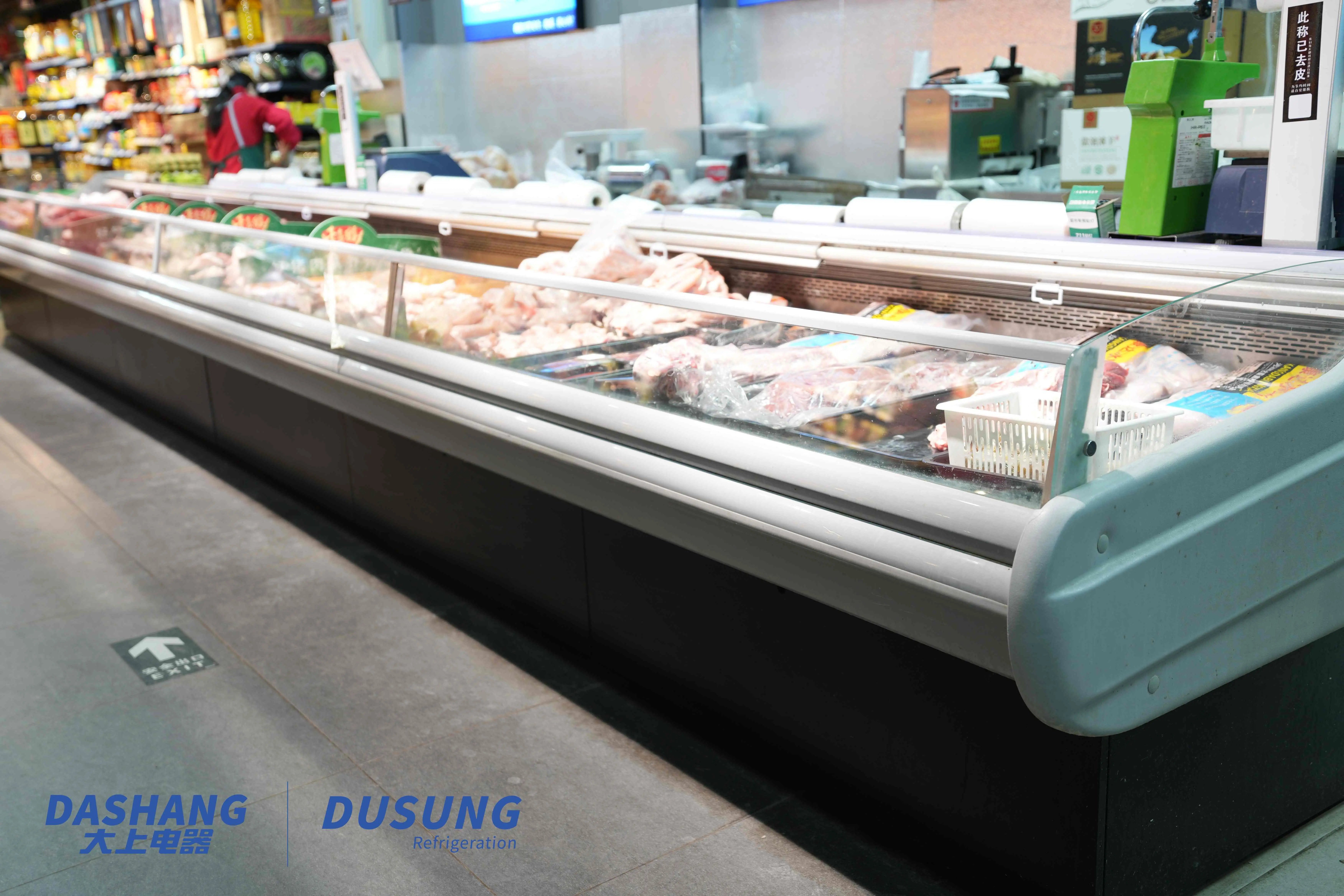
Not every frozen product should be self-service. Some seafood, prepared foods or specialty products may be sold through a staff-operated counter. In this case, the Display Freezer For Supermarket has a different task: it must show the product clearly to the customer while keeping access on the service side.
The display surface becomes more important than package-facing shelf density. Customers need to compare the product visually, while staff need practical access for serving and replenishment. The freezer is therefore part of a service interaction rather than a self-service aisle.
This is why a service freezer should not be judged by the same criteria as an upright glass-door freezer. Both display frozen products, but they support different customer behaviors.
One Frozen Department Can Use Four Different Jobs
A useful way to plan the department is to assign a job to each freezer location:
- · Category wall: make packaged products easy to compare.
- · Central promotion zone: create visibility from multiple directions and support larger-volume products.
- · Combination zone: increase merchandising functions within one footprint.
- · Service zone: present products that are selected by the customer but handled by staff.
Once these jobs are clear, choosing the cabinet becomes more logical. The question changes from “Which freezer has the biggest capacity?” to “Which freezer makes this location work better?”
Replenishment Should Be Planned Along the Same Route
The shopper route is only half of supermarket freezer planning. Staff also need a replenishment route. A beautiful frozen department can become difficult to operate if cartons block the aisle, doors are frequently left open during restocking, or the deepest products are hard to rotate.
Each Display Freezer For Supermarket should therefore be considered from both sides: how the shopper sees it and how the staff refill it. Upright cabinets need practical shelf access. Islands need clear top access and sensible loading depth. Combination units need both upper and lower sections to be refillable without creating unnecessary congestion.
This operational view also affects cleaning. The more complicated the cabinet geometry, the more important it is to preserve access to glass, gaskets, edges and internal surfaces.
Build the Frozen Department Around Product Roles
For supermarkets planning a new frozen section or replacing existing cabinets, it helps to map products by role before selecting equipment. Which categories depend heavily on package fronts? Which products are high-volume promotions? Which lines need top-view browsing? Which products require staff service?
DUSUNG can provide different commercial freezer formats for supermarket applications, including upright, island, combination and service-oriented display solutions. When a project includes the product mix, aisle dimensions, expected customer access and replenishment method, the freezer configuration can be aligned with the role of each zone instead of repeating the same cabinet throughout the department.
A more useful starting point for discussion is therefore not simply a model number. It is a simple frozen-department map showing where categories are located and how shoppers and staff move around them.
FAQ
Does every supermarket need several freezer types?
No. Smaller stores may work well with one main format. Larger frozen departments often benefit from multiple formats because different product groups and locations have different display jobs.
When is an upright display freezer most useful?
It is especially useful when package fronts, vertical classification and side-by-side comparison are important.
When is an island freezer more suitable?
It works well in open central areas, for top-view shopping, promotional packs and products that benefit from visibility from several directions.
What information is useful before planning a supermarket freezer layout?
Product categories, packaging sizes, aisle dimensions, customer access direction, replenishment route and required service areas are useful starting points.
Post time: Sep-18-2026


