
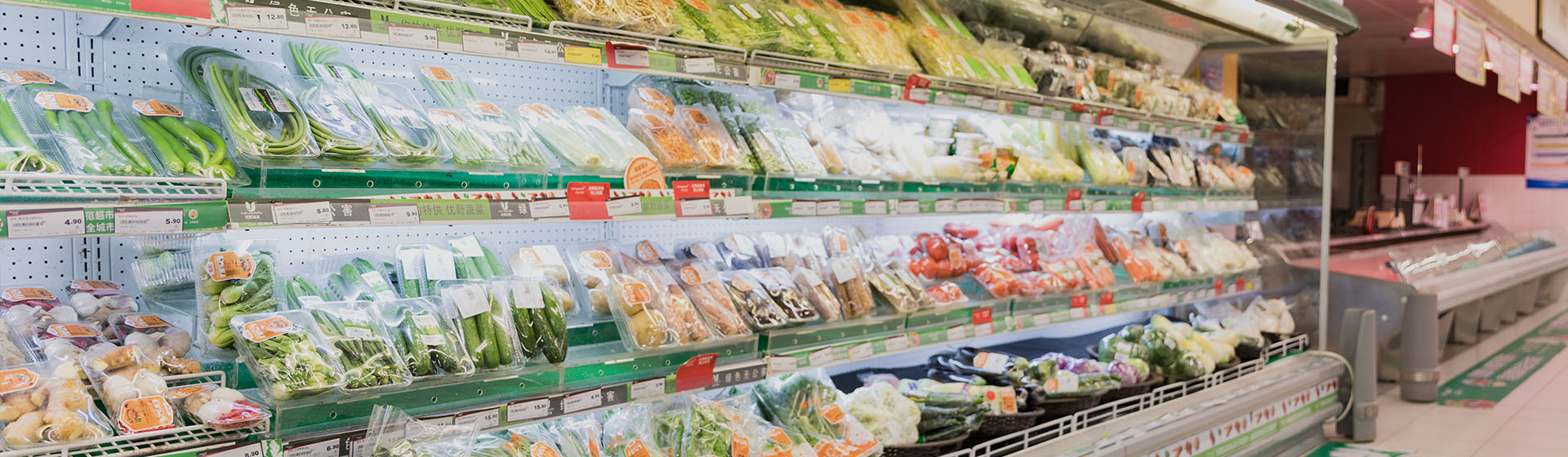
Lighting is an important part of refrigerated display design because it determines how clearly products can be seen through glass doors. In a Remote Glass Door Fridge, the position, direction, and distribution of light influence whether packaging, labels, and product colors remain easy to distinguish across different shelf levels. However, effective lighting requires more than choosing bright lamps. The interaction between lighting, glass, cabinet structure, and refrigeration performance must also be considered.
Why Light Distribution Matters More Than Brightness Alone
A display cabinet may have powerful lighting but still present products unevenly. Bright areas can draw attention to certain shelves, while darker corners make other products less noticeable. This usually happens when light sources are poorly positioned, their output is unevenly distributed, or the cabinet’s internal structure creates shadows.
In a Remote Glass Door Fridge, lighting should reach the main product display area without creating excessive contrast between shelves. Vertical lighting along the door frame can illuminate products from the sides, while shelf-mounted lighting can direct light toward individual product rows. The appropriate arrangement depends on the cabinet’s height, shelf configuration, and intended merchandise. Excessive brightness is not always helpful. Strong light directed toward the glass can produce reflections, while concentrated illumination may create bright spots on glossy packaging. These effects can make labels harder to read, even when the cabinet interior appears well lit.
A balanced lighting design should therefore distribute light across the display rather than maximize brightness in one location. The objective is to maintain consistent visibility from the upper shelves to the lower display area, allowing customers to identify products without being distracted by glare or deep shadows.
How Glass Doors Influence Lighting Performance
Glass doors provide a clear view of refrigerated merchandise, but they also introduce optical effects that can interfere with visibility. Reflections from ceiling lights, windows, nearby displays, and other bright surfaces may appear on the glass. Depending on the viewing angle and surrounding environment, these reflections can compete with the products behind the door.
The relationship between lighting and glass construction is particularly important in supermarkets and convenience stores, where cabinets are often installed beneath strong overhead lighting. If the interior is relatively dark while the surrounding environment is bright, reflections on the outer glass surface may become more noticeable. The solution is not necessarily to increase the brightness inside the cabinet. Instead, the lighting arrangement should be evaluated alongside the glass specification and the cabinet’s installation environment. Double-layer glass, low-emissivity coatings, and suitable door designs can contribute to thermal performance, while lighting placement helps determine how clearly products can be viewed. These functions are related, but they are not interchangeable.
Viewing angle also matters. A display that looks clear when viewed directly from the front may produce more reflections when approached from the side. For this reason, lighting should be assessed from the positions where customers are most likely to view the products. Before finalizing a lighting configuration, it is useful to examine the cabinet under its intended store lighting conditions. This helps identify reflections and visibility problems that may not be apparent when the unit is tested in an isolated environment.
Matching Lighting Position to Product Packaging
Different types of packaging respond differently to illumination. Clear plastic bottles may produce strong highlights, metallic cans can reflect concentrated light, and glossy labels may become difficult to read when light strikes them at an unsuitable angle. Matte cartons generally produce fewer sharp reflections, but their printed details still require sufficient illumination. The goal is to make the product itself easy to recognize without allowing reflections to dominate its appearance. Lighting placement should therefore account for both the packaging material and the direction from which customers view the display.
Shelf-mounted lights can help illuminate individual rows, especially when the cabinet contains products with different label colors or package heights. Frame-mounted lighting may provide a more continuous appearance across the cabinet, depending on the design. Neither approach is automatically superior; the result depends on the cabinet’s dimensions, internal layout, and light distribution.
When evaluating a lighting arrangement, consider the following points:
- Label visibility: Check whether product names, sizes, and other important printed details remain readable under normal viewing conditions.
- Surface reflections: Observe whether glossy bottles, metal cans, or transparent containers produce distracting highlights.
- Shelf-to-shelf consistency: Compare illumination across the upper, middle, and lower sections rather than judging the display from a single shelf.
- Color appearance: Confirm that packaging colors remain distinguishable under the selected lighting without creating an unnatural visual impression.
These checks are especially useful when one cabinet displays several product categories. A configuration that works well for beverage bottles may not produce the same results for dairy cartons or packaged ready-to-eat foods.
Balancing Illumination with Refrigeration Performance
Lighting is not separate from the cabinet’s refrigeration requirements. Although LED lighting is generally more energy-efficient than many traditional lighting technologies, electrical energy consumed by lights is ultimately released as heat. Depending on the lighting system and where its heat is dissipated, some of this heat may add to the cabinet’s cooling load.
The effect varies with lamp power, operating hours, installation position, and cabinet design. It would therefore be inaccurate to assume that every lighting arrangement produces the same refrigeration impact. In a Remote Glass Door Fridge, the refrigeration system must maintain the required internal temperature while accounting for heat entering the cabinet from its surroundings and internal components. Lighting that generates unnecessary heat may increase the cooling demand, although the actual effect depends on the complete system.
LED lighting offers a practical option because it can provide useful illumination with relatively low electrical consumption. However, energy efficiency should not be assessed through the lamp specification alone. Light output, distribution, operating duration, and compatibility with the cabinet all influence the overall result.
Lighting fixtures should also be suitable for the environment in which they operate. Their installation must avoid interfering with airflow passages, obstructing access for cleaning, or creating maintenance difficulties. Where integrated lighting is used, its position should be considered during the cabinet design stage rather than treated as an isolated accessory.
Evaluating Lighting Before Selecting a Cabinet
Lighting performance should be evaluated as part of the complete display configuration. Product type, store environment, cabinet dimensions, glass construction, and operating requirements all influence the appropriate solution. A practical assessment can follow three steps. First, identify the main products and packaging materials to be displayed. Second, examine the cabinet’s lighting position and distribution under realistic ambient conditions. Finally, verify that the selected arrangement supports clear product visibility without interfering with normal refrigeration operation.
It is also worth considering maintenance. Lights that are difficult to access may take longer to clean, inspect, or replace. Dust, residue, and aging components can affect illumination over time, so convenient maintenance access helps preserve the intended display quality. The best lighting configuration is not necessarily the brightest or most elaborate one. It is the arrangement that provides consistent visibility, limits distracting reflections, suits the products being displayed, and works within the cabinet’s refrigeration design.
Choosing a Remote Glass Door Fridge for Display Requirements
When comparing cabinet options, lighting should be assessed alongside glass construction, shelf design, temperature requirements, and the overall installation plan. These elements work together to determine whether a display is suitable for its intended application.
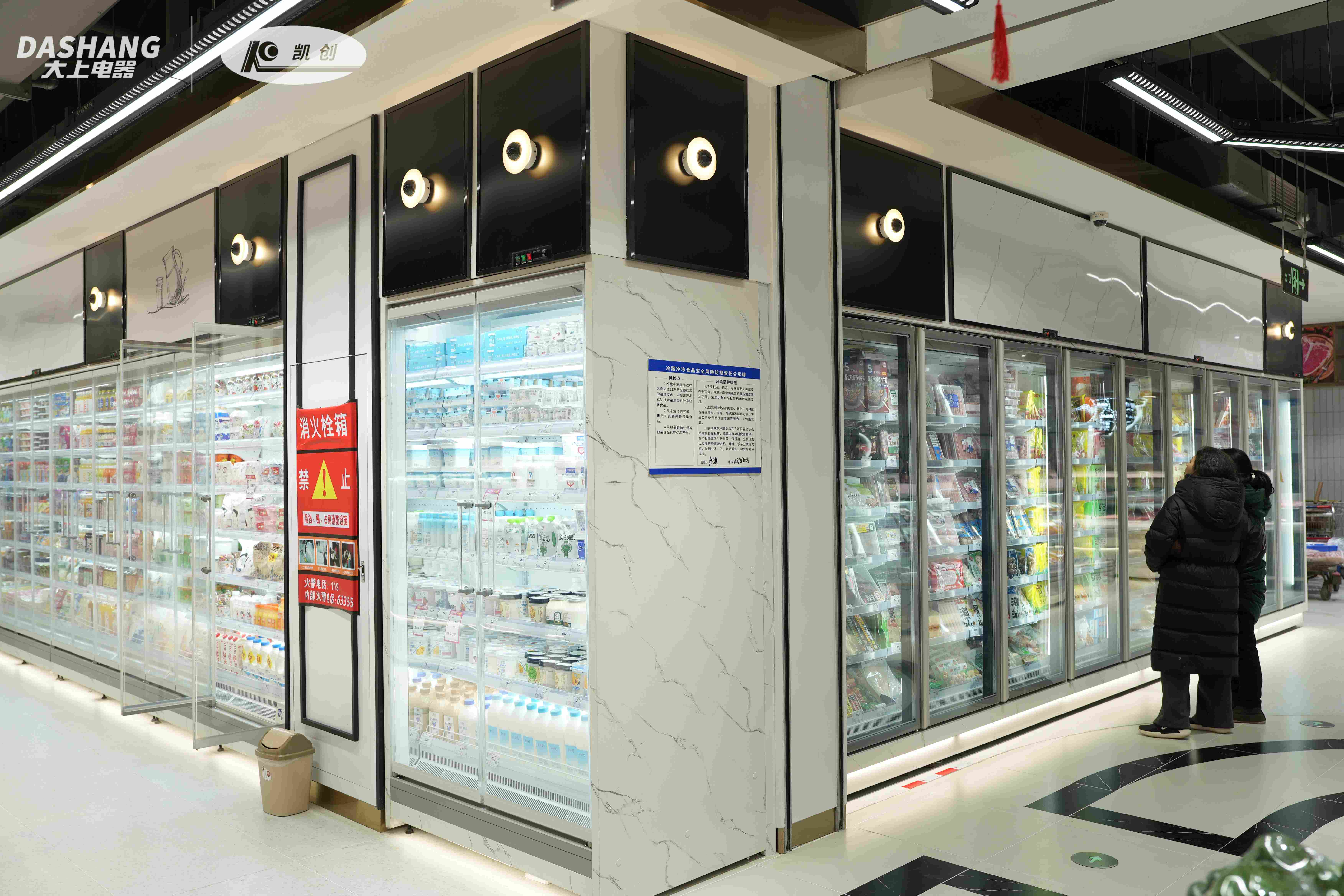
Dusung’s range of remote glass-door refrigeration cabinets includes configurations featuring LED lighting on door frames, while some multideck display models also offer LED lighting on shelves. Its product designs include double-layer glass doors with low-emissivity film on selected models. These options provide different ways to approach product visibility and thermal performance, depending on the required cabinet configuration.
Conclusion
Lighting design affects the performance of a Remote Glass Door Fridge by influencing product visibility, label readability, reflections, and the visual consistency of the display. Glass construction, packaging materials, fixture placement, and surrounding light conditions all contribute to the final result. A well-planned configuration balances illumination with refrigeration requirements rather than focusing on brightness alone. Evaluating the complete cabinet under realistic operating conditions helps ensure that products remain clearly visible while the equipment continues to operate as intended.
FAQs
1. Can store lighting affect the visibility of products inside a refrigerated cabinet?
Yes. Overhead lights, windows, and nearby illuminated displays can reflect off the glass doors. The effect depends on the relative brightness of the surroundings, viewing angle, and glass properties.
2. Does shelf-mounted LED lighting work better than frame-mounted lighting?
Neither arrangement is universally better. Shelf-mounted lighting can target individual product rows, while frame-mounted lighting can illuminate the display from its sides. The suitable option depends on cabinet design and product presentation requirements.
3. Can lighting influence the energy consumption of a Remote Glass Door Fridge?
Yes. Lighting consumes electricity and generates heat, which may contribute to the cooling load depending on the fixture design and heat dissipation. Efficient LEDs and suitable installation can help manage this impact.
Post time: Oct-21-2026


