
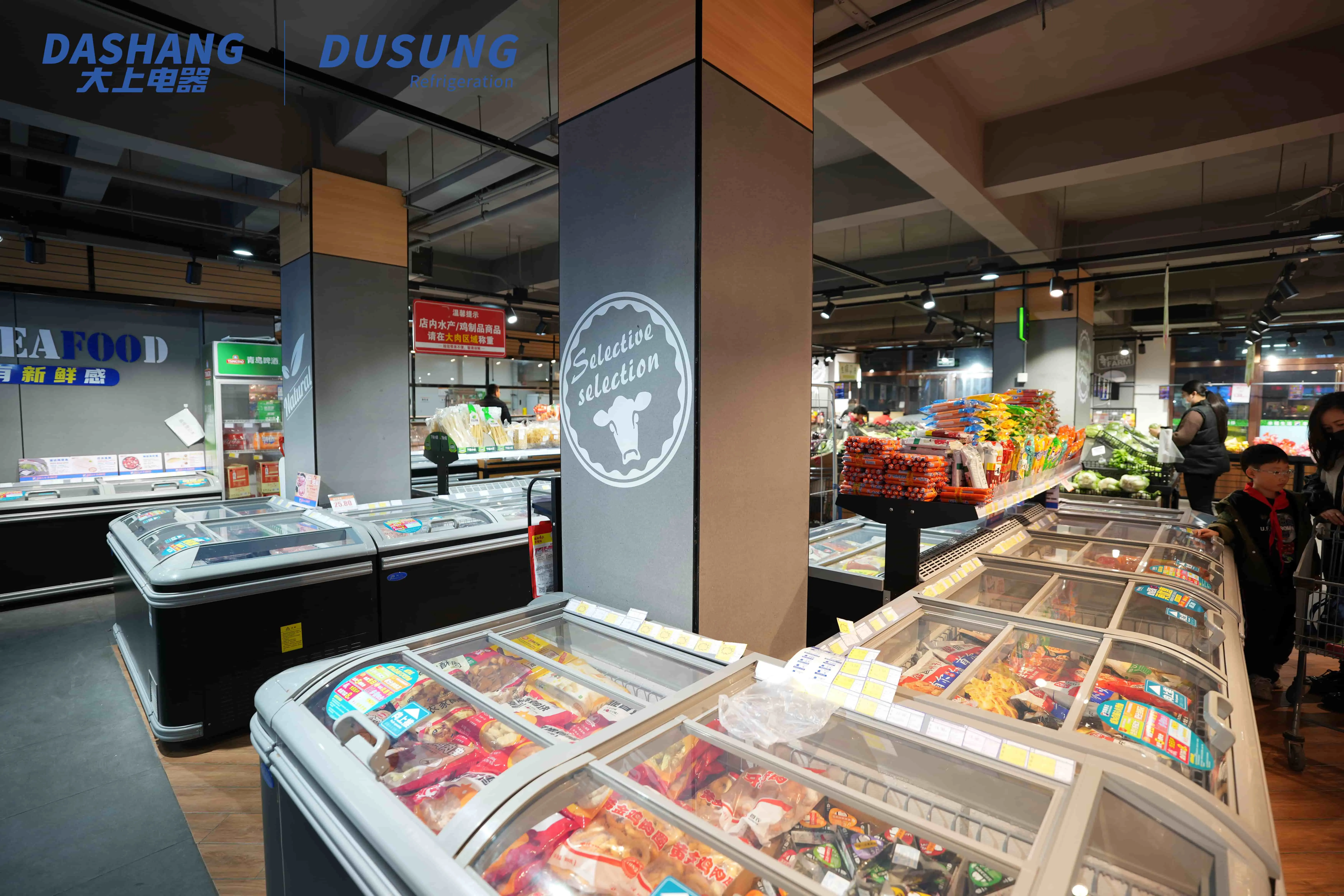
A Glass Top Freezer combines two functions that do not naturally point in the same direction. Frozen products need a well-insulated enclosure with limited warm-air entry, while the contents also need to remain visible and easy to identify. The glass top is the structural element that allows those two requirements to work together.
Most products in this category use a horizontal chest-style cabinet. Cold air is denser than warm air, so much of it remains in the lower part of the cabinet when the top is opened. That gives a top-opening freezer an inherent advantage over a vertical door in terms of cold-air retention. The challenge is that glass transfers more heat than a thick insulated solid lid. A good design therefore has to gain visibility without creating an excessive thermal penalty.
Why a Glass Top Freezer Uses a Horizontal Cabinet
The horizontal format is central to the way a Glass Top Freezer works. When the lid is opened, the dense cold air in the lower storage zone does not immediately spill out. Warm room air still enters, but the basic geometry helps the freezer retain a larger portion of its cold air mass.
This format works well with baskets, dividers and layered storage. Ice cream, frozen food, packaged meat and similar products can remain below the designed load line while the transparent top provides direct visual access.
The main compromise is reach depth. A very deep cabinet can offer a large nominal volume, but bottom items become difficult to access. Good product design therefore balances total depth, basket height and normal reach rather than simply maximizing internal liters.
The Glass in a Glass Top Freezer Must Limit Heat Transfer
A transparent top has a harder thermal job than a thick solid insulated lid. One side of the glass is exposed to warm room air while the other faces a low-temperature interior. If the glass assembly transfers too much heat, the refrigeration system must continuously remove that additional load.
Commercial glass tops may use insulated glazing, coatings or other methods to reduce heat transfer and condensation. The exact construction can vary, but the design objective remains the same: keep the contents visible while reducing the energy penalty of transparency.
The frame and track around the glass are also part of the thermal boundary. Heat can enter through poorly insulated frames, loose overlaps or gaps between sliding panels. The top system therefore depends on the glass, frame, overlap and closing accuracy working together.
Sliding Glass Tops and Hinged Glass Tops Behave Differently
Not every Glass Top Freezer opens in the same way. Sliding glass lids are common because only part of the top needs to be opened at one time. One panel moves over or under another, creating a limited access area while most of the cabinet remains covered.
A hinged glass lid provides a wider opening and can make loading large packages easier, but it exposes a larger area whenever the lid is raised. It also requires clear vertical space and hinges that can safely support the panel.
The difference affects both access and heat gain. Sliding tops suit frequent access to organized product sections, while hinged tops can be more practical when large items need to be placed into the cabinet. The product should match the expected loading pattern rather than treating the lid style as a cosmetic choice.
Basket Layout Turns Deep Volume into Usable Capacity
A Glass Top Freezer can have a large internal volume, but without organization the lower area becomes difficult to use. Baskets and dividers convert one deep cavity into smaller storage zones.
Top baskets are useful for fast-moving or small products because they keep items within easy reach. The deeper section can hold larger packs or reserve stock. Removable dividers allow categories to be separated without permanently reducing flexibility.
The most important rule is to keep the load below the designed loading level. Stacking too high can interfere with the cold-air pattern, make the lid harder to close and expose top packages to warmer conditions near the glass.
Useful capacity is therefore not the same as physical volume. The best capacity is the volume that can be loaded while preserving lid movement, visibility and the intended temperature distribution.
Visibility Reduces Unnecessary Lid Openings
One of the strongest product advantages of a Glass Top Freezer is that the contents can be identified before the cabinet is opened. This is not only a display benefit. Every unnecessary opening introduces warm and humid air that has to be cooled again, and the moisture can later form frost on cold surfaces.
Clear glass, logical basket arrangement and visible package labels shorten search time. If the interior is poorly organized, the transparent lid loses much of its value because users still have to open the cabinet and move products around.
For this reason, the glass and the internal organization should be treated as one system. The lid provides visual information; baskets and dividers make that information useful.
Condensation and Frost Show How the Top System Is Working
A Glass Top Freezer operates with a cold transparent surface exposed to room air. When room humidity is high, condensation can appear on the glass. If moisture enters the cabinet, frost can develop around the frame, tracks or internal surfaces.
Some designs use anti-condensation solutions, but normal maintenance still matters. Sliding tracks should remain clean, panels should close fully, and packaging should never prevent the glass from reaching its correct position. A damaged seal or misaligned panel can create a continuous path for warm humid air.
The installation environment also matters. A freezer near an open entrance, a warm-air outlet or a humid preparation area may experience more condensation than the same cabinet in a stable indoor space.
Glass Top Freezer vs Solid-Lid Chest Freezer
The most direct comparison is with a traditional chest freezer using a solid insulated lid. A solid lid generally creates a stronger thermal barrier because it can contain more insulation and has no large transparent surface.
A Glass Top Freezer gives up some insulation potential in exchange for direct visibility. This makes it useful where users need to identify the contents frequently without opening the cabinet first.
The difference can be summarized as follows:
- · solid lid: stronger thermal barrier and no direct view;
- · glass top: better visibility with greater attention to glass heat transfer and condensation;
- · both formats: horizontal cold-air retention and deep storage volume.
Neither structure is automatically better. The correct choice depends on whether visibility is part of the freezer’s main job.
The Load Line Protects Refrigeration Performance
One of the most important product details in a Glass Top Freezer is the designed load line. It is not only the height at which the lid can still close. It represents the space required for the intended cold-air pattern.
When products are stacked above this level, upper packages sit closer to the warmer glass and may disturb air movement. Tall cartons can also block the view through the lid, removing one of the main reasons for using a transparent top.
A cabinet that appears slightly less full but stays within the designed loading zone often performs better than one filled to the maximum physical height.
Matching the Cabinet to Frozen Product Size
Different frozen products use the internal volume differently. Small ice cream packs benefit from baskets and clear separation. Large bags of frozen food make better use of deep zones. Packaged meat may require stronger baskets and more structured grouping.
DUSUNG can configure commercial freezer solutions with different cabinet depths, lid arrangements, basket systems and refrigeration layouts. For a glass-top project, useful starting information includes product dimensions, required storage depth, access frequency and available floor area.
If a Glass Top Freezer is being planned for a new frozen-food area or a replacement project, provide the main package sizes and expected loading pattern. That allows the lid type, cabinet depth and internal organization to be selected around real storage behavior rather than total volume alone.
FAQ
1. Is a Glass Top Freezer less insulated than a solid-lid freezer?
The transparent section generally transfers more heat than a thick insulated lid, so glass construction and sealing are important. The benefit is direct visibility.
2. Why are sliding glass lids common on chest freezers?
They allow only part of the top to be opened, which provides access while keeping most of the cabinet covered.
3. Can products be stacked above the load line?
They should remain below the designed loading level so the lid closes correctly and the intended cold-air distribution is maintained.
4. What causes condensation on the glass top?
Condensation is influenced by room humidity, glass temperature, frame design, sealing and local airflow around the cabinet.
Post time: Sep-22-2026


