
A Glass Lid Freezer is a horizontal frozen-storage cabinet built around a simple but important product idea: keep the top of the refrigerated volume physically closed while allowing the contents to remain visible. The glass lid is therefore not an isolated display feature. It is part of the thermal boundary of the cabinet, part of the access system, and part of the way usable storage depth is organized.
For this reason, the performance of a Glass Lid Freezer depends on more than transparent glass. Cabinet depth, insulation, lid movement, internal baskets, load height, temperature control, defrost behavior, and the relationship between the refrigerated well and the surrounding room all influence how the product works.
Glass Lid Freezer Structure Begins with a Closed Horizontal Cold Well
The basic architecture of a Glass Lid Freezer is different from an upright freezer. The refrigerated volume sits below the access opening, so the cabinet naturally forms a deep horizontal well. This shape can provide substantial frozen-storage capacity in a relatively low cabinet, but it also creates two design challenges: the lower part of the cabinet must remain usable, and the top opening must allow access without unnecessarily exposing the entire refrigerated volume.
The glass lid addresses the second challenge by creating a movable transparent boundary. When the lid is closed, the cabinet remains separated from the warmer surrounding air. When access is needed, only part of the top area may need to be opened, depending on the lid design. This is particularly useful in sliding-lid configurations, where one section can move while the rest of the top remains covered.
How the Glass Lid Freezer Uses the Lid as Part of the Refrigeration Boundary
Transparent glass has to perform two jobs at once. It must provide a clear view into the cabinet, but it must also function as part of the top closure. That means glass design, frame sealing, sliding overlap, handle position, and closing behavior all matter to the freezer as a product.
A lid that does not return fully to its closed position can increase warm-air entry and create more frost around the opening. A damaged or dirty sliding track can make closing less reliable. Poor alignment can also reduce the practical benefit of a closed-top design. For this reason, the lid should be considered a working refrigeration component rather than a decorative cover.
Internal Depth, Load Line, and Basket Layout Define Usable Capacity
A Glass Lid Freezer can look large on paper because horizontal cabinets often provide considerable gross internal volume. Gross volume, however, is not the same as usable capacity. Frozen products should remain within the intended load height, and the internal arrangement should allow cold conditions to be maintained across the stored load.
Baskets and dividers are important because they turn deep space into organized storage. Instead of stacking every package directly from the bottom upward, baskets can separate smaller packages, create accessible upper zones, and reduce the need to remove several products just to reach one item below. Different basket widths can also help accommodate different package shapes.
A practical loading arrangement usually considers:
- package width, height, and footprint rather than only total weight;
- the maximum designed load line inside the cabinet;
- space required around internal walls or air paths according to the refrigeration design;
- basket depth and lifting clearance;
- whether large cartons should remain in a lower zone while smaller packages stay closer to the top.
Capacity should be evaluated as organized refrigerated volume. Filling every visible gap can make the freezer harder to use and interfere with the way the cabinet was designed to maintain temperature.
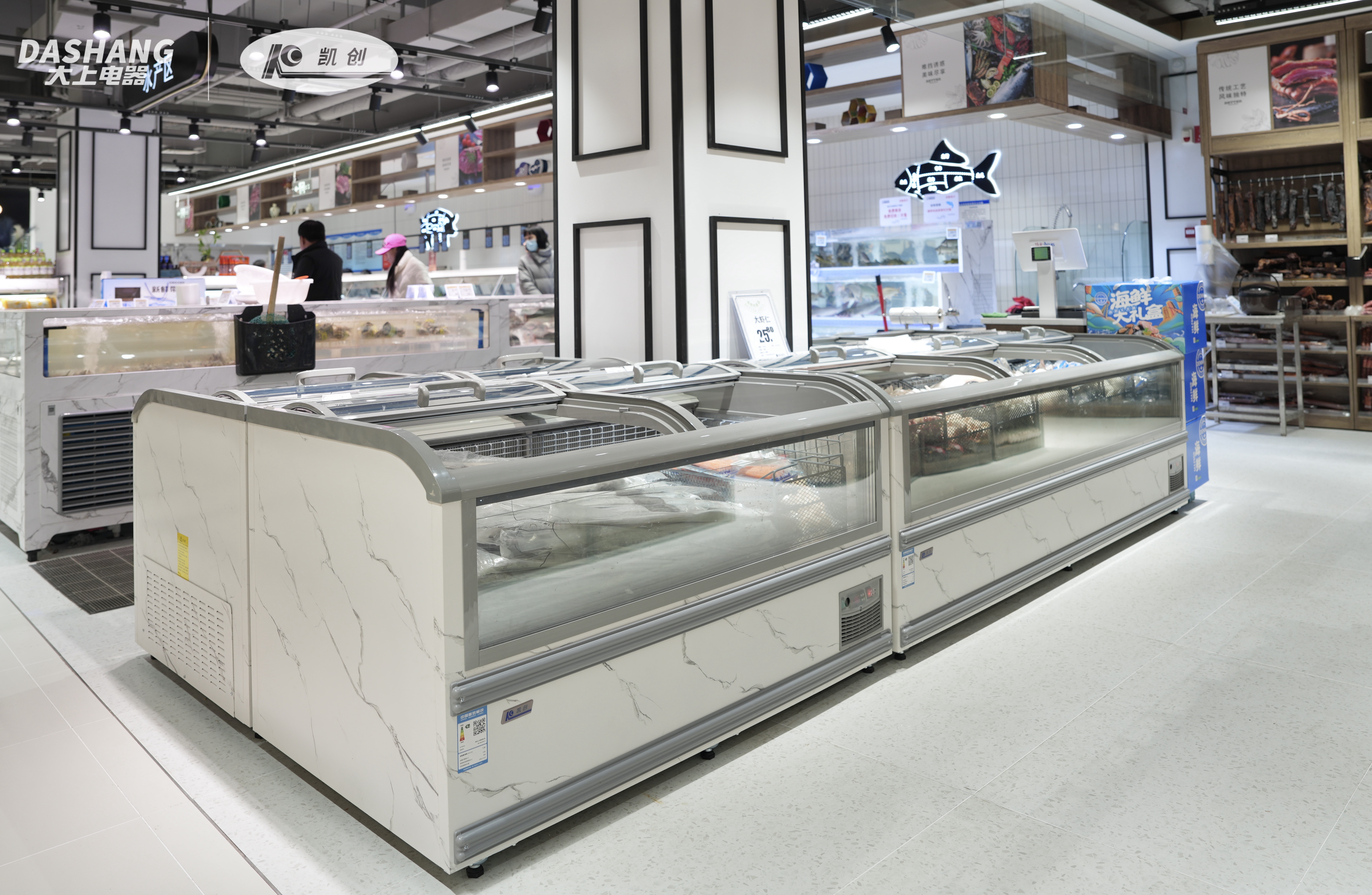
Sliding Glass Lids Change Access Geometry
The overlap between panels, handle position, sliding direction, and track quality all influence daily use. A lid should move smoothly without excessive force, yet close securely enough to maintain the intended top boundary. If the freezer is placed against another cabinet or under a shelf, sliding lids may also reduce the clearance needed above the unit compared with large hinged covers.
Access geometry should also match basket layout. If the most frequently opened lid section is positioned over a basket that is difficult to remove, the internal organization works against the lid design. A better product arrangement aligns the opening zones and the storage zones so that the cabinet remains practical without unnecessary movement of products.
Refrigeration, Insulation, and Temperature Stability Work as One System
The lid alone cannot create stable frozen storage. The Glass Lid Freezer depends on the full refrigeration system: insulated enclosure, evaporator design, compressor capacity, condenser heat rejection, temperature control, and defrost strategy. The goal is not simply to produce very cold air. The system needs to remove heat at a rate that matches normal product loading and ambient conditions.
Insulation slows heat transfer through the cabinet walls. The refrigeration circuit removes the remaining heat. The thermostat or controller regulates operation around the target range. When warm or partially frozen products are added, the system must recover from the added heat load. When the lid is opened, it must recover from additional air exchange. These operating conditions are why the product should be evaluated as a complete refrigeration cabinet, not as a glass display box with cooling added afterward.
Condenser ventilation is also important. If the heat-rejection area is blocked by cartons, walls, or poor installation clearance, the cabinet can run longer and recover more slowly. The exact clearance depends on the model, but the principle is the same: heat removed from the cabinet must be released somewhere.
Frost, Condensation, and Cleaning Are Part of Product Performance
Condensation on the glass has a different effect. It can reduce visibility even when the freezer is maintaining temperature correctly. Cleaning the glass, tracks, seals, and frame therefore supports both visibility and proper closing. Internal surfaces and baskets should also be cleaned without damaging components or blocking drainage and defrost-related areas.
A good maintenance routine focuses on the parts that directly affect the product’s structure: lid movement, sealing surfaces, frost level, internal organization, condenser ventilation, and temperature control. This keeps maintenance connected to how the freezer is designed to work rather than treating cleaning as a separate topic.
Glass Lid Freezer vs Solid-Lid Chest Freezer vs Open Display Freezer
These products may all store frozen food, but their structures solve different needs.
A solid-lid chest freezer prioritizes enclosed storage and generally provides no direct view of the contents while closed. A Glass Lid Freezer keeps the chest-style horizontal cabinet but adds visual access through the lid. An open frozen display removes the top barrier altogether and therefore relies on a different airflow and refrigeration concept.
The Glass Lid Freezer sits between the two: it offers the deep storage character of a horizontal cabinet while keeping the refrigerated space physically covered. That makes the lid, internal baskets, load height, and cabinet depth especially important. It should not be evaluated only by external dimensions or nominal volume because its usefulness depends on how these elements work together.
Configuring the Product for a Real Refrigeration Project
In the later stage of a refrigeration project, cabinet dimensions, glass-lid format, basket arrangement, refrigeration method, electrical requirements, exterior finish, and installation conditions need to be matched to the actual application. DUSUNG can support Glass Lid Freezer configurations within a broader commercial refrigeration project, including cabinet sizing and related display-freezer arrangements.
Useful project information includes the frozen product types, typical package dimensions, expected loading level, available floor area, ambient conditions, required temperature range, access direction, power supply, and whether the equipment will operate as a standalone unit or as part of a larger frozen-food zone. Providing these details allows the product discussion to focus on the cabinet itself and the operating conditions it must handle. For a project requiring a closed horizontal freezer with transparent access, DUSUNG can use this information to develop a more suitable configuration and quotation.
FAQ
What is the main structural advantage of a Glass Lid Freezer?
It combines a closed horizontal frozen-storage cabinet with a transparent top. The lid allows the interior to remain visible while still forming part of the thermal boundary of the freezer.
Why are baskets important in a Glass Lid Freezer?
Because the cabinet is deep. Baskets divide the internal volume, keep smaller packages closer to an accessible level, and help prevent the freezer from becoming one large unorganized storage well.
Does a glass lid eliminate frost and condensation?
No. Humidity, temperature difference, opening frequency, product loading, defrost behavior, and lid closure all affect frost and condensation. Product design can reduce problems, but operating conditions still matter.
What should be confirmed before configuring a Glass Lid Freezer?
Confirm cabinet size, frozen product type, package dimensions, target temperature, loading level, lid format, installation space, ambient conditions, power supply, refrigeration method, and required basket arrangement.
Post time: Sep-18-2026


