
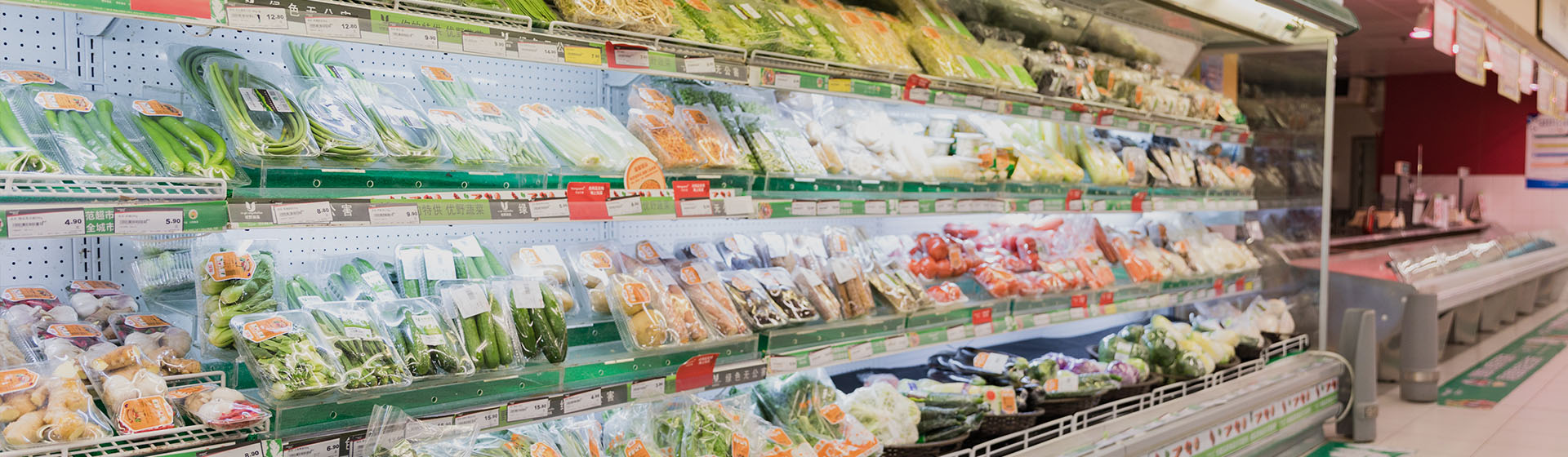
A Supermarket Refrigeration Showcase has two jobs that must happen at the same time: it must keep chilled products in a suitable refrigerated environment, and it must turn those products into a clear, readable display. If the cabinet cools well but hides labels, creates dark corners, or makes products difficult to reach, the refrigeration function may be acceptable while the merchandising result is weak. A well-planned Supermarket Refrigeration Showcase treats cooling and presentation as one product system rather than two separate tasks.
This is why supermarket display refrigeration should not be evaluated only by cabinet length or internal volume. The useful question is whether shoppers can recognize product groups quickly, compare options without searching through a crowded shelf, and remove an item without disturbing the rest of the display. The cabinet shape, shelf depth, front opening or door format, lighting, air curtain or glass structure, and product loading pattern all influence that result.
The First Problem Is Not Temperature — It Is an Unclear Product View
In a supermarket aisle, a customer usually gives a refrigerated section only a few seconds of attention before deciding where to look. If packages overlap, lower shelves are too dark, or the cabinet frame interrupts the sightline, products can be technically available but visually absent. A Supermarket Refrigeration Showcase therefore needs a display face that helps shoppers understand the assortment before they begin reaching into the cabinet.
Open-front multidecks, glass-door upright showcases, service counters and semi-vertical promotional cabinets solve this visual problem in different ways. An open front creates direct access and a wide uninterrupted view. A glass-door format keeps the display enclosed while allowing customers to see the products first. A lower service showcase brings fresh food closer to eye level and supports staff-assisted service. The correct format depends on what is being displayed, but the goal is the same: make the chilled range easy to read.
Shelf Geometry Controls How Much of the Product Can Actually Be Seen
Shelf count alone does not determine display capacity. A deep shelf can hold more packages, but products in the rear may disappear behind the front row. A very shallow shelf improves visibility but can reduce loading capacity and increase restocking frequency. In a Supermarket Refrigeration Showcase, useful shelf depth is the depth that keeps enough product visible while still supporting practical stock levels.
- · Tall beverage bottles need more vertical clearance and strong shelf support.
- · Dairy cups and desserts can use closer shelf spacing because the packages are compact.
- · Packaged meat and prepared foods often benefit from shallower, wider facings so labels remain visible.
- · Promotional products usually need fewer visual barriers and a clear front row rather than maximum loading density.
Adjustable shelving is valuable because the same supermarket zone may change product categories during the year. However, adjustment only helps when shelf positions remain compatible with the cabinet’s designed airflow. A shelf plan that looks efficient on paper can perform poorly if cartons are pushed into supply or return-air paths.
The Refrigeration System Must Protect the Display, Not Fight Against It
Cold air is necessary, but uncontrolled airflow can damage the visual quality of a display. Strong air velocity across exposed fresh food may dry surfaces, while uneven distribution can create warmer zones at shelf ends or around heavily loaded areas. A Supermarket Refrigeration Showcase should maintain the intended temperature environment across the usable display zone, not only near one sensor.
Open-front cabinets rely on a stable air curtain and correct return-air path. Glass-door cabinets depend more on door sealing, recovery after opening and balanced internal circulation. Service showcases may use lower display wells where airflow must reach the full length without creating obvious cold spots. Each structure needs a refrigeration pattern that supports the way products are presented.
Lighting Should Improve Recognition, Not Simply Make the Cabinet Brighter
The most useful lighting helps customers read labels, distinguish package colors and see products on the upper and lower shelves with similar clarity. Excessive brightness can create glare on glass or make shiny packaging difficult to read. Poorly positioned lighting can also leave the rear of a shelf dark even when the front edge looks bright.
For that reason, lighting and shelving should be planned together. Vertical LED strips can support a tall glass-door cabinet, while shelf-edge lighting can improve small packaged products. In open multidecks, even illumination across several levels often matters more than a dramatic spotlight. The product should remain the visual focus.
Different Product Categories Need Different Showcase Formats
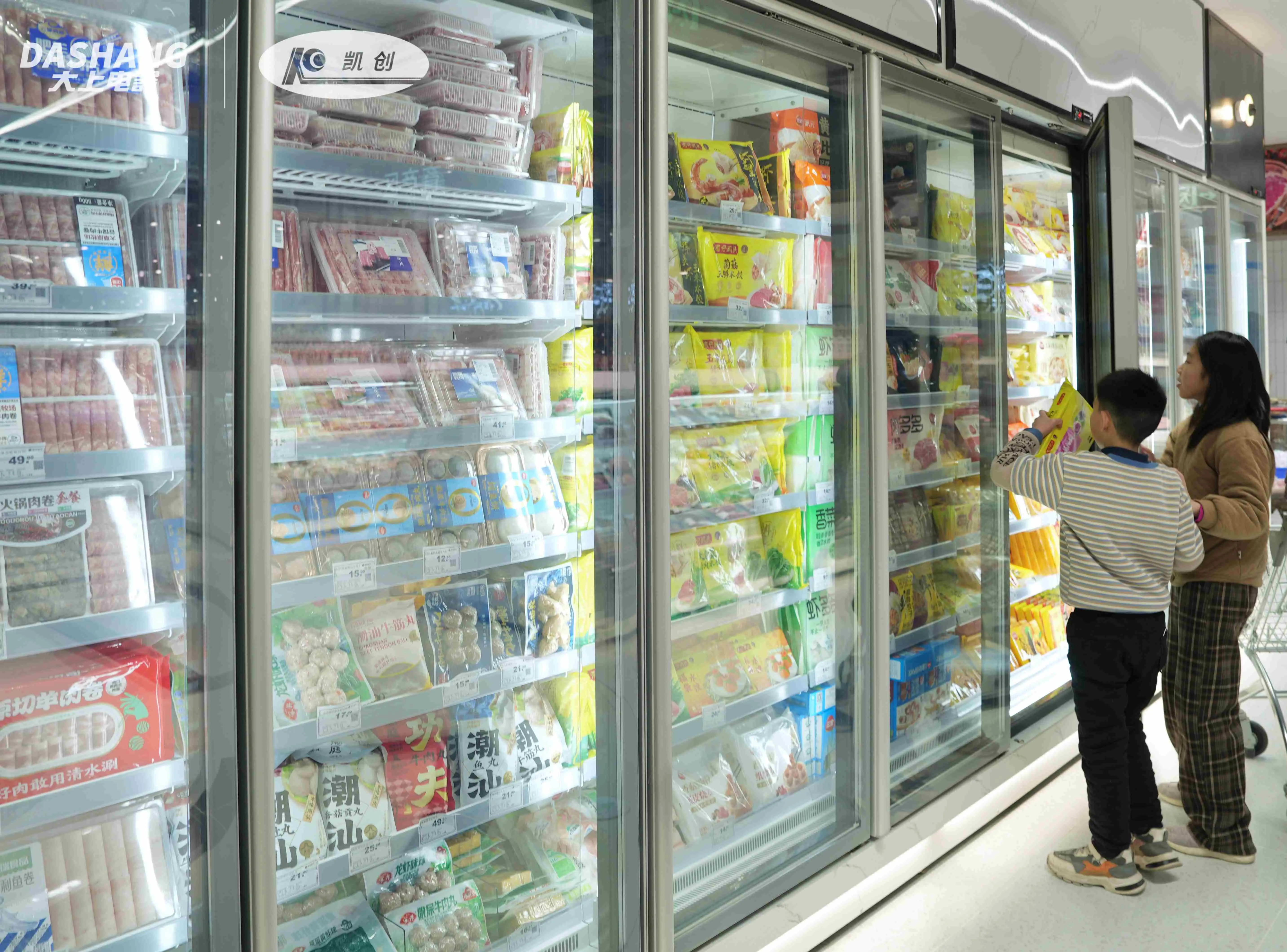
There is no single Supermarket Refrigeration Showcase that is ideal for every chilled category. Beverages need strong vertical organization and easy self-service. Dairy products benefit from dense but readable shelf rows. Fresh meat and deli food usually need a lower presentation angle, controlled service access, or a display surface that supports trays. Fruit and vegetables need a format that keeps the assortment visible without forcing excessive stacking.
This is where supermarket refrigeration becomes a system rather than a single cabinet. A store may use glass-door upright units along a wall, open multidecks for high-turnover chilled food, lower fresh-food showcases for service areas, and promotional cabinets for temporary or seasonal placement. The equipment types are different, but the visual language should remain consistent across the refrigerated zone.
What Should Be Checked Before Finalizing the Display Layout?
Instead of asking only how many meters of refrigeration are required, it is more useful to define the product map first. The assortment determines shelf height, door quantity, display depth and cabinet format. A practical planning checklist includes:
- · Which product groups need the strongest front visibility?
- · Which items have the highest turnover and require the shortest access path?
- · How tall and deep are the typical packages?
- · Will the display be self-service, staff-served, or mixed?
- · Does the store need an open front, glass doors, or a lower service showcase?
- · How will the cabinets connect visually when several units are installed in one line?
These questions keep the decision focused on the product rather than on a generic cabinet specification. They also reduce the risk of choosing a showcase that has sufficient volume but poor display usability.
Turning the Product Requirement into a DUSUNG Refrigeration Solution
Once the product categories, display length and service method are clear, DUSUNG can match the project with different supermarket refrigeration formats, including upright glass-door cabinets, open multidecks, island freezers, deli and fresh-food showcases, promotional cabinets and related supermarket refrigeration equipment. The useful starting point is not a model number; it is the actual product mix, store layout and display objective.
For a new store, renovation or refrigerated-zone expansion, sharing the floor plan, product categories, preferred cabinet type and required display length makes configuration more efficient. DUSUNG can then help connect cabinet format, refrigeration method, door or open-front structure, shelving and exterior appearance into a more coherent refrigerated display. If you are planning a supermarket chilled section, send the layout and main product categories so the refrigeration solution can be discussed around the real display requirement rather than a generic equipment list.
FAQ
1. What products can be displayed in a Supermarket Refrigeration Showcase?
Depending on the cabinet type and temperature range, it can be used for beverages, dairy products, packaged chilled food, meat, deli items, desserts, fruit and vegetables, and other refrigerated merchandise.
2. Is an open showcase always better than a glass-door showcase?
No. Open cabinets provide fast access and a wide visual field, while glass-door cabinets create an enclosed refrigerated display and can reduce unnecessary exposure to room air. The product category and store layout should determine the format.
3. Why is shelf depth important in refrigerated display?
Shelf depth affects both capacity and visibility. If shelves are too deep, rear products can become hidden; if they are too shallow, restocking may become frequent. The best depth balances visible facings with practical loading.
4. Can different supermarket refrigeration showcases be combined in one project?
Yes. Supermarkets commonly combine upright glass-door cabinets, multidecks, fresh-food counters, island freezers and promotional units to match different product categories and service methods.
Post time: Sep-14-2026


