

An energy-efficient glass door refrigerator is designed to provide refrigerated storage while allowing products to remain visible to customers. In supermarkets, convenience stores, and food-service environments, this combination helps maintain product presentation without requiring customers to open the cabinet to see what is available. However, visibility alone does not determine refrigeration efficiency. Door construction, sealing performance, opening frequency, cabinet insulation, and installation conditions all influence how effectively a refrigerator maintains its internal temperature. Understanding these factors helps operators select a suitable Energy-Efficient Glass Door Refrigerator and manage its energy consumption more effectively.
Why Door Design Matters for Refrigeration Efficiency
Every time a refrigerator door opens, warmer ambient air can enter the cabinet while cooled air escapes. The refrigeration system then needs to remove the additional heat to restore the required internal conditions.
A properly designed glass door helps limit this exchange by keeping the refrigerated space enclosed during normal operation. Compared with open display cabinets, glass door models can reduce direct exposure of stored products to surrounding air, although actual performance depends on cabinet design and operating conditions.
Door construction should therefore be considered as part of the complete refrigeration system. Important details include the quality of the door frame, sealing structure, glass construction, and how consistently the door closes.
A door that does not close properly can allow warm air to enter continuously. This may increase the cooling load and make temperature management more difficult. When comparing models, examine the door’s closing mechanism and the contact between the door seal and cabinet frame.
Evaluate Glass Construction and Insulation
Insulated glass is commonly used in commercial refrigeration doors to help reduce heat exchange. Its performance depends on the glass configuration, insulating structure, and overall cabinet design. A suitable door should balance clear product visibility with the thermal requirements of refrigerated storage.
Condensation is another factor worth considering. Differences between indoor and cabinet temperatures can cause moisture to form on glass surfaces, potentially affecting product visibility. Depending on the design, insulated glass and other condensation-control features may help address this issue.
When selecting a glass door refrigerator, check the actual glass specifications rather than assuming that all transparent doors provide the same insulation. The intended operating environment should also be considered, particularly in stores with high humidity or frequent customer traffic.
Check Door Sealing and Closing Performance
Door sealing is one of the most practical factors affecting cold air retention. Even a refrigerator with suitable insulation may operate inefficiently if its door cannot maintain a consistent seal.
A suitable door gasket should make proper contact with the cabinet frame when closed. Gaps, deformation, dirt accumulation, or damaged seals can create paths for warm air infiltration.
Self-closing mechanisms can also be useful in busy retail environments. Customers and staff may not always close doors carefully after retrieving products. A properly designed closing mechanism helps the door return to its closed position, reducing the chance of unnecessary air exchange.
Before choosing a model, consider:
- Whether the door closes securely after normal use.
- Whether the gasket makes consistent contact with the frame.
- Whether the handle is convenient for frequent opening.
- Whether the door structure allows straightforward inspection and cleaning.
- Whether replacement seals and maintenance support are available.
These details may appear small, but they influence how reliably the cabinet maintains its enclosed refrigerated environment over time.
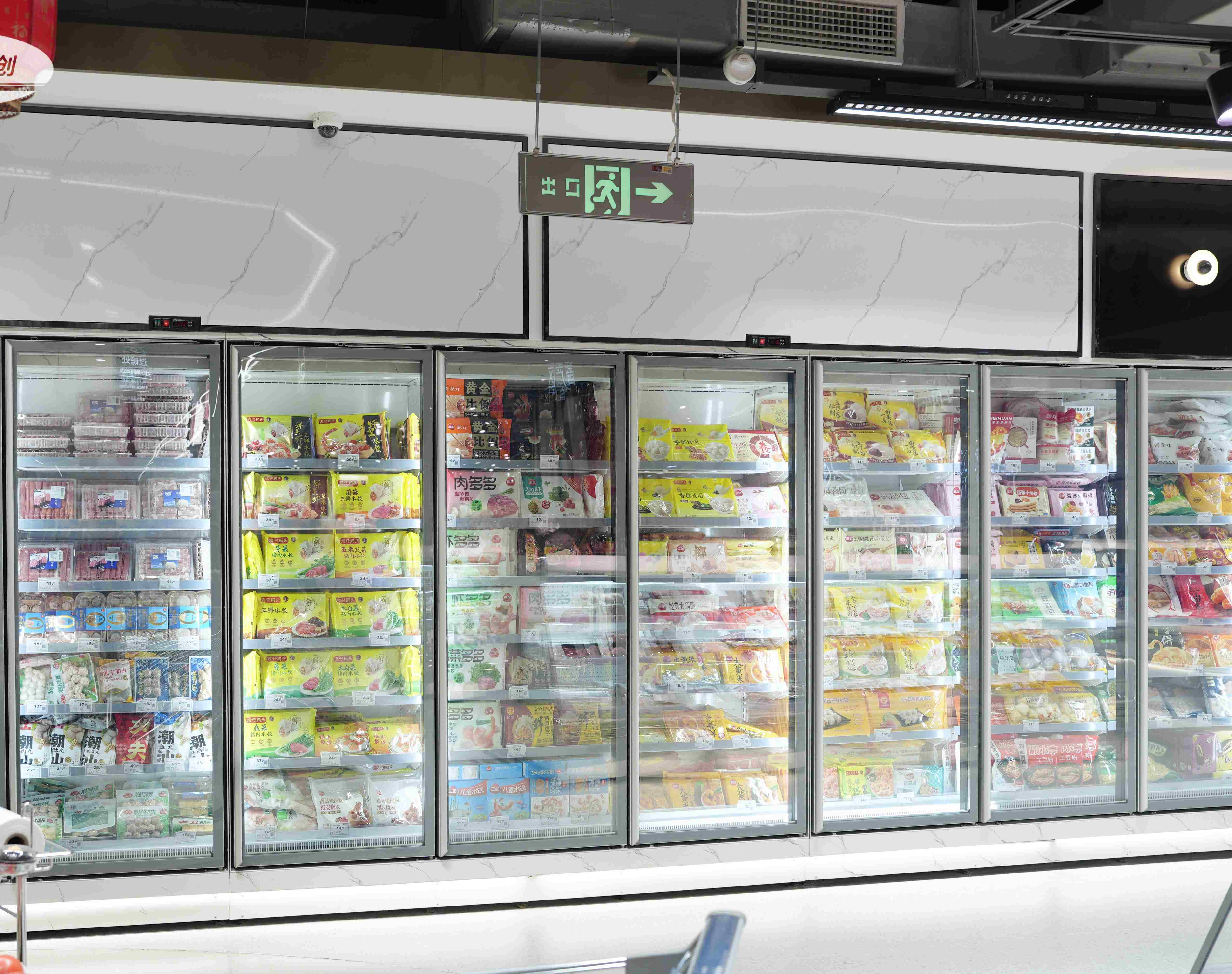
Match Cabinet Capacity to Product Display Requirements
Choosing the correct cabinet size is another part of energy-conscious refrigeration. A refrigerator that is too large for the quantity of products displayed may use more space and cooling capacity than the application requires. An undersized cabinet, meanwhile, can lead to overcrowding and obstruct internal airflow.
Start by identifying the products that will be displayed and the quantity that needs to remain refrigerated. Bottled beverages, packaged dairy products, and fresh food items may require different shelf arrangements and storage space.
Shelf spacing should accommodate the height and packaging of the products. Adjustable shelves can provide flexibility when the product range changes, while suitable shelf depth helps make effective use of the cabinet’s interior.
Avoid blocking air outlets or overloading shelves. Products should be arranged according to the manufacturer’s loading guidance so that cooled air can circulate as intended.
A correctly sized Energy-Efficient Glass Door Refrigerator should provide enough display capacity for daily requirements without encouraging unnecessary storage or restricting airflow.
Consider the Refrigeration System and Operating Environment
Door design is only one part of energy performance. The refrigeration system, ambient conditions, and cabinet installation also affect how much work the equipment needs to maintain the target temperature.
The first step is checking the refrigerator’s specified temperature range and confirming that it suits the products being stored. Different applications may require different operating conditions, so a cabinet should be selected according to its intended use rather than appearance alone.
Ambient temperature is also important. A refrigerator installed near ovens, direct sunlight, or other heat sources may experience a higher cooling load. Restricted ventilation can further affect the operating conditions of the refrigeration system.
For this reason, installation clearance should follow the manufacturer’s instructions. The refrigerator should have the required airflow around its refrigeration components, and its surrounding environment should be suitable for the specified operating conditions.
When comparing models, review the cooling system, rated power, temperature control, and operating requirements together. These specifications provide a more useful basis for evaluation than focusing on one energy-related feature in isolation.
Use Maintenance to Preserve Cooling Efficiency
Even a well-designed refrigerator may lose efficiency if key components are not maintained. Dust, blocked ventilation, damaged seals, and poor loading practices can all interfere with normal operation.
Regular maintenance should focus on the components that influence heat exchange and airflow. Condenser surfaces should be checked and cleaned according to the manufacturer’s instructions, since accumulated dust can restrict heat dissipation. Door gaskets should also be inspected for dirt, cracks, or deformation.
Internal organization matters as well. Overloading the cabinet or covering air outlets can interfere with circulation. Staff should follow the recommended loading limits and avoid leaving doors open longer than necessary.
A practical maintenance routine includes:
- Inspecting door seals and confirming that doors close properly.
- Cleaning condenser components as recommended by the manufacturer.
- Keeping ventilation openings clear.
- Checking temperature settings and monitoring unusual changes.
- Removing products that obstruct internal air circulation.
These measures help maintain normal operating conditions and may prevent avoidable increases in cooling demand.
Compare Glass Door Refrigerators by Their Energy-Related Features
When comparing commercial glass door refrigerators, it is useful to evaluate the complete cabinet rather than relying on a single specification.
| Selection Factor | What to Check | Practical Benefit |
|---|---|---|
| Glass Construction | Insulated glass configuration and condensation control | Helps manage heat transfer and maintain product visibility |
| Door Sealing | Gasket quality and frame contact | Reduces unwanted air exchange |
| Closing Mechanism | Door closing consistency and ease of use | Helps prevent doors from remaining open |
| Cabinet Capacity | Internal volume and shelf arrangement | Avoids overcrowding and unsuitable cabinet sizing |
| Cooling System | Temperature range, rated power, and control | Helps match equipment to the intended application |
| Maintenance Access | Access to seals, condenser, and ventilation areas | Supports routine cleaning and inspection |
The best choice depends on the store layout, displayed products, operating environment, and expected usage frequency. A model with suitable door construction may still be a poor fit if its capacity or cooling specifications do not match the application.
Choosing an Energy-Efficient Glass Door Refrigerator
Selecting an Energy-Efficient Glass Door Refrigerator requires evaluating more than glass appearance or cabinet capacity. Door insulation, sealing performance, closing mechanisms, cooling system specifications, and maintenance access all contribute to practical refrigeration performance.
Dusung offers commercial refrigeration solutions, including glass-door upright refrigerators and freezers for retail and food-service environments. By considering product types, required storage capacity, installation dimensions, and operating conditions together, stores can identify a configuration that supports product visibility while meeting their refrigeration needs.
Conclusion
Glass door design can contribute to better cold air retention by keeping the refrigerated cabinet enclosed and limiting unnecessary air exchange. However, energy performance also depends on insulation, door sealing, cabinet capacity, cooling system configuration, installation, and maintenance. Evaluating these factors together helps select a refrigerator that balances product display, cooling requirements, and long-term operating efficiency.
FAQs
1. Are glass door refrigerators more energy-efficient than open display refrigerators?
An enclosed glass door cabinet can reduce direct exposure to ambient air compared with an open display unit. Actual energy consumption depends on cabinet design, usage, installation, and operating conditions.
2. How do door seals affect refrigerator energy consumption?
Damaged or poorly fitted seals can allow warm air to enter the cabinet. This increases the cooling load and may make temperature control more difficult.
3. Does insulated glass improve refrigeration efficiency?
Insulated glass helps limit heat transfer through the door. Its effectiveness depends on the glass construction and the design of the complete refrigerator.
4. How can stores maintain the efficiency of glass door refrigerators?
Keep condenser components and ventilation areas clean, inspect door seals, avoid overloading shelves, and follow the manufacturer’s temperature and maintenance recommendations.
Post time: Nov-23-2026


