
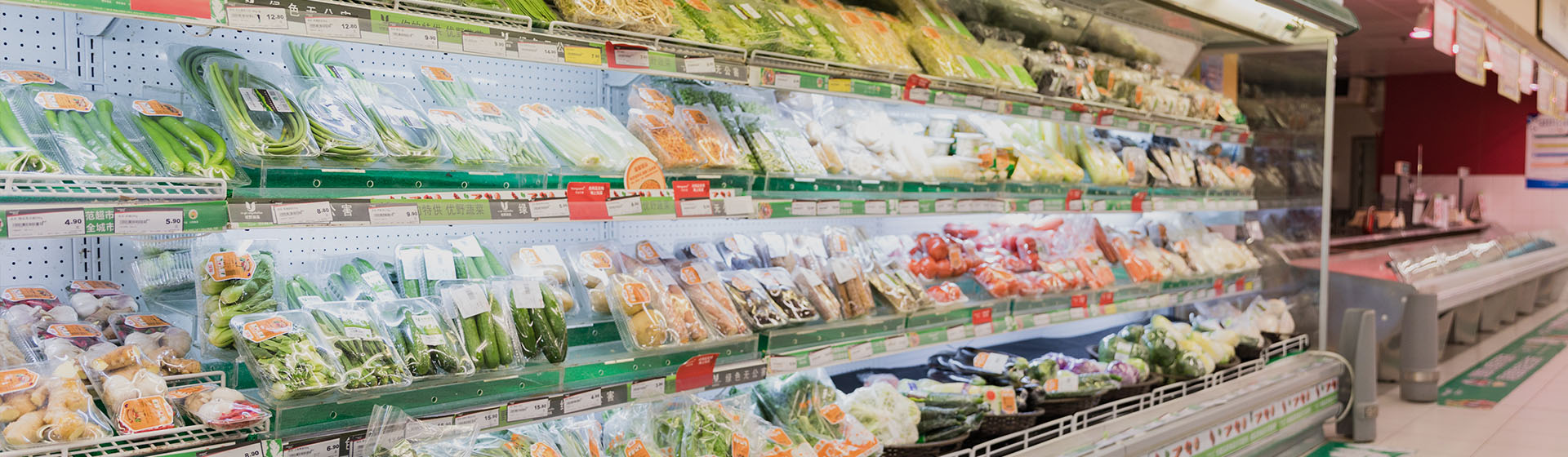
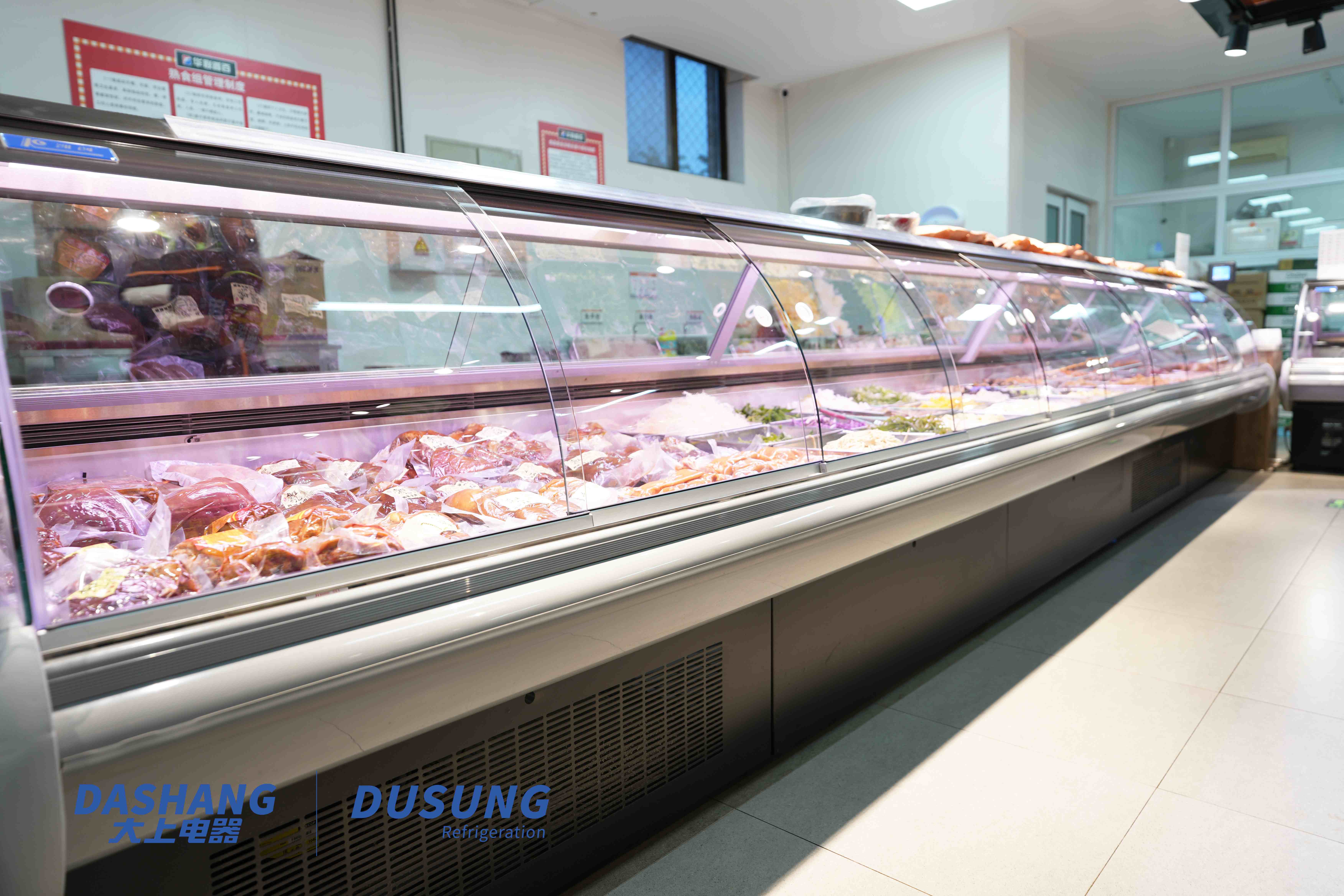
A Deli Case Refrigerator is designed for more than simply keeping food cold. It provides a refrigerated environment while allowing chilled products to remain visible and organized. This makes it suitable for products such as sliced meat, cheese, prepared foods, salads, sandwiches, and other ready-to-serve items that need controlled refrigeration and convenient display.
Unlike a conventional commercial refrigerator, a deli case places greater emphasis on the relationship between refrigeration space and product presentation. Cabinet dimensions, shelf arrangement, glass design, airflow, and access all influence how effectively the equipment can be used. Choosing the right configuration therefore starts with understanding the products that will be stored and how they need to be displayed.
What Makes a Deli Case Refrigerator Different?
A standard refrigerator is generally designed around enclosed storage. Products are placed inside a cabinet, while visibility and accessibility are secondary considerations.
A Deli Case Refrigerator has a different purpose. The refrigerated area also functions as a product display zone, so the cabinet must provide enough visibility and usable space without compromising the intended cooling conditions.
This creates several design requirements. Products should be easy to see, shelves should accommodate different package sizes, and the refrigerated area needs to maintain suitable conditions across the usable display space.
For this reason, choosing a deli case based only on overall dimensions or advertised capacity can be misleading. A cabinet with a large internal volume may not be practical if its shelf configuration does not match the products being stored.
Match the Display Layout to the Products
Deli products come in many different shapes and packaging formats. Sliced meat may be stored in shallow trays, while prepared foods or larger packages may require greater vertical clearance.
Shelf layout should therefore be considered according to the actual products rather than simply maximizing the number of shelves.
Important factors include:
- Product height and package dimensions
- Required shelf depth
- Number of product categories
- Shelf spacing and adjustability
- Frequency of product access
- Available front-facing display area
A flexible shelf arrangement can be particularly useful when a single cabinet needs to accommodate different product sizes. Instead of creating unused vertical or horizontal space, the interior can be organized around the products that are actually being refrigerated.
How Glass Design Influences the Cabinet
Glass is one of the most noticeable features of a Deli Case Refrigerator, but its purpose goes beyond product visibility.
The glass separates the refrigerated interior from the surrounding environment, so its design forms part of the cabinet’s overall thermal performance. At the same time, the size and shape of the glass determine how much of the product area can be seen.
Different applications may use different glass configurations. A flat front can provide a straightforward viewing area, while curved designs can create a wider visual field. Cabinet height and glass angle can also influence how easily products can be viewed from different positions.
The right choice depends on the required viewing area, cabinet dimensions, installation environment, and refrigeration design. Glass should therefore be evaluated as part of the complete cabinet rather than as an isolated feature.
Why Product Loading Matters
The way products are arranged can affect how effectively a refrigerated display operates.
A deli case needs sufficient space for the refrigeration system to maintain the intended cooling conditions. If products are packed too tightly or placed outside the intended display area, the internal airflow pattern may be affected.
This does not mean that the cabinet should be left largely empty. Instead, the available space should be organized efficiently so that products are easy to display while the refrigeration system has enough room to work properly.
For this reason, practical capacity is not simply the maximum amount of product that can physically fit inside the cabinet. Usable capacity depends on shelf dimensions, product size, loading method, and the design of the refrigerated area.
Open or Enclosed: Which Configuration Fits?
Deli cases can use different display formats, and the choice depends on how the refrigerated products need to be accessed.
An enclosed configuration separates the refrigerated space from the surrounding air and can provide a more contained storage environment. It can be suitable when products need to remain refrigerated while access is relatively controlled.
An open-front configuration provides faster access and can make products easier to reach. However, because the refrigerated space interacts directly with the surrounding environment, its refrigeration system must be designed to handle this operating condition.
The choice should therefore be based on the actual application rather than assuming that one cabinet style is suitable for every deli product.
What Should Be Considered When Choosing a Deli Case Refrigerator?
Before selecting a Deli Case Refrigerator, it is useful to evaluate several practical factors.
Product Type
Start with the products that will occupy the cabinet. Sliced meats, cheese, salads, prepared meals, and sandwiches can have very different storage dimensions and arrangement requirements.
Product Dimensions
Measure typical product packaging instead of relying only on estimated capacity. Height, width, and depth can directly affect shelf configuration and usable storage space.
Display Requirements
Consider how much of the product needs to be visible. A cabinet designed primarily for display may require a different glass configuration from one intended mainly for refrigerated storage.
Access Frequency
Products that are handled frequently may require easier shelf access and a more convenient opening configuration. Products that remain primarily on display may place greater emphasis on visibility.
Installation Environment
Ambient temperature, available floor space, surrounding equipment, and installation conditions can all affect refrigeration performance. The cabinet should be matched to the environment in which it will actually operate.
Refrigeration Configuration
Cooling capacity should correspond with the cabinet size, expected loading conditions, and intended application. Looking at cooling specifications without considering cabinet design can give an incomplete picture of performance.
A Deli Case Should Be Designed Around the Product
The main purpose of a Deli Case Refrigerator is to bring refrigerated storage and product display into one cabinet. Its effectiveness depends on how well those two functions are balanced.
A suitable configuration should provide enough refrigerated space for the intended products, an appropriate shelf layout, clear visibility, convenient access, and a refrigeration system matched to the cabinet and operating environment.
For refrigeration equipment projects with specific dimensions or application requirements, manufacturers may also provide different cabinet sizes, shelf configurations, glass options, cooling methods, and other specifications. This can be useful when a standard cabinet does not correspond closely with the actual product requirements.
The most practical approach is therefore to define the products and operating conditions first, then select the cabinet configuration around those requirements.
FAQ
1. What products can be stored in a Deli Case Refrigerator?
A Deli Case Refrigerator can be used for many chilled deli products, including sliced meat, cheese, prepared foods, salads, sandwiches, and other ready-to-serve refrigerated products. The suitable temperature and cabinet configuration depend on the specific product requirements.
2. How is a Deli Case Refrigerator different from a standard refrigerator?
A standard refrigerator mainly focuses on enclosed refrigerated storage. A Deli Case Refrigerator combines refrigeration with product display, so visibility, shelf arrangement, cabinet proportions, and accessibility become more important.
3. Does the glass affect refrigeration performance?
Yes. The glass is part of the separation between the refrigerated interior and the surrounding environment. Its size and configuration should be considered together with insulation and the refrigeration system.
4. Can the shelves be adjusted for different products?
Many deli cases provide adjustable or configurable shelving. This allows the internal space to accommodate products with different heights and package sizes, although the available configuration depends on the specific model.
5. Can a Deli Case Refrigerator be customized?
Depending on the manufacturer and equipment model, customization may include cabinet dimensions, shelf layout, glass configuration, cooling system, and other specifications. The appropriate options should be determined according to the products, installation space, and operating conditions.
Post time: Sep-22-2026


