

A commercial undercounter refrigerator provides convenient refrigerated storage while making efficient use of limited kitchen space. However, selecting the right model involves more than comparing cabinet dimensions or advertised capacity. It must fit beneath the work surface, accommodate the ingredients and containers used in daily operations, and provide suitable cooling conditions.
A poorly selected unit may restrict movement, offer insufficient storage, or create installation difficulties. When choosing a Commercial Undercounter Refrigerator, it is important to consider how its configuration matches the kitchen’s layout and actual storage requirements.
Match Refrigerator Dimensions to the Available Space
The first step is measuring the space where the refrigerator will be installed. Check the available width, depth, and height beneath the counter. These measurements should include enough clearance for installation and the ventilation requirements specified by the manufacturer.
Counter height is particularly important. A cabinet that is too tall may not fit beneath the existing work surface, while excessive depth can cause it to extend into walkways or interfere with nearby equipment.
Door clearance also affects placement. Check whether the door can open fully without hitting walls, cabinets, or other appliances. In compact kitchens, the opening direction may influence which model is most practical.
Do not assume that every undercounter refrigerator can be enclosed tightly beneath a worktop. The refrigeration system needs appropriate airflow to operate under the manufacturer’s specified conditions. Confirm these requirements before finalizing the kitchen layout.
Select Storage Capacity Based on Daily Requirements
Storage capacity should reflect the types and quantities of ingredients kept refrigerated. Choosing a model based only on its advertised volume can lead to an unsuitable configuration because different products occupy interior space differently.
A café may need to store milk, cream, fruit, and prepared ingredients in containers of various sizes. A restaurant may require more room for larger food containers or prepared ingredients. Both applications need sufficient usable space, but their interior storage requirements may differ.
Before comparing capacities, consider:
- The types and dimensions of products stored regularly.
- The quantity required during busy operating periods.
- Whether containers have standard or irregular dimensions.
- How frequently staff replenish or remove stored products.
- Whether temporary increases in stock require additional space.
An undersized cabinet can become difficult to organize when fully loaded. However, choosing a much larger refrigerator may waste valuable preparation space. The better approach is to balance usable storage capacity with the available installation area.
For a Commercial Undercounter Refrigerator, interior usability is just as important as the total volume stated in the product specifications.
Check the Interior Layout and Container Compatibility
Two refrigerators with similar external dimensions may offer different storage flexibility because of their internal arrangements.
Start by examining shelf spacing and usable compartment dimensions. Adjustable shelves can accommodate products with different heights, while fixed arrangements may limit flexibility. The interior should match the containers and packaged ingredients commonly used in the kitchen.
Door storage, when available, can provide additional space for smaller products. However, it should not be treated as a replacement for the main compartment. Check whether the refrigerator can accommodate larger containers without making the remaining space difficult to use.
Container compatibility deserves particular attention. Kitchens using gastronorm containers should confirm whether the internal dimensions and shelf arrangement can accommodate the required sizes. A product name containing “Gastronorm” should not replace checking the actual specifications.
A practical interior layout also makes frequently used ingredients easier to access. This reduces unnecessary rearranging and helps staff work more conveniently in compact preparation areas.
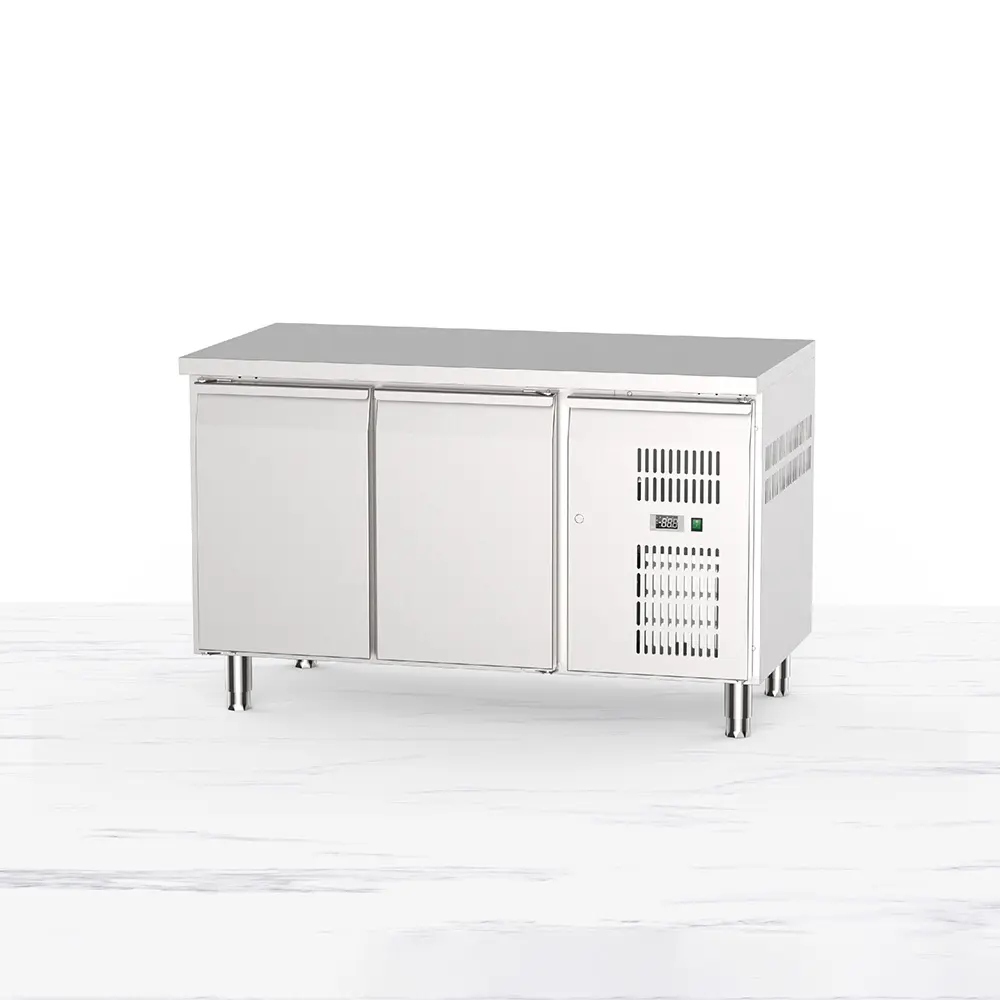
Consider Cabinet Material and Cleaning Requirements
Commercial refrigeration equipment is regularly exposed to moisture, food residue, spills, and cleaning. Cabinet material and surface construction therefore influence its suitability for a professional kitchen.
Stainless steel is commonly used in commercial kitchen equipment because it provides a practical surface for routine cleaning. A stainless steel undercounter refrigerator may also fit more naturally into kitchens equipped with stainless steel worktables and appliances.
However, the material description alone does not establish the quality of the complete cabinet. Check which surfaces use stainless steel and examine the finish, door construction, edges, and accessible areas.
Cleaning access is equally important. Handles, door edges, and interior corners should be easy to reach. It is also advisable to review the manufacturer’s cleaning instructions to ensure that suitable products and methods are used.
Confirm Temperature Requirements and Cooling Performance
The required storage conditions depend on the food products kept inside the refrigerator. A unit used mainly for packaged beverages may have different requirements from one storing fresh ingredients in a restaurant.
Identify the intended application before comparing models. Check the manufacturer’s specified temperature range and confirm that it is appropriate for the products being stored. Do not assume that every undercounter refrigerator suits every refrigerated application.
Adjustable temperature settings can provide flexibility, but the available range and control method should be verified for the specific model. The operating instructions should also explain how to set and monitor the required conditions.
The surrounding environment matters as well. High ambient temperatures, restricted ventilation, frequent door opening, and excessive loading can affect refrigeration performance. Proper installation and loading practices help the unit maintain suitable storage conditions during daily operation.
Evaluate Installation and Maintenance Conditions
A compact refrigerator still needs suitable power, ventilation, and maintenance access. Confirm the required power supply and installation conditions before ordering.
The position of refrigeration components may differ between models, affecting the clearance needed around the cabinet. Follow the manufacturer’s installation instructions rather than assuming that all undercounter units can be fitted in the same way.
Maintenance access should also be considered. A refrigerator placed tightly between fixed cabinets may be difficult to inspect or service if important access points are blocked. Leaving suitable clearance can make routine maintenance more manageable.
If several refrigeration units will be installed together, consider how the undercounter cabinet fits into the complete kitchen layout. Its position should not obstruct other equipment or reduce access to frequently used work areas.
Compare Models Using Key Selection Criteria
Once the kitchen’s requirements are clear, compare models using consistent specifications. The following table summarizes the main details to review.
| Selection Criteria | What to Check | Why It Matters |
|---|---|---|
| Cabinet Dimensions | Width, depth, height, and clearance | Ensures the unit fits the available space |
| Storage Capacity | Usable volume and shelf arrangement | Helps accommodate daily ingredients |
| Container Compatibility | Internal dimensions and container sizes | Confirms whether commonly used containers fit |
| Cabinet Construction | Material, surface finish, and cleaning access | Supports practical cleaning and maintenance |
| Cooling Performance | Temperature range and control settings | Matches the intended storage application |
| Installation Conditions | Power supply, ventilation, and service access | Helps prevent installation difficulties |
Preparing these details before contacting a manufacturer makes it easier to identify suitable configurations. It also helps determine whether a standard model meets the kitchen’s requirements or whether another size or arrangement should be considered.
For kitchens using gastronorm containers or preferring coordinated stainless steel equipment, a Gastronorm stainless undercounter model may be worth evaluating. Its suitability should still be confirmed through actual dimensions and product specifications.
Finding the Right Commercial Undercounter Refrigerator
The right Commercial Undercounter Refrigerator should fit the available space, provide sufficient usable storage, and meet the kitchen’s cooling and installation requirements. Comparing these factors before selecting a model helps avoid configuration mismatches.
Dusung offers commercial refrigeration solutions, including undercounter and stainless steel refrigeration options for food-service environments. Providing installation dimensions, storage requirements, container sizes, and preferred configuration can help narrow down suitable models for different kitchen layouts.
Conclusion
Choosing an undercounter refrigerator requires balancing cabinet dimensions, storage capacity, interior layout, material, and cooling requirements. A model that fits beneath the counter but cannot accommodate the kitchen’s containers or operating conditions may not be a practical choice. Evaluating these factors together helps identify equipment that makes effective use of limited space and supports daily commercial operations.
FAQs
1. What should be measured before buying an undercounter refrigerator?
Measure the available width, depth, and height. Also check door clearance, ventilation requirements, and access for installation and maintenance.
2. How do you choose the right storage capacity?
Consider the types, sizes, and quantities of ingredients stored daily. Compare usable interior space with actual container dimensions rather than relying only on advertised volume.
3. Can a commercial undercounter refrigerator accommodate gastronorm containers?
Some models may be suitable, but compatibility depends on internal dimensions and shelf arrangements. Confirm the required container sizes against the specific model specifications.
4. Why is ventilation important for undercounter refrigerators?
The refrigeration system requires appropriate airflow under the manufacturer’s specified conditions. Insufficient clearance may affect operating performance.
Post time: Nov-23-2026


