
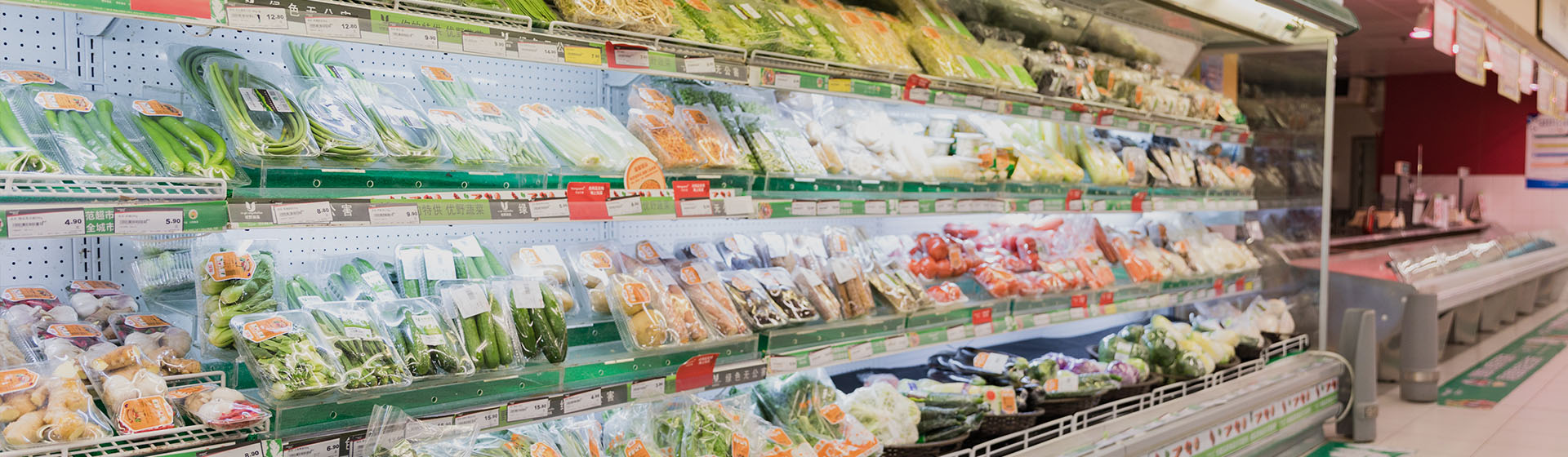
In modern retail environments, vertical refrigeration equipment has become essential for product visibility, temperature stability, and energy efficiency. Among the most commonly compared solutions are the air-curtain upright fridge system and the glass-door upright fridge. Both are widely used in supermarkets, convenience stores, and beverage merchandising spaces, but they operate on different cooling principles and deliver distinct performance advantages.
Understanding how these two refrigeration systems differ is important for retailers aiming to improve product display quality, reduce energy consumption, and maintain consistent cooling performance under high-traffic conditions.
Core Working Principles of the Two Upright Refrigeration Systems
The air-curtain upright fridge system operates without a physical barrier at the front. Instead of a traditional door, it uses a continuous flow of chilled air that forms an invisible “air curtain” to isolate internal cold temperatures from external warm air. This allows customers to access products directly while maintaining cooling efficiency through controlled airflow design and high-performance compressors.
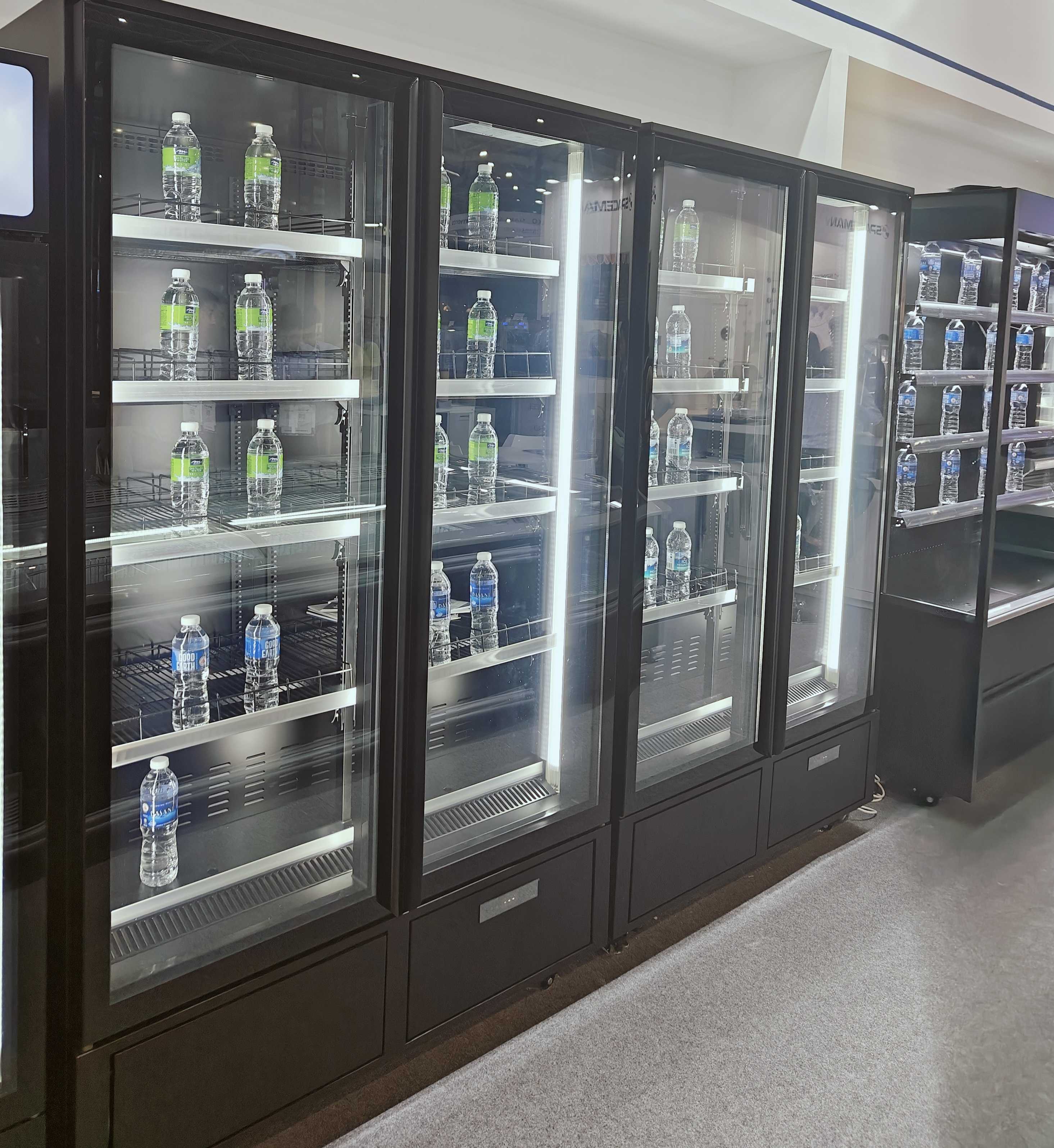
In contrast, the glass-door upright fridge relies on a sealed transparent door structure. The insulated glass panel physically separates the interior from the external environment, significantly reducing cold air leakage when the door remains closed. This design is widely adopted due to its stability, energy control, and simplicity of operation.
Both systems aim to preserve product freshness and enhance display visibility, but their approach to thermal management is fundamentally different.
Key Structural and Performance Differences
The choice between air-curtain and glass-door refrigeration systems often depends on store layout, customer interaction patterns, and energy priorities. Each system has strengths that suit specific retail scenarios.
● Air-curtain upright fridges eliminate physical barriers, enabling faster customer access and a more open merchandising experience
● Glass-door upright fridges provide stronger thermal insulation, reducing energy loss during non-opening periods
● Air-curtain systems typically require more advanced airflow engineering to maintain stable internal temperatures
● Glass-door systems are generally easier to maintain due to their closed structure and reduced exposure to ambient air
● Air-curtain models enhance product visibility and encourage impulse purchasing through open display design
● Glass-door models offer better temperature consistency, especially in environments with frequent temperature fluctuations
● Air-curtain units may consume more energy in high-temperature or high-traffic environments if airflow is not optimized
● Glass-door units are often preferred for long-term storage and stable cold chain preservation
These differences highlight that neither system is universally superior; instead, each performs best under specific operational conditions.
Application Scenarios in Modern Retail Environments
Retail environments today are highly dynamic, requiring refrigeration systems that not only preserve food quality but also support merchandising strategies. Air-curtain and glass-door upright fridges are often deployed strategically within the same store to balance visibility and efficiency.
Air-curtain upright fridges are commonly used in areas where rapid customer access is important, such as beverage sections, grab-and-go food zones, and promotional display areas. Their open design encourages interaction and increases product exposure, making them highly effective for impulse-driven sales.
Glass-door upright fridges are more frequently used for frozen foods, dairy products, and items that require stricter temperature control. Their sealed structure helps maintain stable internal conditions, even in environments with frequent customer movement or fluctuating ambient temperatures.
Operational Efficiency and Energy Considerations
Energy efficiency is a critical factor in refrigeration system selection, especially for large-scale retail operations. Air-curtain systems rely heavily on precise airflow control and high-efficiency compressors to compensate for the absence of a physical barrier. When properly engineered, they can perform efficiently, but they are more sensitive to environmental conditions.
Glass-door systems, on the other hand, naturally reduce cold air loss due to their sealed design. This makes them more energy-stable in the long term, particularly in stores with extended operating hours or high ambient temperatures.
Key operational considerations include refrigeration load stability, compressor cycling frequency, and maintenance requirements. Retailers often evaluate these systems based on total cost of ownership rather than initial purchase cost alone.
Design Flexibility and Merchandising Impact
Modern retail is heavily influenced by visual merchandising strategies, and refrigeration equipment plays a central role in product presentation. Air-curtain upright fridges offer a highly open and accessible display format, which allows products to be arranged in a more visually engaging manner. This design is particularly effective in high-end supermarkets and convenience stores that prioritize customer experience.
Glass-door upright fridges provide a structured and organized display behind a transparent barrier. This helps maintain product arrangement consistency and reduces the risk of contamination or handling damage, which is important in strict hygiene environments.
Factors to Consider When Choosing Between the Two Systems
Selecting the right upright refrigeration system requires careful evaluation of multiple operational and commercial factors.
● Store traffic volume and customer interaction frequency
● Target product categories and temperature sensitivity
● Energy efficiency goals and long-term operational costs
● Available floor space and store layout design
● Climate conditions and ambient temperature variations
● Maintenance capacity and technical support availability
By assessing these factors, retailers can determine whether an air-curtain system or a glass-door system better aligns with their business strategy and operational needs.
Long-Term Value and Maintenance Requirements
From a lifecycle perspective, both systems require regular maintenance to ensure consistent performance. Air-curtain upright fridges require periodic inspection of airflow channels, fan systems, and temperature calibration to maintain the integrity of the air barrier. Any disruption in airflow balance can directly impact cooling efficiency.
Glass-door upright fridges require maintenance focused on door sealing systems, glass insulation performance, and defrost cycles. Ensuring that door gaskets remain intact is essential for preventing cold air leakage and maintaining energy efficiency.
Both systems benefit from proactive maintenance scheduling, which can significantly extend equipment lifespan and reduce operational downtime.
Conclusion
Air-curtain upright fridge systems and glass-door upright fridges each offer distinct advantages in modern retail refrigeration. While air-curtain systems excel in accessibility and visual merchandising impact, glass-door systems provide superior insulation stability and energy efficiency. The optimal choice depends on how a retailer prioritizes customer engagement, product type, and long-term operational efficiency.
In many modern retail setups, a hybrid approach combining both systems is often the most effective strategy, allowing businesses to balance visibility with energy control and maximize overall store performance.
FAQ
1. What is the main difference between air-curtain and glass-door upright fridges?
The main difference lies in the separation method. Air-curtain fridges use a cold airflow barrier instead of a physical door, while glass-door fridges rely on insulated glass doors to maintain internal temperature.
2. Are air-curtain upright fridges suitable for all retail stores?
They are best suited for high-traffic retail environments where product accessibility and visual merchandising are priorities, such as beverage and snack displays.
3. Do glass-door upright fridges affect product visibility?
They may slightly reduce accessibility due to the physical barrier, but modern transparent glass designs still provide strong product visibility while maintaining better temperature stability.
4. Can both systems be used together in one store?
Yes, many modern supermarkets use both systems strategically to balance energy efficiency and customer engagement across different product categories.
Post time: May-21-2026


